EVENT: MITCHELL F. CHAN, WORKERS’ PLAYTIME (OCTOBER 10, 2026–NOVEMBER 21, 2026)

Mitchell F. Chan, Workers’ Playtime
10 October–21 November 2026
DE SARTHE
2/F, Block A, Vita Tower, 29 Wong Chuk Hang Road, Hong Kong
Tuesday–Saturday, 11 am–7 pm
Mitchell F. Chan turns Hong Kong’s DE SARTHE into an arcade rigged against its players, where playing becomes a form of work. His latest exhibition, Workers’ Playtime, running from 10 October to 21 November 2026, brings together six interactive electromechanical sculptures and a custom videogame that examine how rules determine the limits of individual agency. For the Toronto-based conceptual artist, games offer a particularly effective means of investigating economic relationships: they allow participants to experience the restrictions they would ordinarily encounter as abstract social structures.

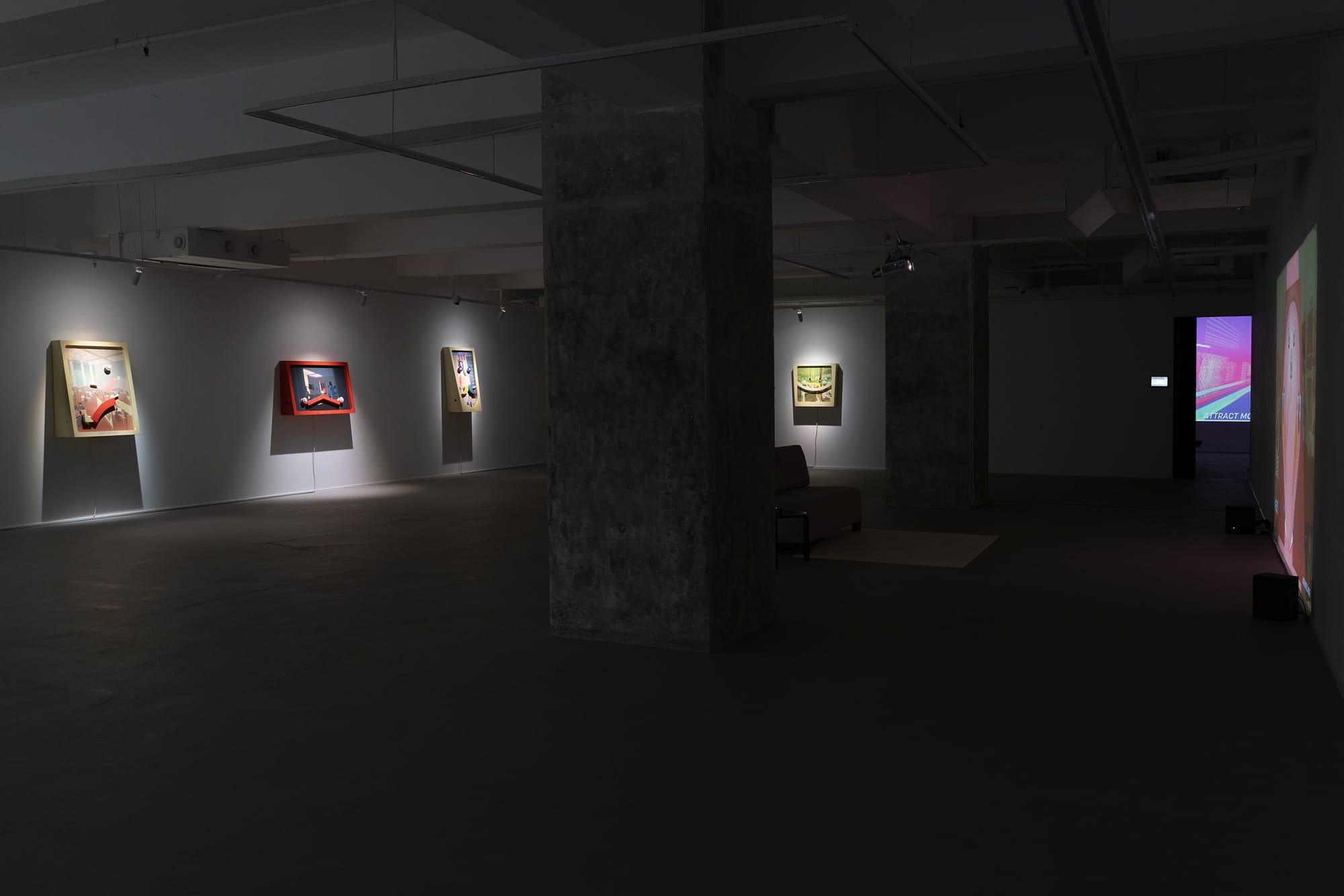
In Cliffhangers (2026), an open-plan corporate office provides the backdrop for a deceptively simple pinball game. The flippers respond to the player’ s commands, yet the ball consistently falls short of its target. The small distance separating success from failure encourages increasingly determined attempts. Players adjust their timing, experiment with different techniques and search for an error in their performance. The fault lies with the apparatus. Yet each unsuccessful attempt encourages another round of self-correction, as though persistence might eventually overcome a condition established in advance. The player assumes responsibility for an outcome beyond their control.

Constructed from electromechanical pinball components, digitally produced imagery, archival pigment prints, wood and acrylic, the sculptures combine the material vocabulary of traditional amusement machines with the visual conventions of contemporary videogames. Each occupies a colourful shadowbox depicting a different economic environment, including industrial production, agriculture and livestreaming. The physical construction is particularly significant. Unlike software, whose operating conditions can remain concealed within code, Chan’ s pinball mechanisms give viewers access to the material restrictions governing each attempt. One can see the obstacle and still feel compelled to overcome it.

Daddy’s Home (2026) relocates the problem to a domestic interior. A woman holding a baby faces a window while a man approaches the house in his car. Two pinballs move towards each other along an inverted V-shaped track, repeatedly failing to reach its summit. Their proximity promises an encounter that the mechanism prevents. The nursery, stripped of objects that might suggest the woman’ s individual identity, concentrates attention on care as an obligation that structures her existence. The ball’s inability to meet introduces a disquieting account of separation within the domestic economy, where continuous effort guarantees neither reciprocity nor progress.

The work can be read alongside Mierle Laderman Ukeles’s Manifesto for Maintenance Art (1969), which challenged the division between artistic creation and the repetitive labour required to sustain everyday life. Where Ukeles sought recognition for maintenance as creative activity, Chan constructs an environment in which effort remains trapped within an unalterable routine. The comparison situates Daddy’s Home within a longer artistic examination of the gendered organisation of domestic work.

The financial sector receives a contrasting treatment in Roundtrippin’ (2026). Here, a pinball circulates autonomously, continuously striking targets without requiring the player’s intervention. Finance needs no player at all. Its self-perpetuating movement contrasts with the futile effort demanded elsewhere in the exhibition: the office worker must keep trying, the domestic encounter remains impossible, while financial activity proceeds independently of human input.
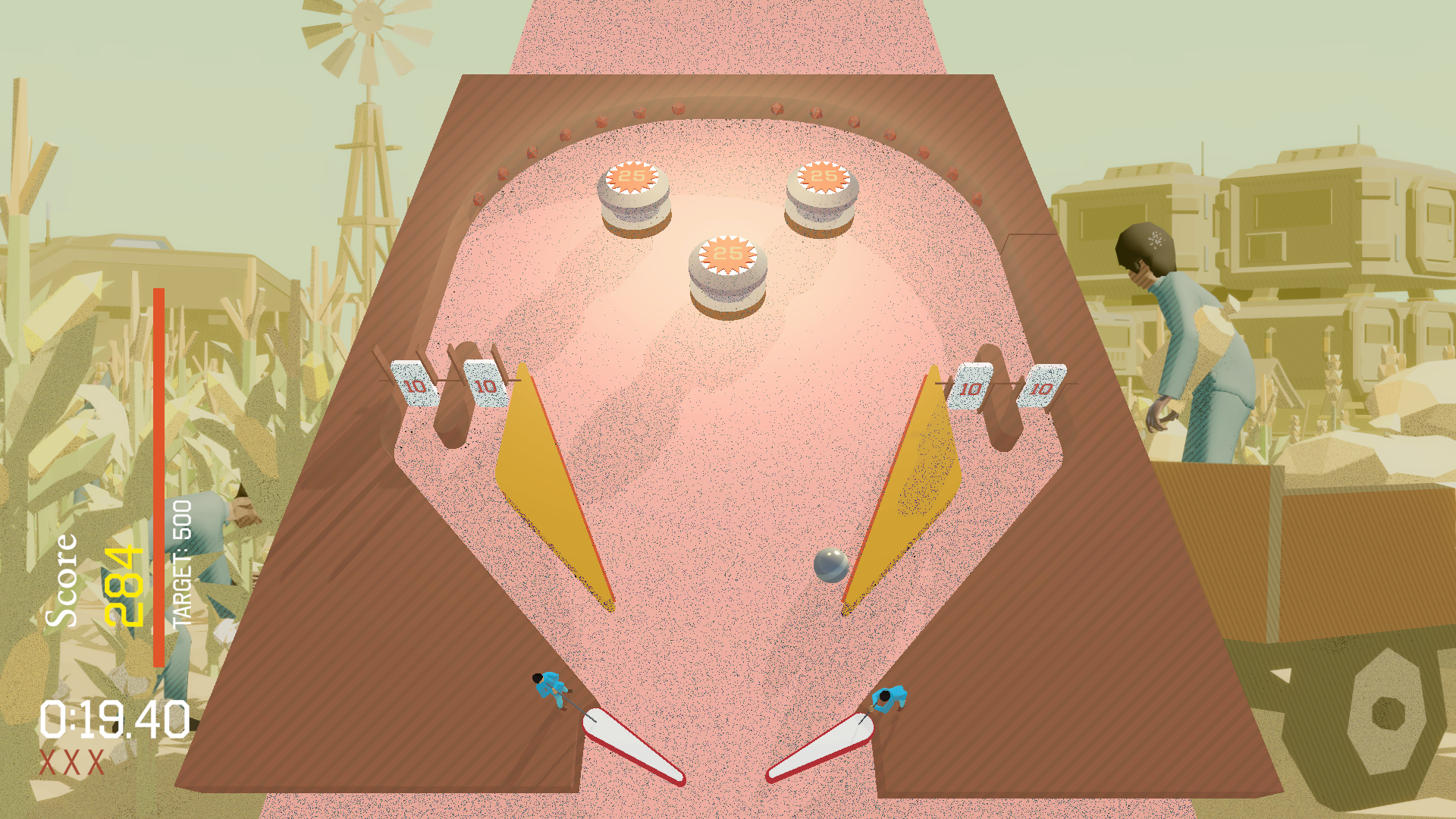
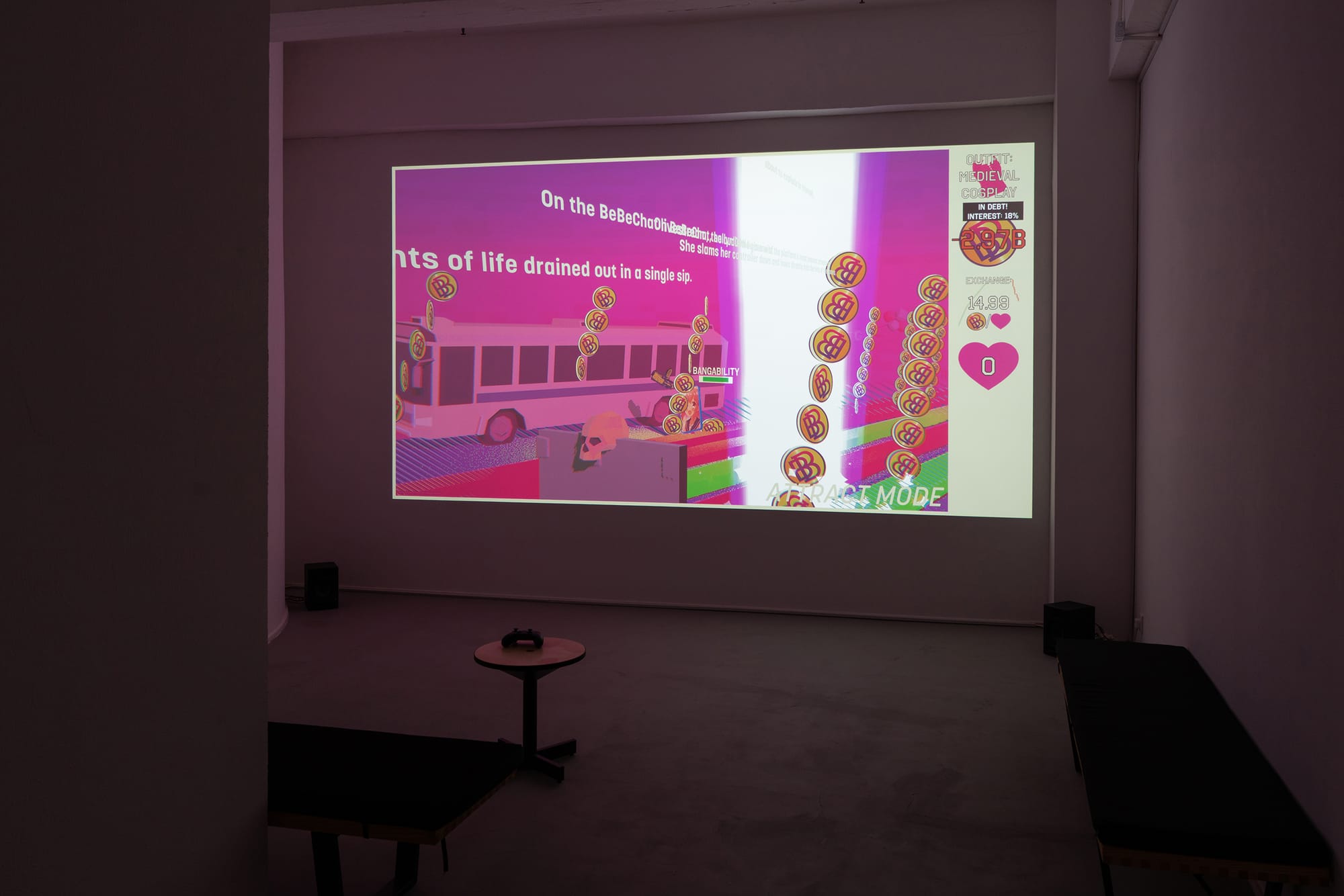
At the centre of the exhibition, Worker’s Playtime: Luxury Edition (2026) extends these experiments into software. Players manipulate flippers, accumulate points and advance through levels accompanied by animated graphics and electronic sound effects. Occasional successes sustain the expectation that mastery is possible. Once the player stops, however, the game continues automatically. Its bumpers and balls remain active after human participation has ceased. A nearby sofa invites visitors to remain and watch, offering the comforts of leisure within an environment devoted to its instrumentalisation.
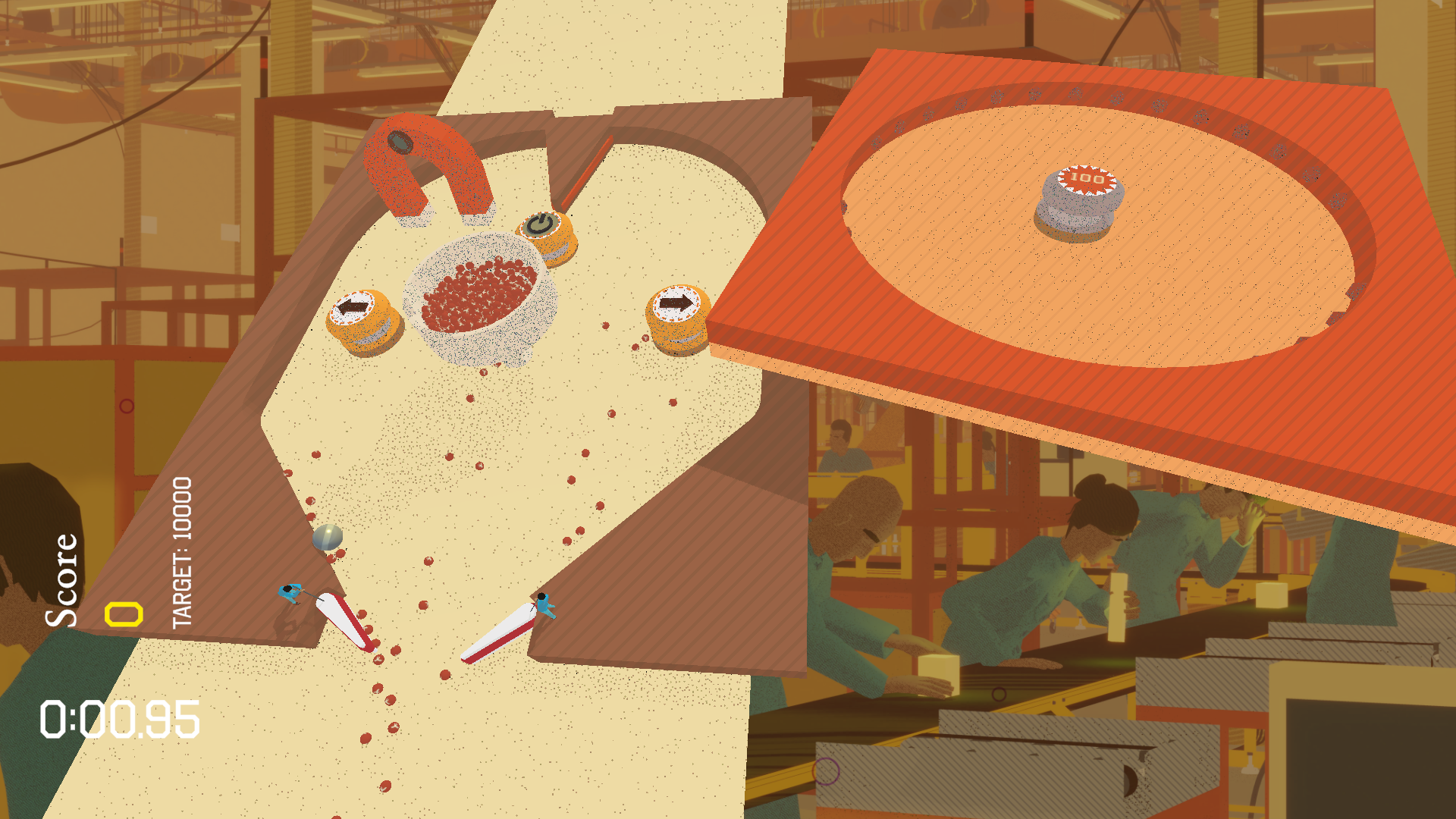
The distinction between the sculptures and the videogame becomes apparent here: the physical works make constraints visible, while the digital version can simulate responsiveness even as its operations become independent of the user.
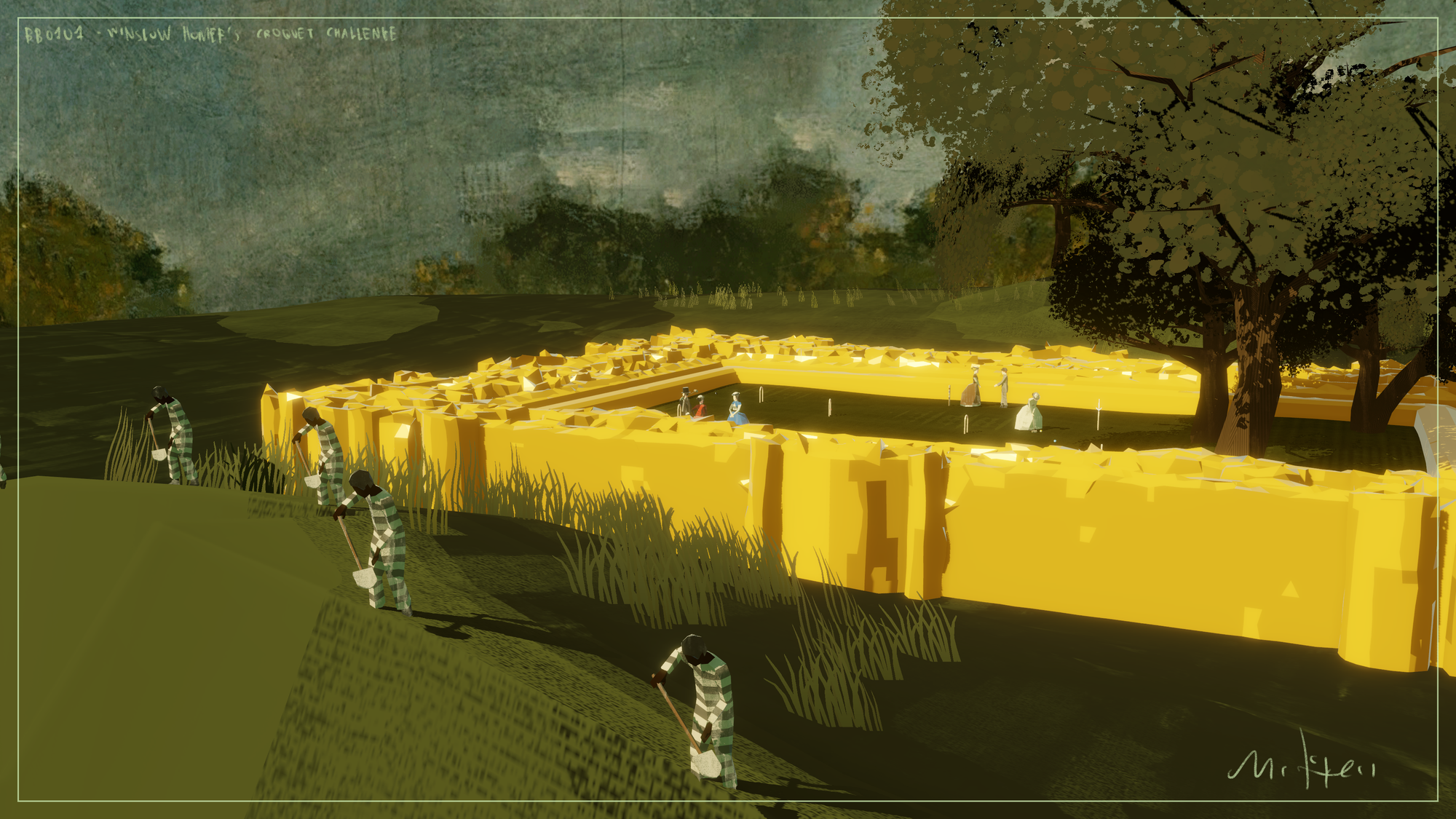
The exhibition develops ideas Chan has pursued across a substantial body of interactive and conceptual work. In Winslow Homer’s Croquet Challenge (2022), commissioned by curator Tina Rivers Ryan for the Buffalo AKG Art Museum’s exhibition Peer to Peer, he transformed Winslow Homer’s 1865 painting Croquet Players into a playable videogame. Players control the female participants against computer-operated male opponents whose dialogue addresses women’s rights. The game also exposes the racial inequalities concealed by Homer’s idyllic scene: lowering the virtual camera reveals a chain gang of formerly enslaved African Americans working beyond the lawn, outside the painting’s gilded frame. The interactive reconstruction makes the painting’s historical omissions accessible through movement and player perspective. The museum acquired the work in 2022.
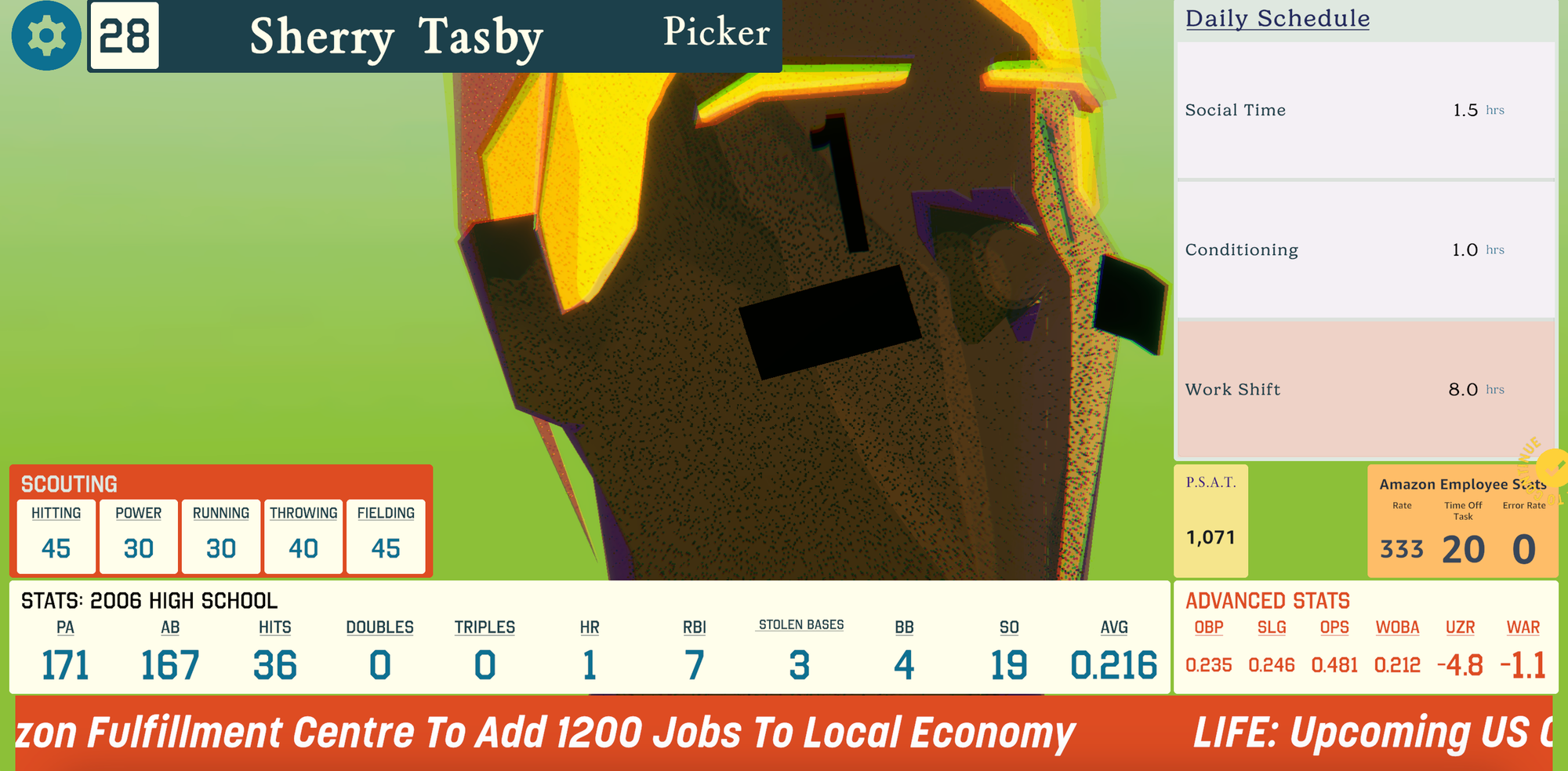
With The Boys of Summer (2023), Chan adopted the conventions of a baseball management simulation to investigate the quantification of personal achievement. Players guide an aspiring athlete towards a professional career by accumulating statistics attractive to scouts and prospective teams. When the sporting career ends, the game continues. The routines of measurement and optimisation migrate into everyday life, where personal advancement remains subject to the same numerical expectations. The project, which also includes a profile-picture collection, examines the commodification of personal data through the experience of inhabiting a character whose future depends on measurable performance.
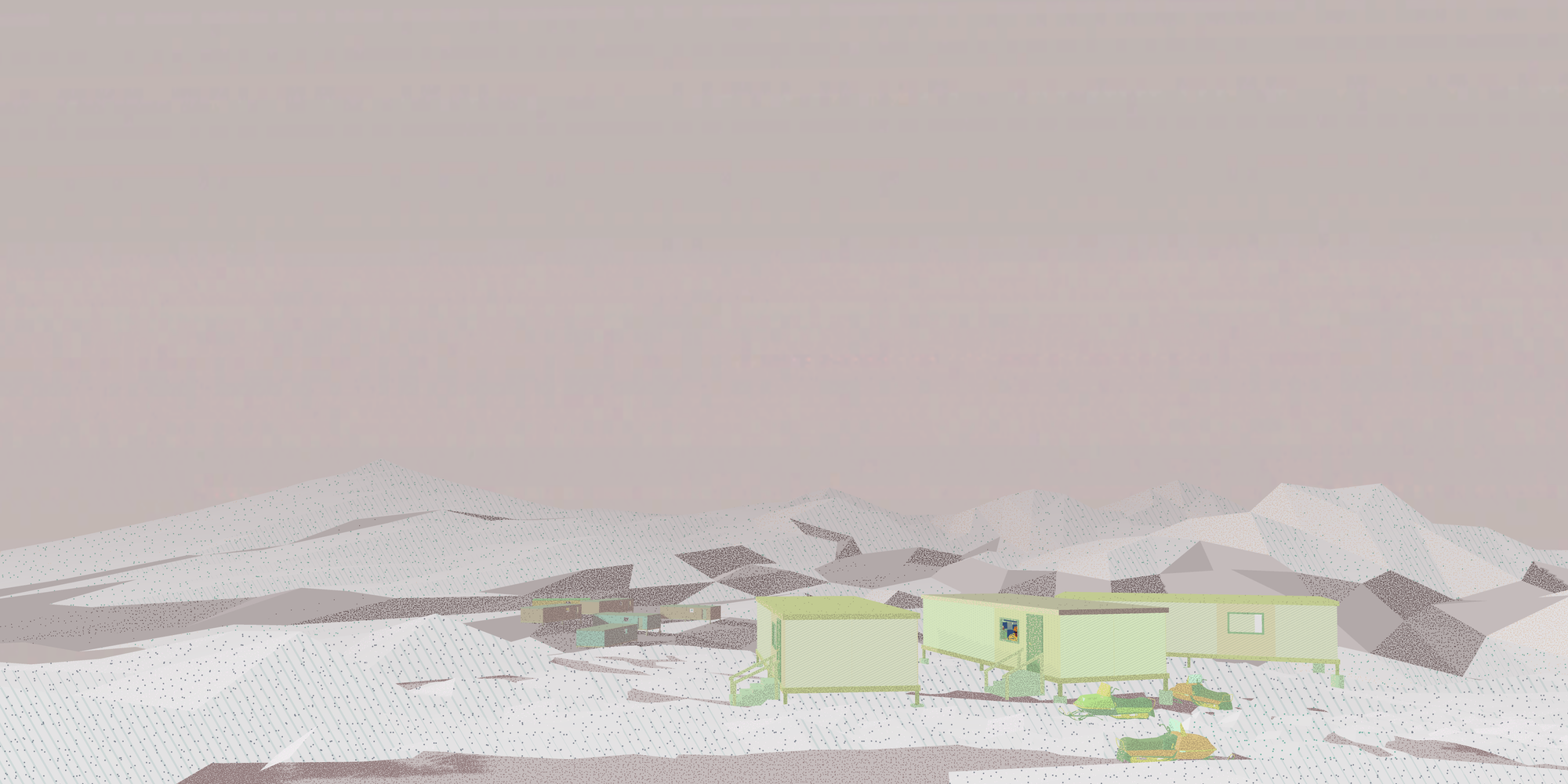
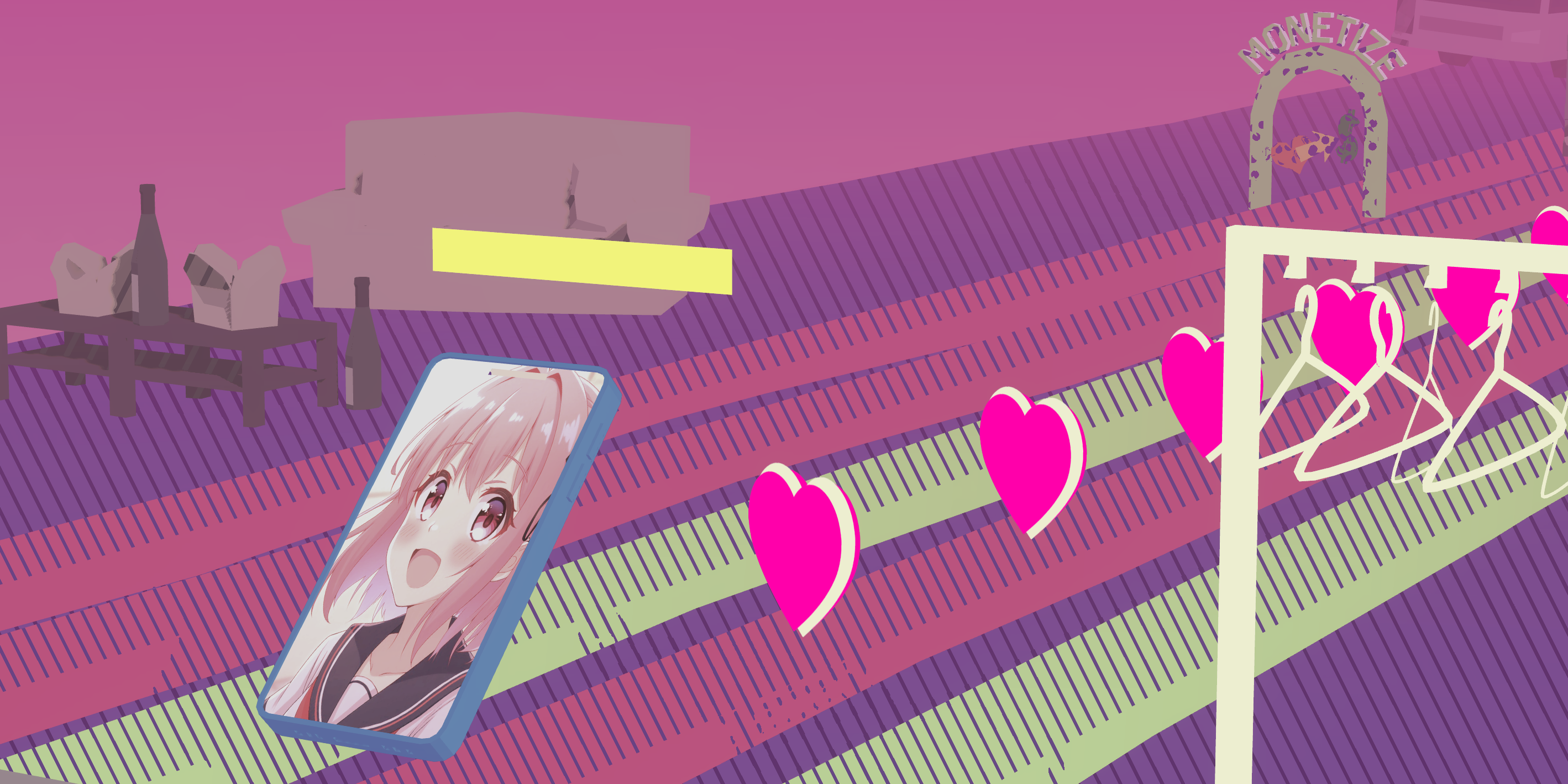
Chan’s subsequent Zantar Triptych (2025) develops these concerns through videogames situated within a fictional gaming economy. In Ladyboss, an endless runner depicts a livestreamer’s escalating dependence on attention and monetisation. The player’s restricted movement corresponds to the protagonist’s limited prospects: the character remains trapped in a cycle of accumulating social capital and converting it into income. In Zantar, a gelatinous creature devours warriors in a medieval village, while the broader game examines an extractive economy through its rules. Chan has also identified an unexpected formal reference in Michael Snow’s experimental film Wavelength (1967), suggesting how cinematic duration and videogame interaction can inform the same artistic construction.
These projects share an interest in the relationship between what games permit players to do and what their designers have decided in advance. In his essay Categories of the Art Game, published by Rhizome on 14 October 2026, Chan challenges the art world’s emphasis on worldbuilding as the defining achievement of game-based art. He introduces the term Gesamtkunstgames for interactive works that incorporate and expand existing artistic forms, while distinguishing playable software from films produced using game engines. His most consequential category is agential representation: the possibility of portraying a person or social condition by reproducing the decisions available within it. Drawing on philosopher C. Thi Nguyen’s Games: Agency as Art (2020), Chan understands game design as an artistic practice concerned with shaping human agency.
Workers’ Playtime offers a particularly uncompromising application of this principle. Its sculptures represent labour through the allocation of control and the restriction of possible outcomes. The viewer experiences these conditions as a participant rather than interpreting them exclusively through images. This approach also invites comparison with Julian Kücklich’s Precarious Playbour: Modders and the Digital Games Industry (2005), which examined the economic value generated by activities undertaken voluntarily for pleasure. Chan’s works investigate a related problem within the design of play itself, particularly the ease with which persistence can be mistaken for meaningful agency.
There is a revealing continuity between this interest in economic systems and Chan’s earlier conceptual experiments. His Digital Zones of Immaterial Pictorial Sensibility (2017), modelled explicitly on Yves Klein’s Zones of Immaterial Pictorial Sensibility, explored how ownership and financial exchange condition the experience of immaterial artworks. Exhibited at the Fondazione Prada during the 2024 Venice Biennale, the project anticipated his subsequent interest in the rules that establish value independently of an object’s physical properties. The commercial setting of Workers’ Playtime introduces an additional complication: works that criticise economic extraction circulate as collectible commodities. The designation Luxury Edition acknowledges this condition with considerable irony.

Yet Chan’s method also raises a difficulty.
Traditional pinball combines skill with unpredictable physical outcomes. His sculptures deliberately constrain that relationship, replacing uncertainty with predetermined results. Such an arrangement risks reducing participation to the confirmation of a conclusion already established by the artist. Once the visitor recognises that victory has been engineered out of reach, continued engagement becomes an increasingly deliberate choice. Some players may persist out of curiosity, others from stubbornness. The decision to withdraw remains available, even when success does not.
In Worker’s Playtime: Luxury Edition, setting down the controller leaves the videogame running. The software carries on without a player. For all its invitations to demonstrate skill, the machine has been designed to operate independently of human intervention. What it demands from its visitors is their persistence, and the time they are prepared to surrender before walking away.