GAME: GABRIEL HELFENSTEIN’S THE HOUSE BEFORE (NOW AVAILABLE)

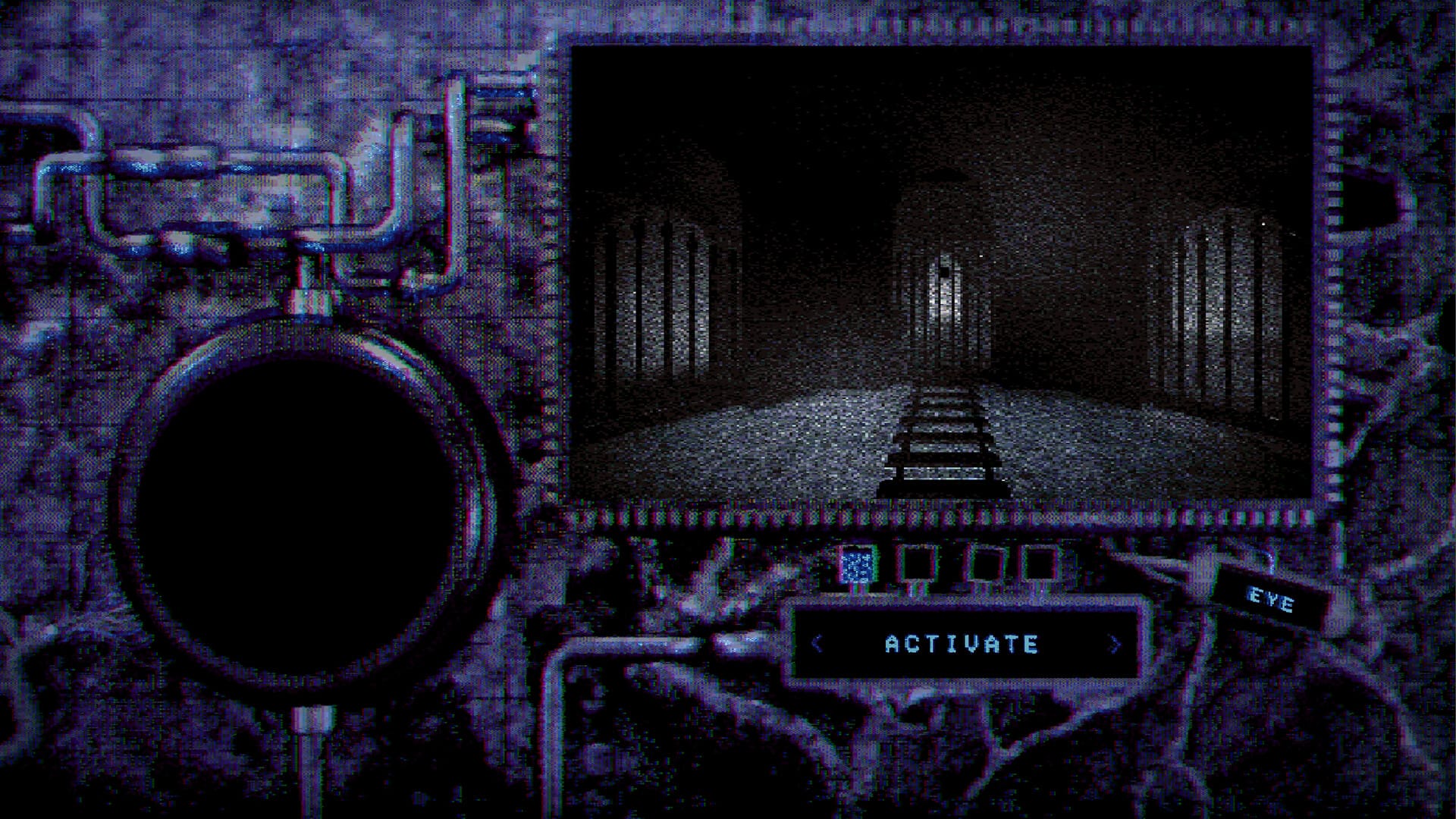
In a new game published by Fantasia Malware, a sentient house confronts the creatures living in its interior and the consequences of a history it cannot remember. Gabriel Helfenstein turns architecture into an anatomy of inherited trauma, and leaves room for repair.
A house wakes up. It has no legs or arms and cannot leave. Its consciousness runs through chambers, corridors and tunnels whose limits it cannot determine. Strange creatures live inside it. Some seem sick, others angry, and they appear to know things about the house that it has forgotten or never knew. Whatever lies beyond its walls is out of reach.
This is the premise of The House Before, a narrative body horror game by Helfenstein, released on November 3, 2026, by the Berlin-based collective and label Fantasia Malware. It blends visual novel, adventure and mini-game elements and takes about two hours, mostly linearly. The house’s whole perceptual universe is its own interior, and the player holds a vast body with a very small field of knowledge.

The visual design makes this literal.
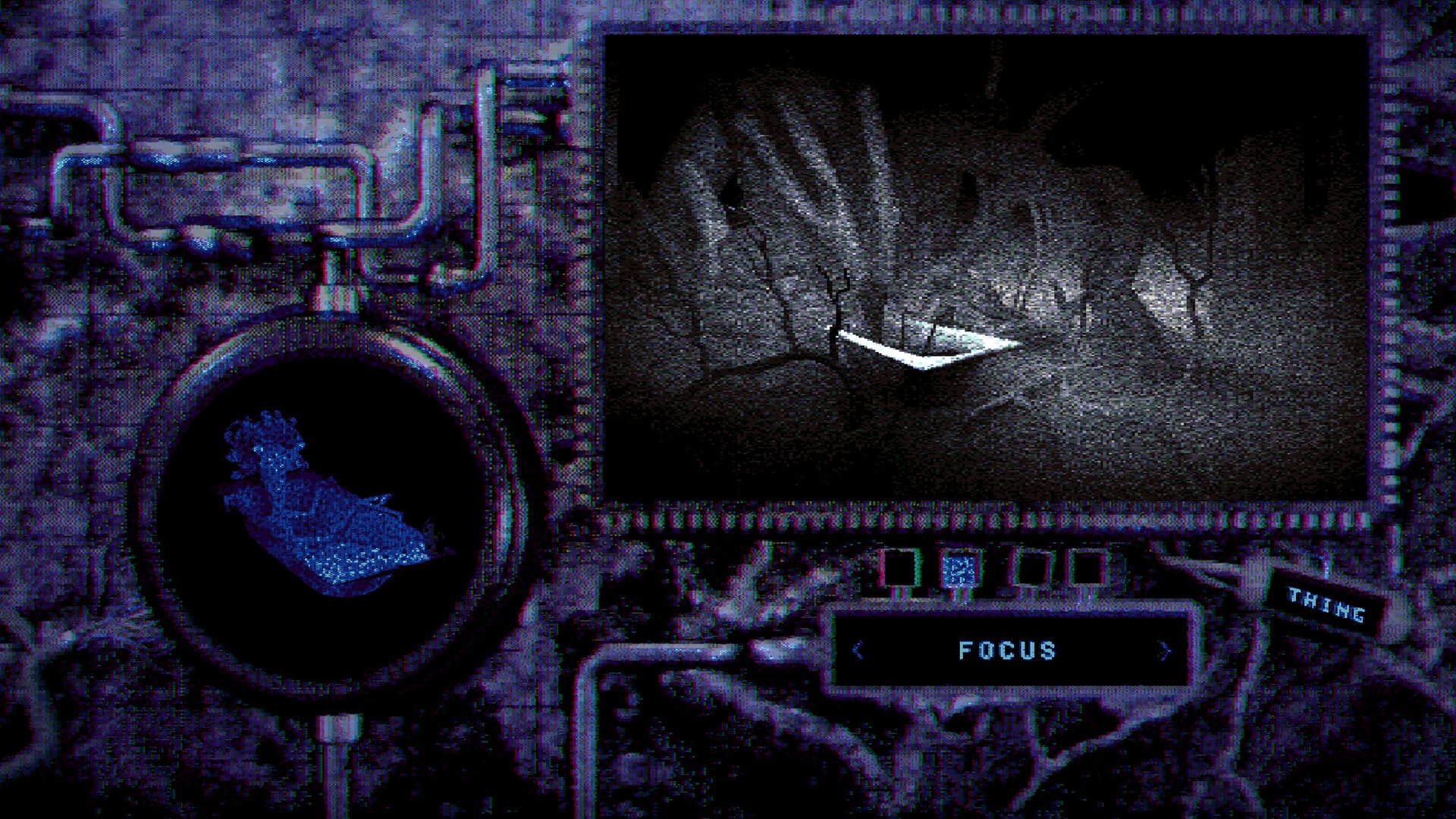
At one point, a mechanical interface frames a grainy monochrome scene, with a circular diagram of an irregular blue structure like a half-excavated organ. A control marked FOCUS implies that seeing takes a mechanical adjustment.
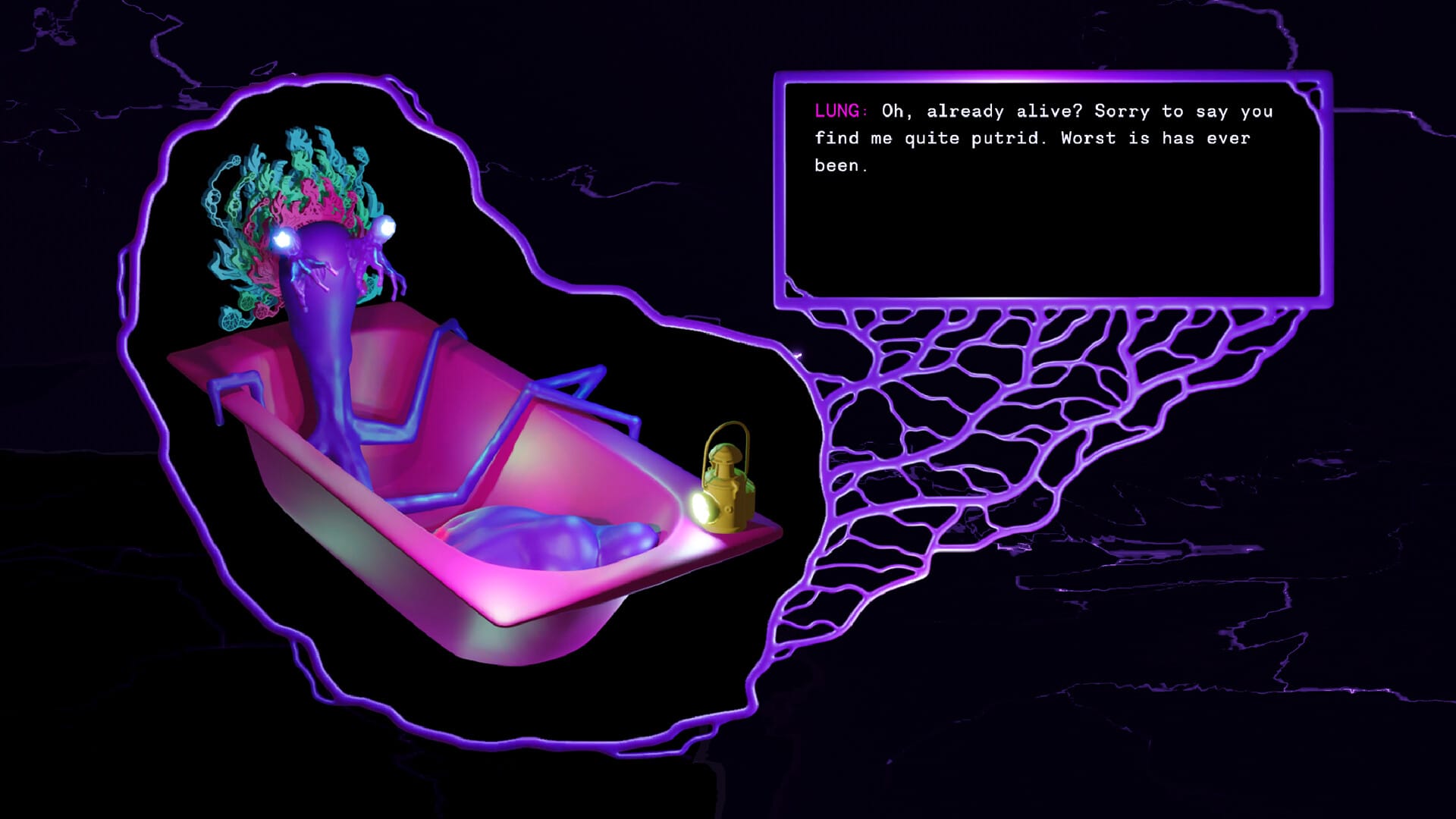
Elsewhere, a purple creature with luminous eyes and colorful tendrils sits in a pink bathtub. It is labeled LUNG, and it apologizes for its putrefying state. HEART, a blue, elongated organism with antennae and yellow eyes, politely announces that things need to be put in order.
The creatures talk like tenants of a shared flat while looking like a grotesque biological fantasy. An organ speaks like an administrator, and a malfunction becomes a grievance between neighbors. The line between physiological process and social relationship dissolves.
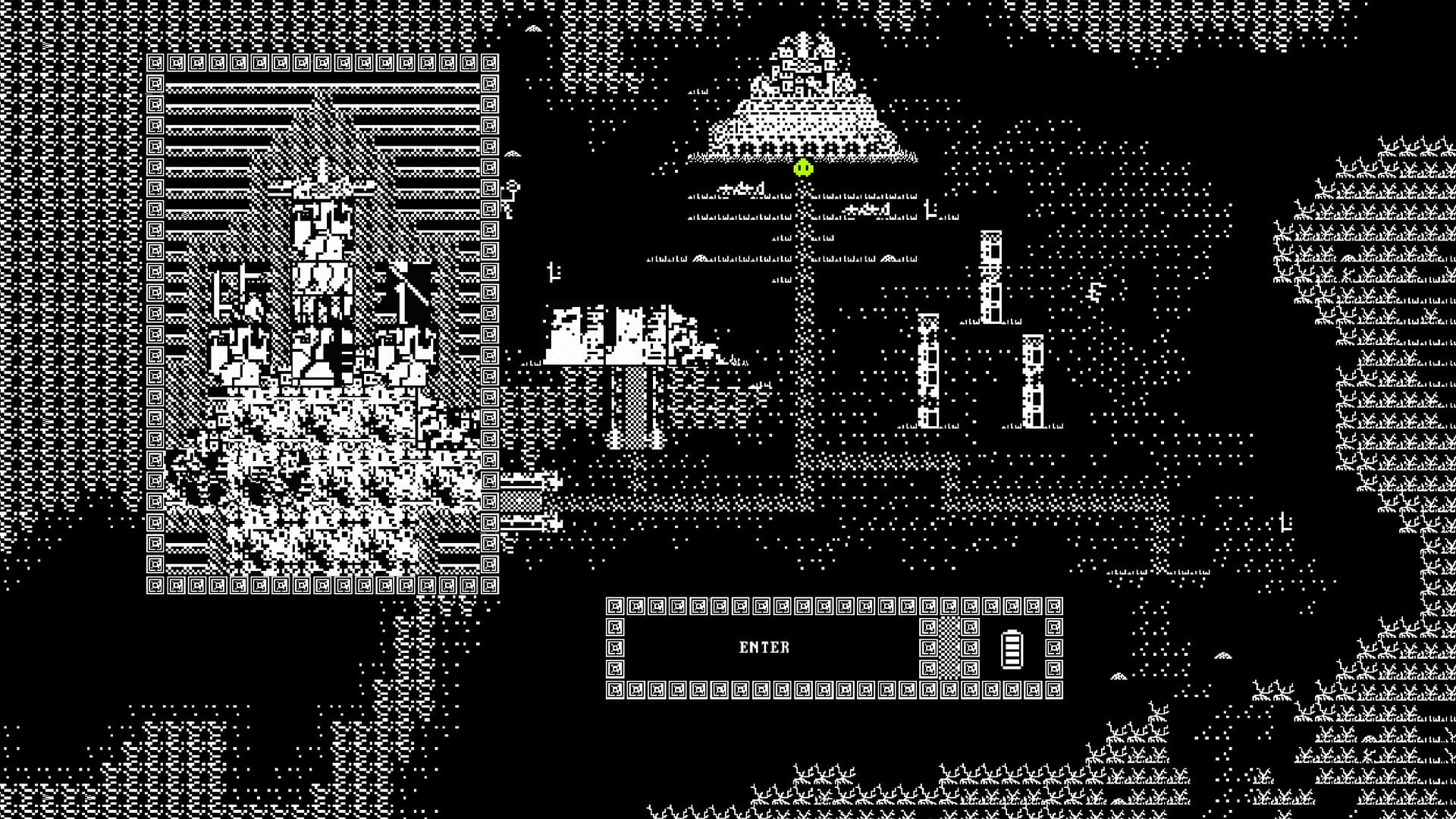
Other moments of the game use entirely different conventions. One monochrome environment of tiny white pixels places an ENTER prompt beneath strange vegetation and geometric structures. Each region of the house seems to need its own representational system, so the house has no single image of itself. Its interior appears through incompatible instruments, each giving a provisional account of the same organism.
The interfaces reinforce this.
In his Next Fest demo coverage, critic Dominic Tarason notes that the UI changes as often as the art style. His separate hands-on account describes an eye mounted on a rail vehicle for inspecting the house, and the option of shifting between periods of the building’s existence, where changes to the past affect the present inhabitants. Some inhabitants resist. The house has agency, but that agency is tied up with the interests of other beings. Altering one’s own history can mean altering someone else’s reality.
Helfenstein links this to Walter Benjamin’s rejection of progress as an orderly, cumulative advance. In his 1940 essay, known in English as “Theses on the Philosophy of History”or “On the Concept of History”, Benjamin reads Paul Klee’s Angelus Novus (1920) as an angel who sees a single catastrophe piling wreckage on wreckage while a storm drives him into the future. In this reading, we are born into events that precede us, and their injuries persist where we cannot see them. The house’s wounds predate its waking, and its inhabitants’ resentment points at acts it cannot account for.
Benjamin also offers more than the recognition of catastrophe. His idea of remembrance recovers the unrealized possibilities of earlier struggles, so the past makes claims on the present. That helps explain the qualified hope in Helfenstein’s oppressive fiction. His own announcement describes a game about being trapped under the weight of history, with potential to be found in past struggles.
The title implies succession, an existence preceded by another whose consequences endure. The official description lists the imperatives “Heal old wounds”, “Procreate” and “Be better than the House Before”. They introduce responsibility into a situation that begins as helplessness.
A political tension remains. Benjamin’s account of historical responsibility concerns collective struggle and the interruption of inherited domination, and a narrative built around one body’s consciousness risks reducing these questions to private psychology. The house’s interior holds other subjects whose experience exceeds its own, which keeps the social dimension in play.
Helfenstein cites Thomas Ligotti’s “The Red Tower”, from the 1996 collection The Nightmare Factory, as an influence. Ligotti’s story describes a ruined factory that manufactures unsettling goods, eventually “hyper-organisms”, by a logic that serves no human purpose. Both works concern enclosed systems that cannot be explained from outside. They differ on change: Ligotti’s machinery suggests a malign creative process that persists, while Helfenstein allows a damaged structure to take up a different relation to its inheritance.
Architecture as anatomy also recalls Kitty Horrorshow’s Anatomy (2016), in which the player explores a suburban house while listening to cassette recordings about the physiology of domestic space, as the house grows unstable. Christine Prevas, in a 2023 article, reads the game’s glitches as a trans mechanic that unsettles the relationship between the trans body and the space of the house. Helfenstein reverses the arrangement: the player is the building, and its inhabitants have their own autonomy.
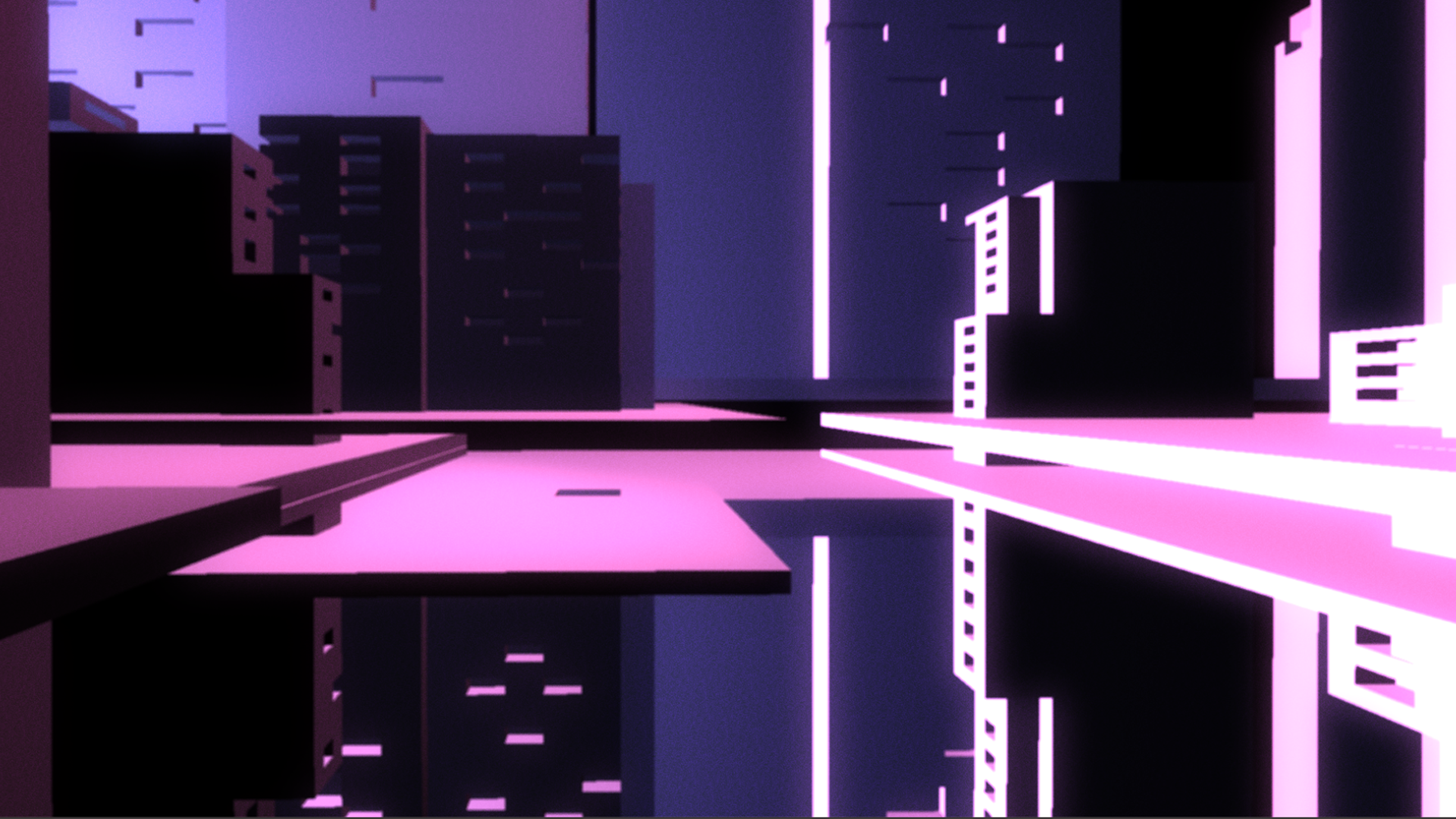
Helfenstein began making games around 2015, mostly under the name Outlands, and was part of the collective AAA before joining Fantasia Malware.
In NORTH, players apply for asylum in a city of strange creatures.
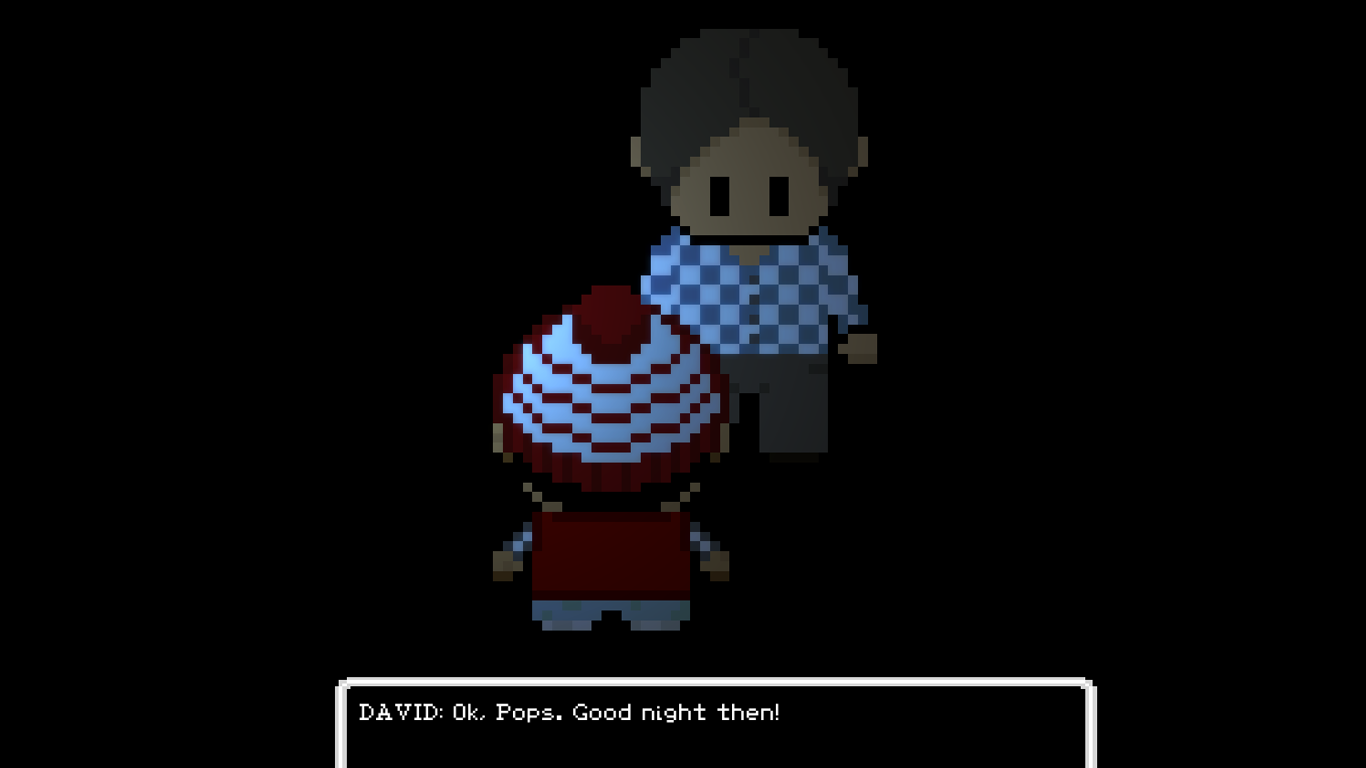
Breeder: Homegrown follows an elderly man who escapes a clinic and returns home to childhood memories and the monstrous figures attached to them.
The closest antecedent is Okthryssia and Saturnia’s Bureaucratic Adventures, a two-player game nominated for the 2022 Independent Games Festival Nuovo Award. Two siblings try to claim an inheritance through a bewildering bureaucracy while holding incompatible versions of their shared past. In a 2022 Game Developer interview, Helfenstein tied the game to his father’s death in 2020 and the bureaucratic and emotional negotiations that followed. The game also asks players to leave the screen for stream-of-consciousness writing and miming. In The House Before, inheritance moves from the family and legal sphere into the constitution of the playable subject.
Helfenstein works in Fantasia Malware with Jira Duguid and Chloê Langford. The collective makes games and performances and releases its members’ solo work. Collective projects include Orchid Collector, The Life of Saint Fiona Bianco Xena and SEX! At Alexanderplatz. The last turns dating-app and slot-machine mechanics into a romance set in Alexanderplatz, the former center of East Berlin.
In 2022 the group hosted four events in the series Fantasia Malware Presents, pairing each member with an invited artist. The guests included Studio Oleomingus and Jeremy Couillard. Helfenstein performed A Time Traveller’s Guide to Past Delicacies.
In a 2022 conversation with Akademie Schloss Solitude, Langford and Duguid described a Baroque, overstimulated experience of the world and called their work “overstimulation propaganda” rather than a critique of noise.
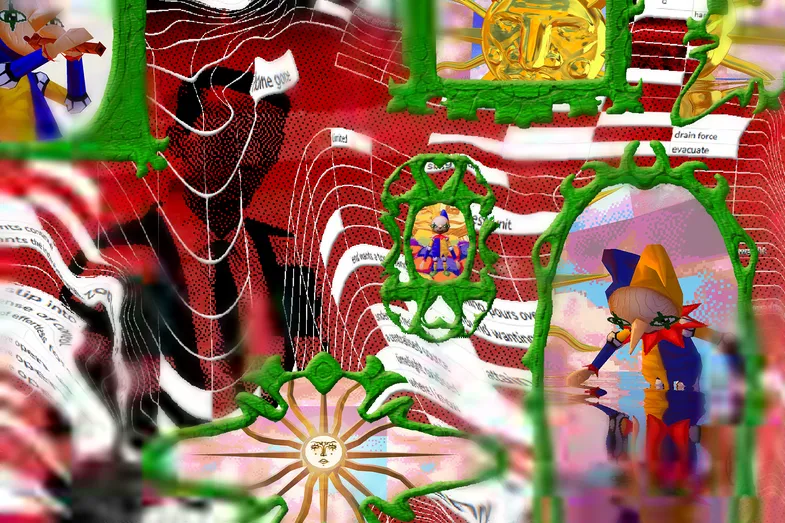
In March 2026 the collective presented Feral Loop Fever at HAU Hebbel am Ufer, Berlin. Helfenstein’s LANDLORDS tells one life through five landlords and moves from a monochrome pixelated poem to a kaleidoscopic 3D dream. The House Before carries the collective’s mutable systems into a longer and more introspective form, with the restricted perspective giving its stylistic breaks a more oppressive charge.
Buildings usually outlive their occupants and preserve traces of human activity without being able to interpret them. Helfenstein’s house is condemned to awareness and has to face what it contains. Whether it can improve stays uncertain, since inherited structures often reproduce the conditions that damaged them. The emphasis on succession still keeps the future open to alteration.
Whatever survives will inherit the rooms.