EVENT: INSTANCE DUNGEONS: GRAY ZONE (SEPTEMBER 5–NOVEMBER 11 2026, GWANGJIU; SOUTH KOREA)
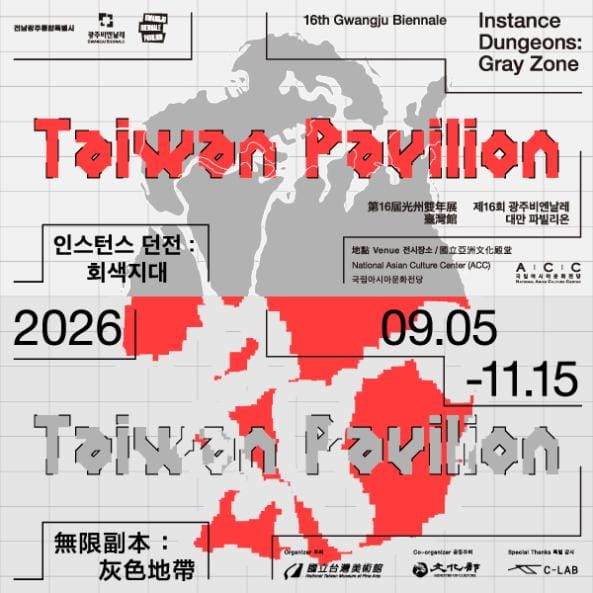
Instance Dungeons: Gray Zone runs through November 15, 2026, at the National Asian Culture Center, 38 Munhwajeondang-ro, Dong-gu, Gwangju, South Korea, as part of the Pavilion Project accompanying the 16th Gwangju Biennale’s main exhibition, You Must Change Your Life, directed by Ho Tzu Nyen with curators Che Kyongfa, Park Gahee and Brian Kuan Wood. The venue is open Tuesday, Thursday, Friday and Sunday from 10:00 to 18:00, with extended Wednesday and Saturday hours. The pavilion is organized by the National Taiwan Museum of Fine Arts, co-organized by Taiwan’s Ministry of Culture, with special thanks to the Taiwan Contemporary Culture Lab (C-LAB) and sponsorship from the NTMoFA Patrons Circle.
A biennale pavilion titled after a video game mechanic just survived a diplomatic incident before it could open. That fact alone tells you more about Instance Dungeons: Gray Zone than any curatorial statement could.
An instance dungeon, in MMORPG design, is a private copy of a level generated for a single party of players. Everyone gets the same layout, the same monsters, the same locked doors, but no two runs share a server instance. You can die and try again. History, in this exhibition’s framing, works the same way: the Cold War ends, then reopens as a fresh instance, spawned with new enemies but identical architecture. Curators Chen Hsiang-Wen and Lin Hsiao-Yu use the term literally. Taiwan sits inside the First Island Chain, replaying a geopolitical level it never fully exited.
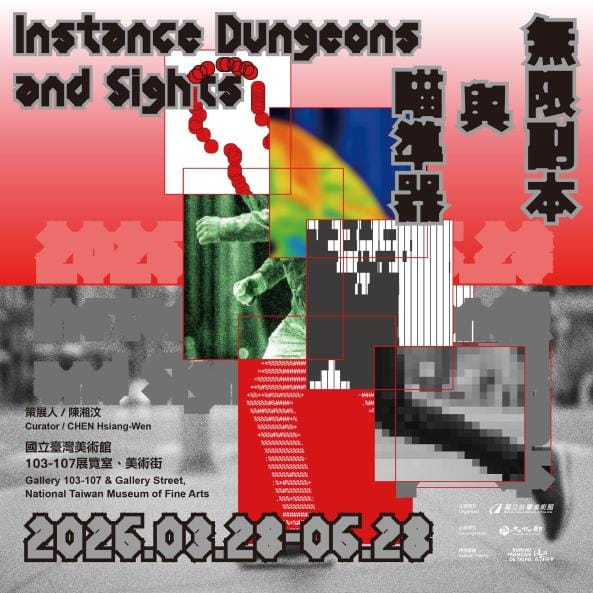
The show builds on NTMoFA’s earlier project Instance Dungeons and Sights and pushes the gaming metaphor into the gray zone, the military-strategy term for the ambiguous territory between declared war and declared peace. Nobody fires the first shot in a gray zone. Instead there is disinformation, cyber intrusion, economic pressure and algorithmic surveillance, all delivered through the same screens people use to check the weather.
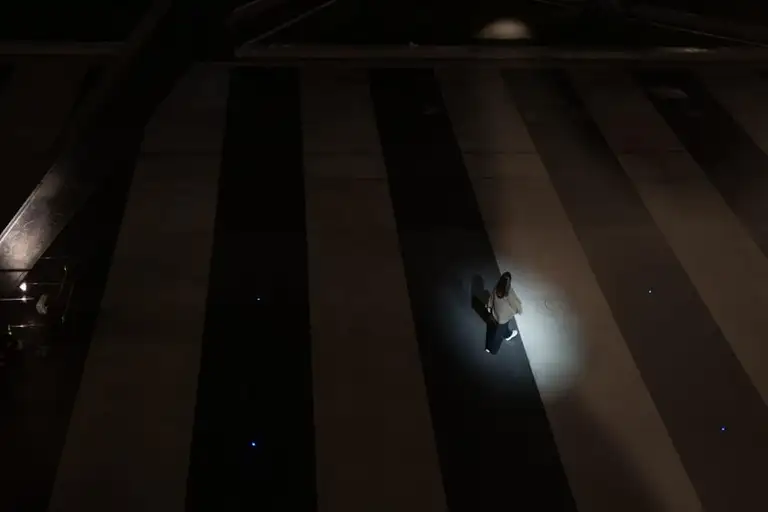
Cheng Hsien-Yu’s Traced puts the game engine’s most basic tool, real-time motion tracking, to psychological use: a spotlight follows every visitor through the room via computer vision, converting the S+T+ARTS honoree’s own Ars Electronica-recognized practice into a question about whether being watched by a machine still counts as being witnessed. Juan Po-Yuan goes further into procedural logic with two new pieces. Searching for the Nose Beneath Fronta na maso feeds Prague’s buried Stalin-monument archive into an AI and records the resulting aphasia. Grinding_tw does something sharper: it trains a generative image model on archives of Taiwan’s Cold War military ruins, and the model keeps misreading bunkers and radar stations as first-person-shooter environments. The ruins become a self-generating dungeon with no exit, built entirely from an algorithm’s confused pattern-matching between wartime concrete and game-level geometry.
Hsu Che-Yu and Chen Wan-Yin, collaborators since 2015, address a site rarely acknowledged in Taiwanese public memory: the island’s former plutonium separation plant, tied to a shelved nuclear weapons program. Their video House a stages a re-enactment with a scientist who once worked on that program alongside cultural activists and performers, building and dismantling a structure within a structure at the Sawac (Kanjin) Amis community near the original site.
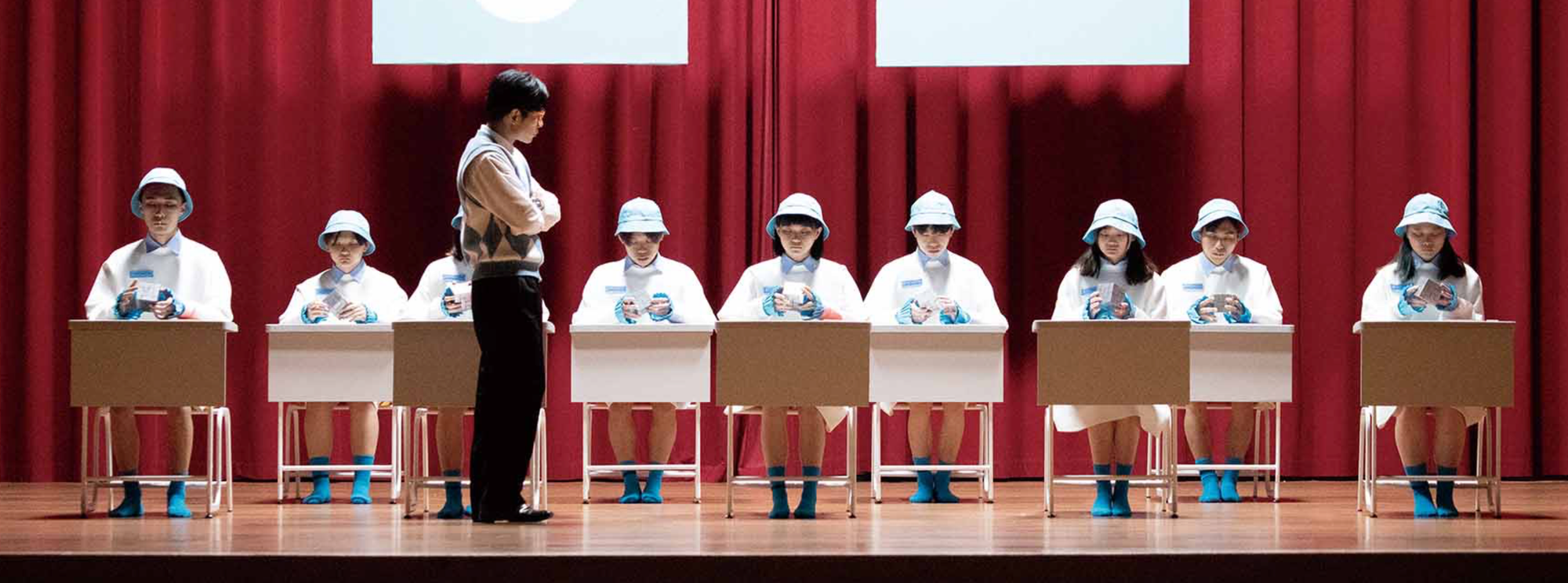
Su Hui-Yu, a 2025 Berlinale Forum selectee, continues his Re-Shooting method in The Space Warriors and the Digigrave, resurrecting a 1980s martial-law-era Taiwanese sci-fi series and rendering Chiang Kai-shek Memorial Hall as an AI-generated spaceship he calls the Digigrave. The technical machinery behind that transformation, he suggests, mirrors Taiwan’s actual position in the global AI supply chain, a nation whose chips power the same systems now reprocessing its own iconography.
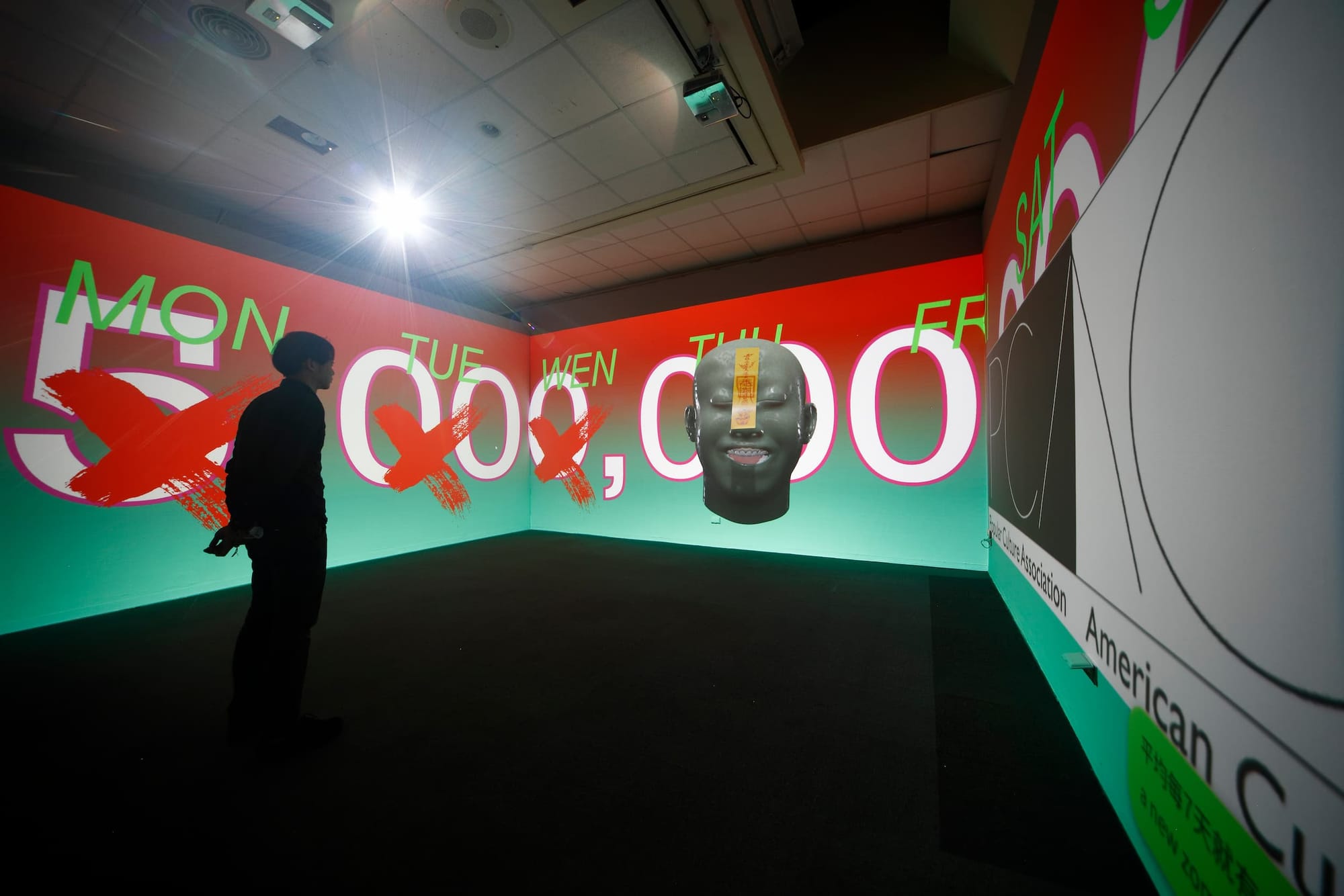
Li Yi-Fan, who represented Taiwan at the 2026 Venice Biennale, shows the earlier important_message.mp4 (2019), built from internet conspiracy theories. His question survives the jump from web forums to gallery wall intact: if the information driving a fear is fabricated, is the fear itself still real? Lin Yu-Liang’s Nothing But a Faint Shadow treats a shadow as a corrupted map, arguing that the terrain people walk through has already been pre-targeted by systems they never consented to.
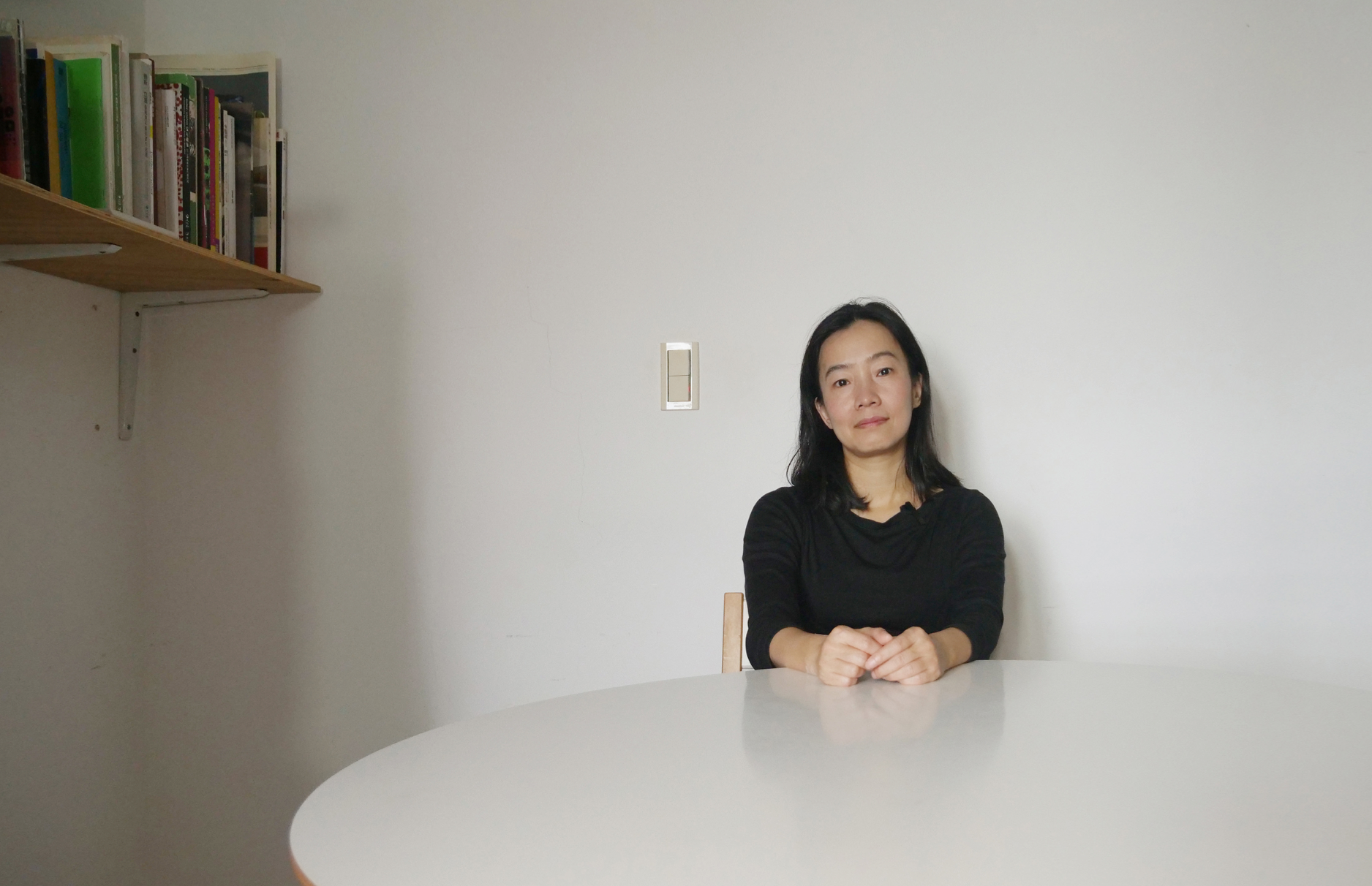
Ting-Ting Cheng’s Audio Description stages three near-identical interviews with a war correspondent before revealing the subject is an actor, a slow reveal engineered to unsettle trust in every piece of war footage that follows it.
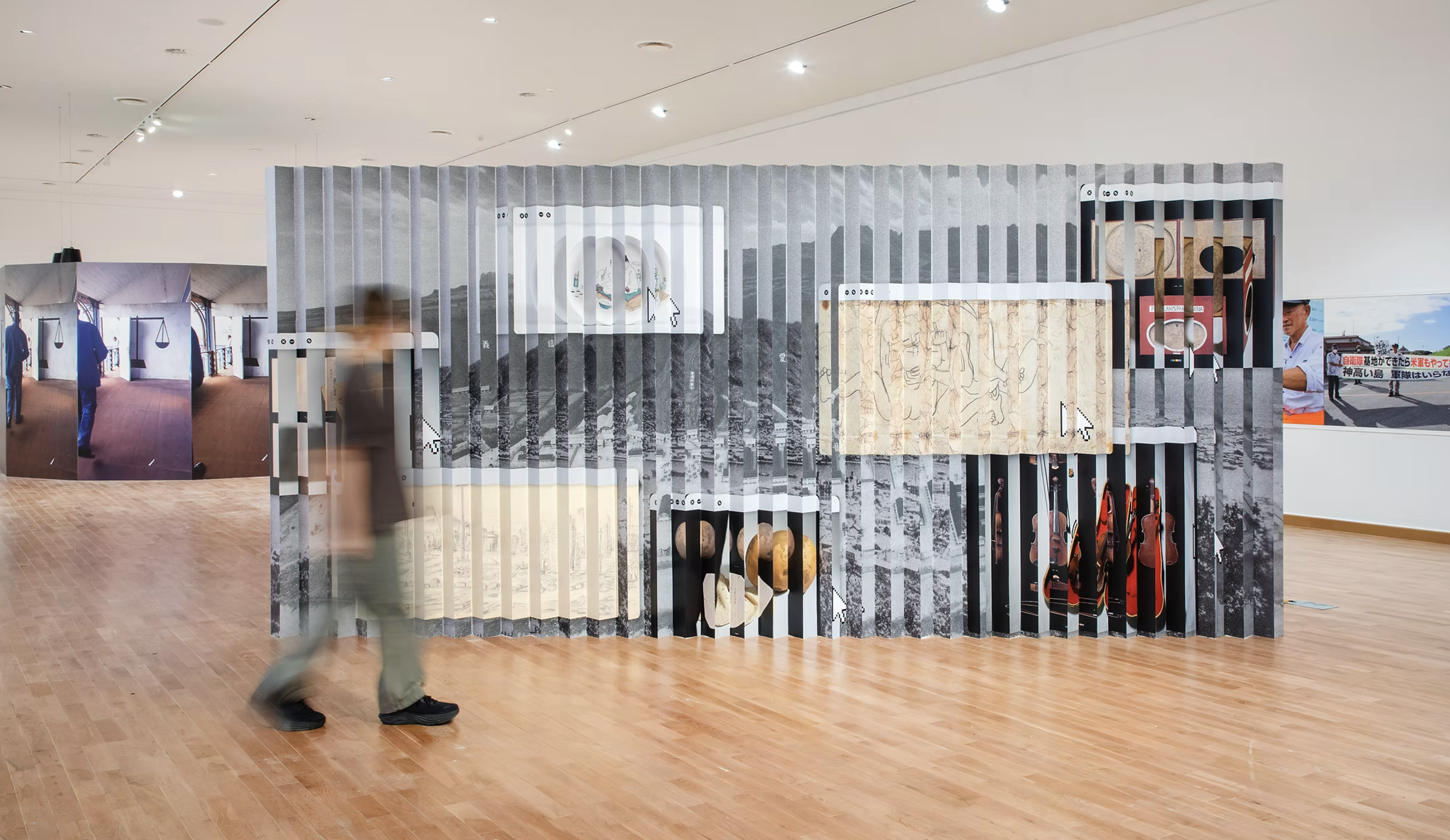
Chang Wen-Hsuan’s Data Exceeds the Limit (2023–2024), originally commissioned for the 2024 Busan Biennale, pairs Green Island’s White Terror-era prison with wartime Busan across a two-channel video of fragmented first-person testimony, part of her ongoing project File:\new-order.
What separates this pavilion from the long line of biennale shows that borrow gaming vocabulary for a wall text is that the mechanics actually generate the content. Juan Po-Yuan’s AI produces a first person shooter by accident, mistaking archival photographs of bunkers for level geometry because that is the visual grammar its training data taught it to expect. Cheng Hsien-Yu’s tracking spotlight borrows directly from the sensor logic that makes stealth games and surveillance software structurally identical. The instance-dungeon concept itself does real curatorial work: it explains why Taiwan’s Cold War does not read as history in the past tense, but as a level that keeps respawning with the same boss.
The exhibition’s politics extend past its content into its own signage. Gwangju Biennale organizers initially renamed the space NTMoFA Pavilion, dropping Taiwan, before Taiwan’s Ministry of Culture protested and the original name was restored. Chinese Ambassador to South Korea Dai Bing then lodged a formal complaint with Gwangju’s mayor, and artists representing the China Pavilion withdrew from the biennale in response. NTMoFA director Chen Kuang-Yi called it fortunate that the pavilion opened under its intended name in a city defined by its own democratic uprising, while curator Chen Hsiang-Wen insisted the exhibition’s title was not a reaction to the dispute but a concept the team had been developing well before it erupted.
The gray zone, in other words, found the pavilion before the pavilion found its name.