GAME ART: KALMAN POOL’S SPACE’M (2026)

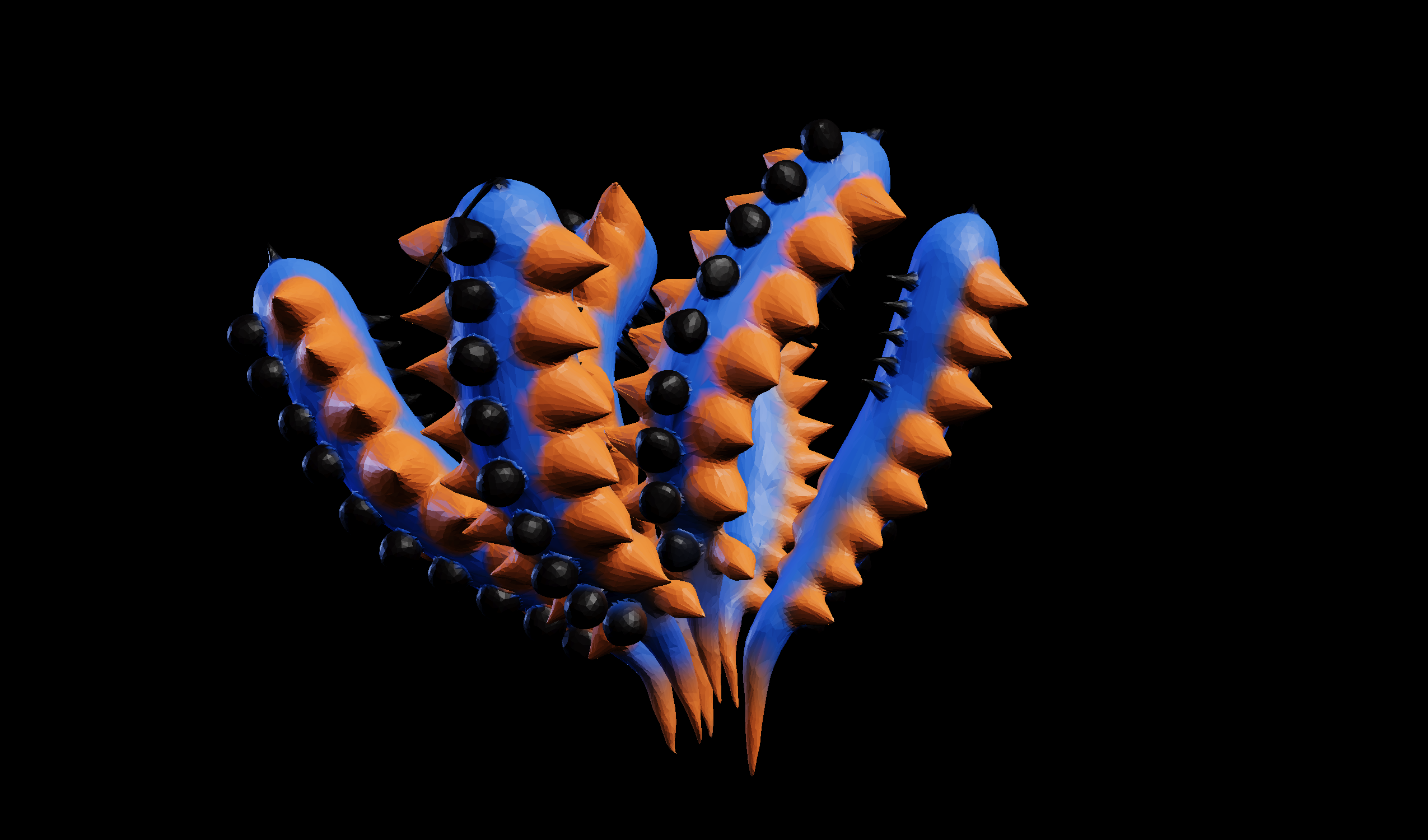
The Shenzhen-based artist’s VR sculptures have entered a browser-based game. Their appearance in a virtual amusement park raises questions about how collecting changes our encounter with sculpture.
At the entrance to SPACE M, a transparent container holds dozens of purple boxes. Visitors can “OPEN A BLIND BOX” or enter a three-dimensional park. In a screenshot of the park, a large pink creature with branching appendages looms above fluorescent vegetation, with a Ferris wheel behind it. A creature that might command attention in isolation becomes one element among the attractions of a designed environment.
SPACE M, currently presented as Mystery Opera, brings 124 creatures derived from his sculptures and paintings into a browser-based art game. Its interface combines randomized discovery with an inventory labelled “MY CREATURES”. The project extends Pool’s practice of translating sculptural forms between virtual space and physical installations. Here the translation also changes the conditions under which an audience encounters them.
Born in Guangzhou in 1996 and based in Shenzhen, Pool studied at the School of the Art Institute of Chicago and the Royal College of Art. He began sculpting in virtual reality in 2018, using handheld controllers to shape objects through bodily movement. His growing Creature Archive, developed over eight years, documents 339 life forms. Some have subsequently become monumental inflatables or fibreglass sculptures, while others remain digital objects. The archive therefore records related works whose material existence varies considerably.
Virtual reality allows Pool to construct forms that disregard familiar constraints of balance and physical support. Heads multiply and extremities merge into bodies punctured by cavities. His creatures resemble aquatic organisms or exotic plants, yet their anatomies follow no identifiable species. Eyes and teeth invite recognition, even when the relationship between bodily parts remains impossible to resolve.
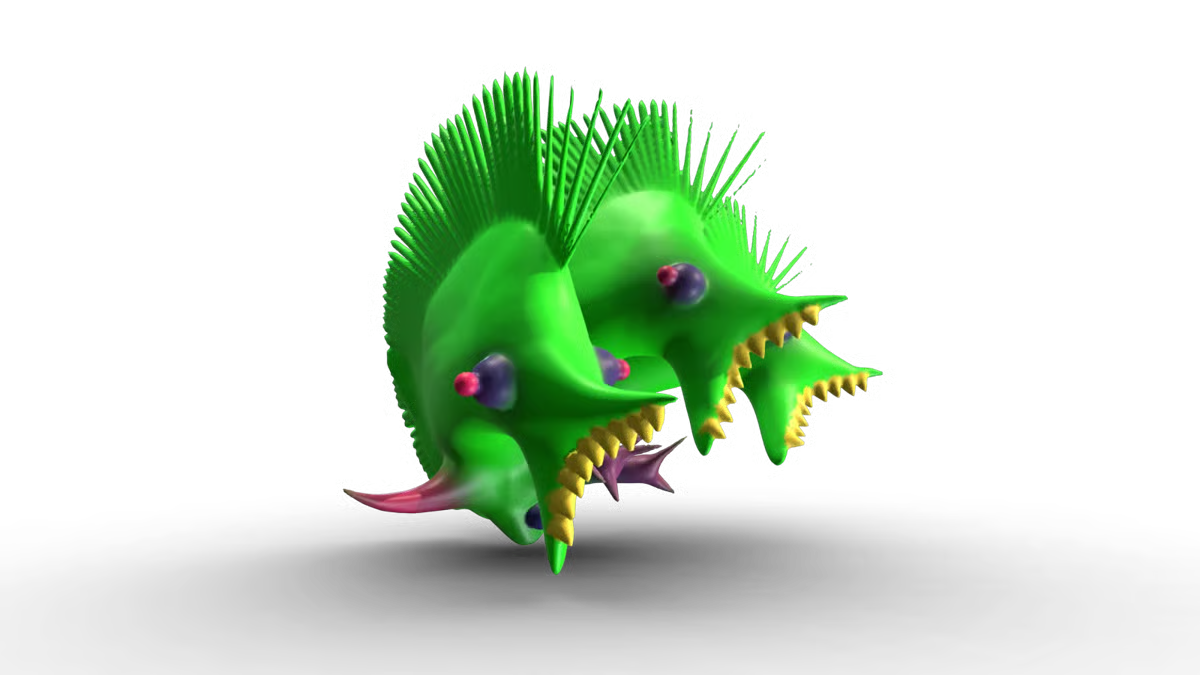
Consider alasia (2024), whose luminous green body supports three fish-like heads with projecting teeth and purple eyes. Its spiny crest adds another layer to an already unstable anatomy. Repetition establishes a family resemblance between the heads without granting the creature a single, dominant face.
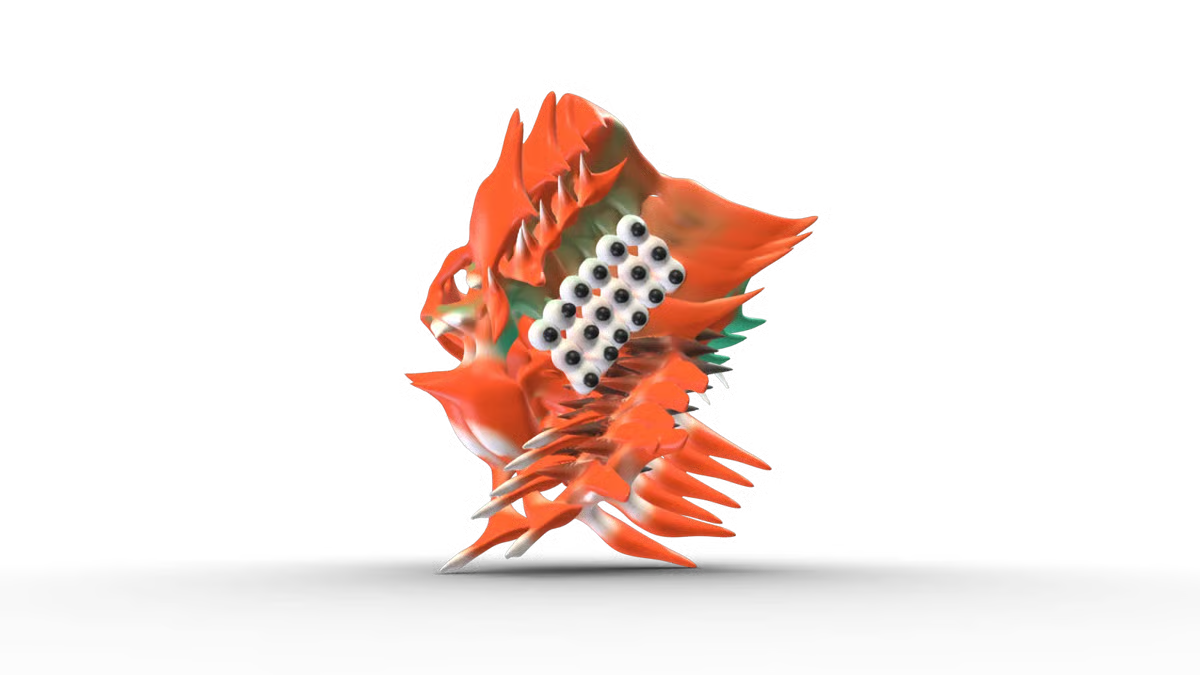
In overwhelmed (2024), proliferating eyes make repetition a defining feature of the creature’s morphology. Such duplication belongs to the possibilities of the sculpting software itself.
Inside SPACE M, these individually modelled objects encounter the conventions of collectible entertainment. The blind box, familiar from figurine culture and chance-based videogame rewards, withholds a creature’s identity until an interface action reveals it. Visitors can add discoveries to a personal collection. This may encourage repeated encounters, but it may also shift attention towards accumulation. A gallery allows spectators to approach a visible object at their own pace. Here the first encounter is organized around surprise. The difference concerns the sequence in which visibility and choice become available.
The amusement park introduces a related ambiguity. The Ferris wheel is recognizable, while the pink organism has no apparent purpose. It could be an inhabitant or an attraction. This uncertainty recalls Cao Fei’s RMB City (2007–11), built in Second Life, where a Ferris wheel rises above the Monument to the People’s Heroes, alongside other unlikely combinations of familiar architecture and fantastic structures. Cao rearranged symbols of urban modernization. Pool inserts creatures from an existing archive into the architecture of leisure. Their political implications are obviously different.
Pool’s physical installations reveal another set of constraints. Forms conceived in virtual space become sealed synthetic bodies whose dimensions and structural integrity depend on fabrication and internal air pressure. They remain susceptible to leakage and deflation. The apparently frictionless digital surfaces acquire material weight and require ongoing maintenance.
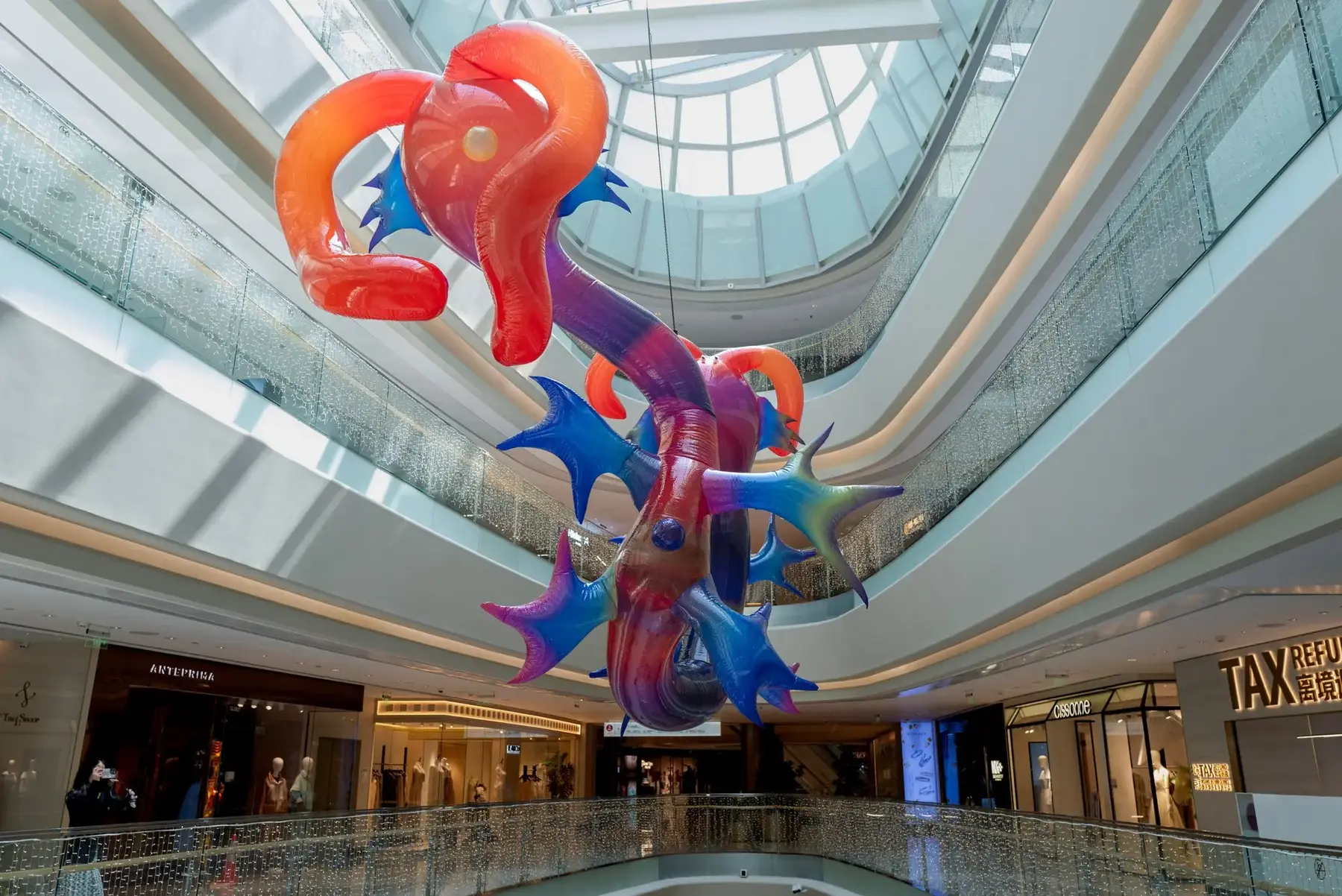
In BOY: Twin Genesis (2026), presented at China World Mall in Beijing, two intertwined bodies form a suspended PVC sculpture approximately five metres high. The object’s dependence on inflation gives its apparent weightlessness a material cost. Its placement in a shopping centre also brings contemporary sculpture into the setting of consumer entertainment. Pool’s forms can function as spectacle even as their anatomies resist easy recognition. Their position between architectural ornament and autonomous artwork remains unresolved.
SPACE M dispenses with physical fabrication but introduces the constraints of an interface. Software determines when a creature appears, how closely it can be examined and what happens after discovery.
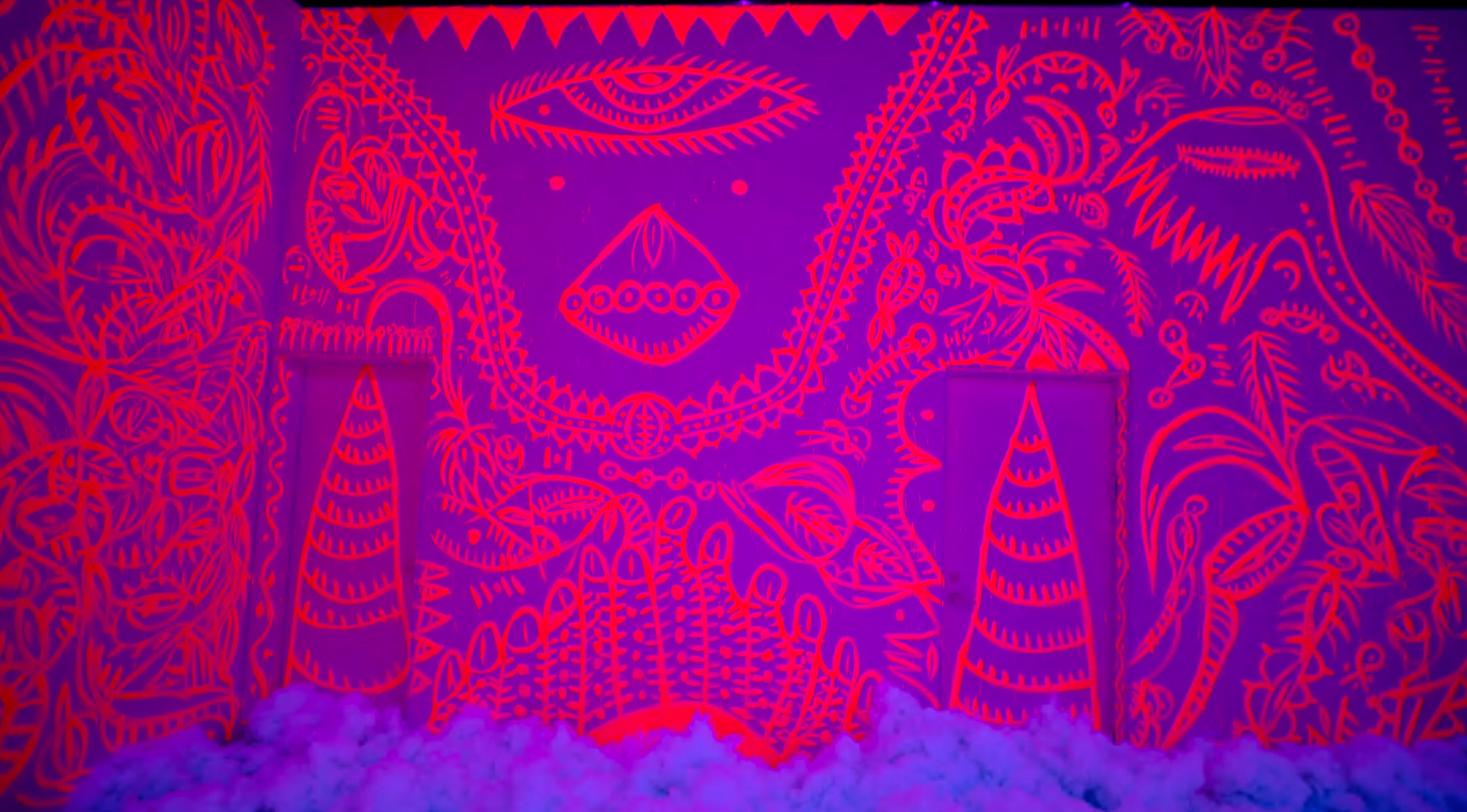
Since 2015, Pool has developed Luminous Opera, an invented writing system without fixed phonetic meaning. Its fluorescent signs cover paintings and installations, including the Luminous Opera Corridor Installation, first realized in 2021 and reactivated in Shanghai in 2025. Visitors encounter the marks while moving through illuminated space, but cannot decipher them as ordinary text. Their sequence depends on the passage through which the spectator walks and the lighting that makes the inscriptions visible.
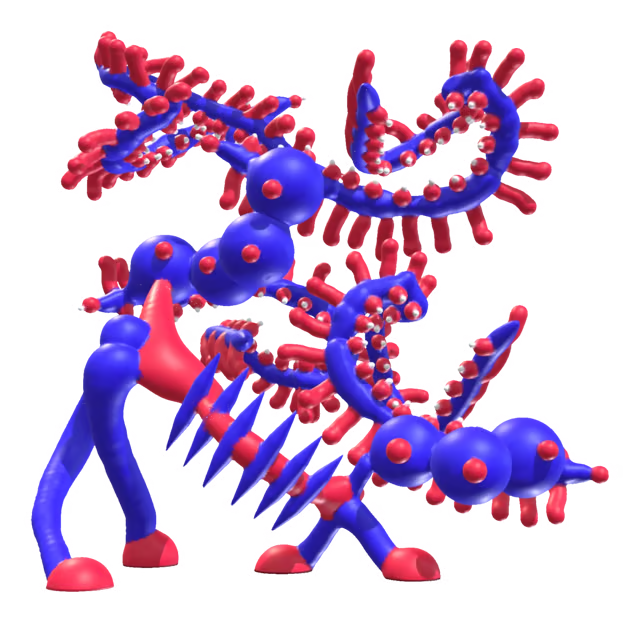
This writing has recently become a source for new sculpture. In Autogenesis, initiated in September 2026, Pool investigates whether a generative model trained on his sculptural archive can produce unfamiliar three-dimensional bodies. A glyph from Luminous Opera acquires depth and becomes an initial form for generation. The model does not interpret its meaning.
Pool distinguishes this experiment from New Genesis, which used externally pretrained image and image-to-3D models. For Autogenesis, he reports training geometry and colour models on his own work. The training corpus comprises 682 saved versions, including drafts and intermediate studies
The results remain provisional. Pool reports experiments in which colour and overall shape survived generation while anatomical relations deteriorated. Some outputs broke into disconnected fragments or failed to reconstruct missing structures. The models’ suitability for physical fabrication remains unestablished. The project also involves AI-assisted engineering, while its musical component uses an externally pretrained model.
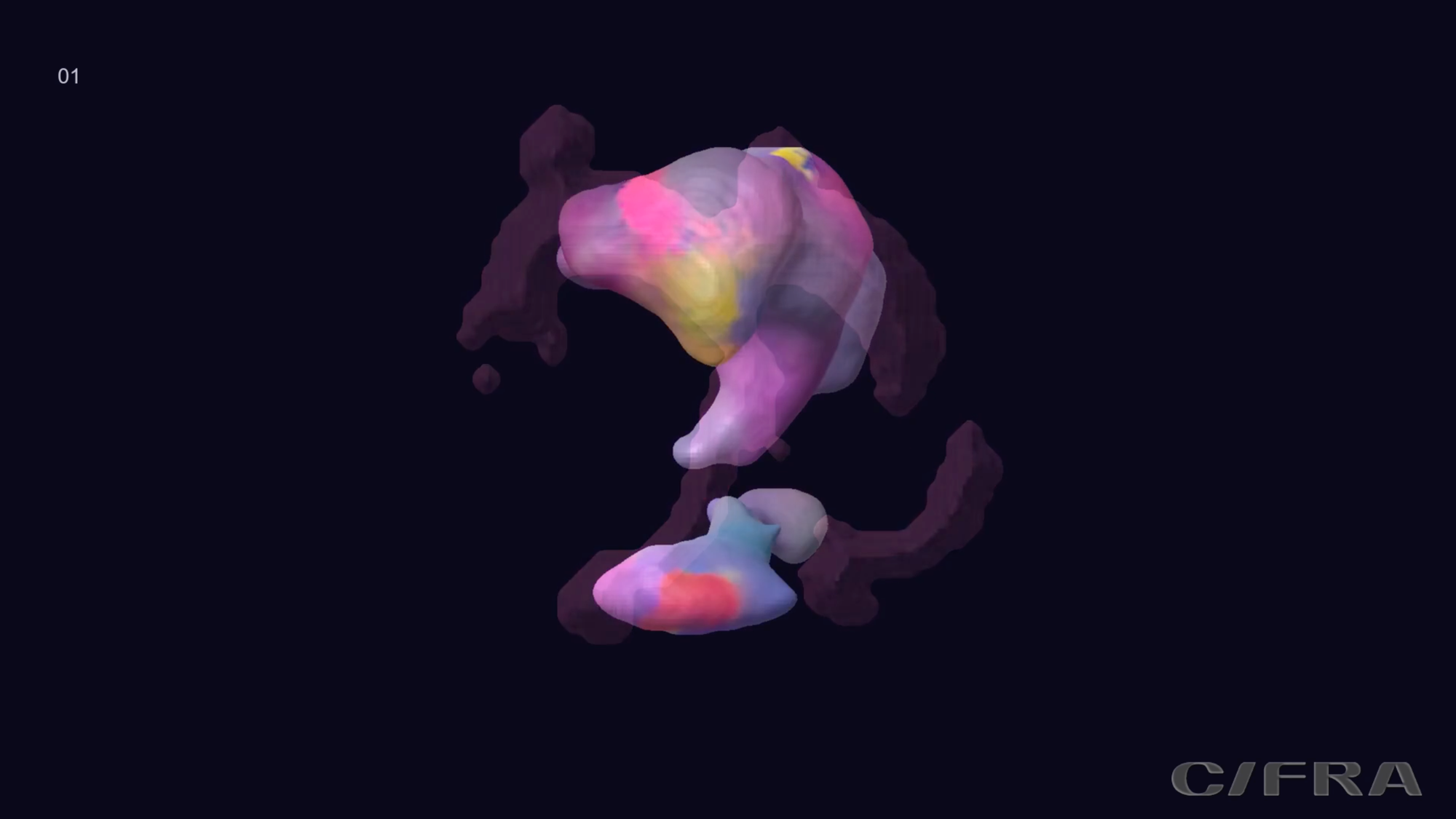
In Autogenesis: The Selection Log (2026), an 88-second single-channel video presented on CIFRA, three generated bodies initially share the screen, each accompanied by a musical voice. Two disappear in succession, together with their voices. The remaining creature occupies the final image.
The two discarded bodies disappear from the film, although the act of choosing between them remains visible in its structure. In SPACE M, a visitor can open another blind box, but cannot decide which creature appears. The invitation to discover conceals the limits of that control.