GAME ART: LILY BELMIRA’S CITY BY MICHAEL HEIZER (2026)
I want to see City paved over and turned into free housing or a nuclear waste repository or something else that helps people. (Lily Belmira)
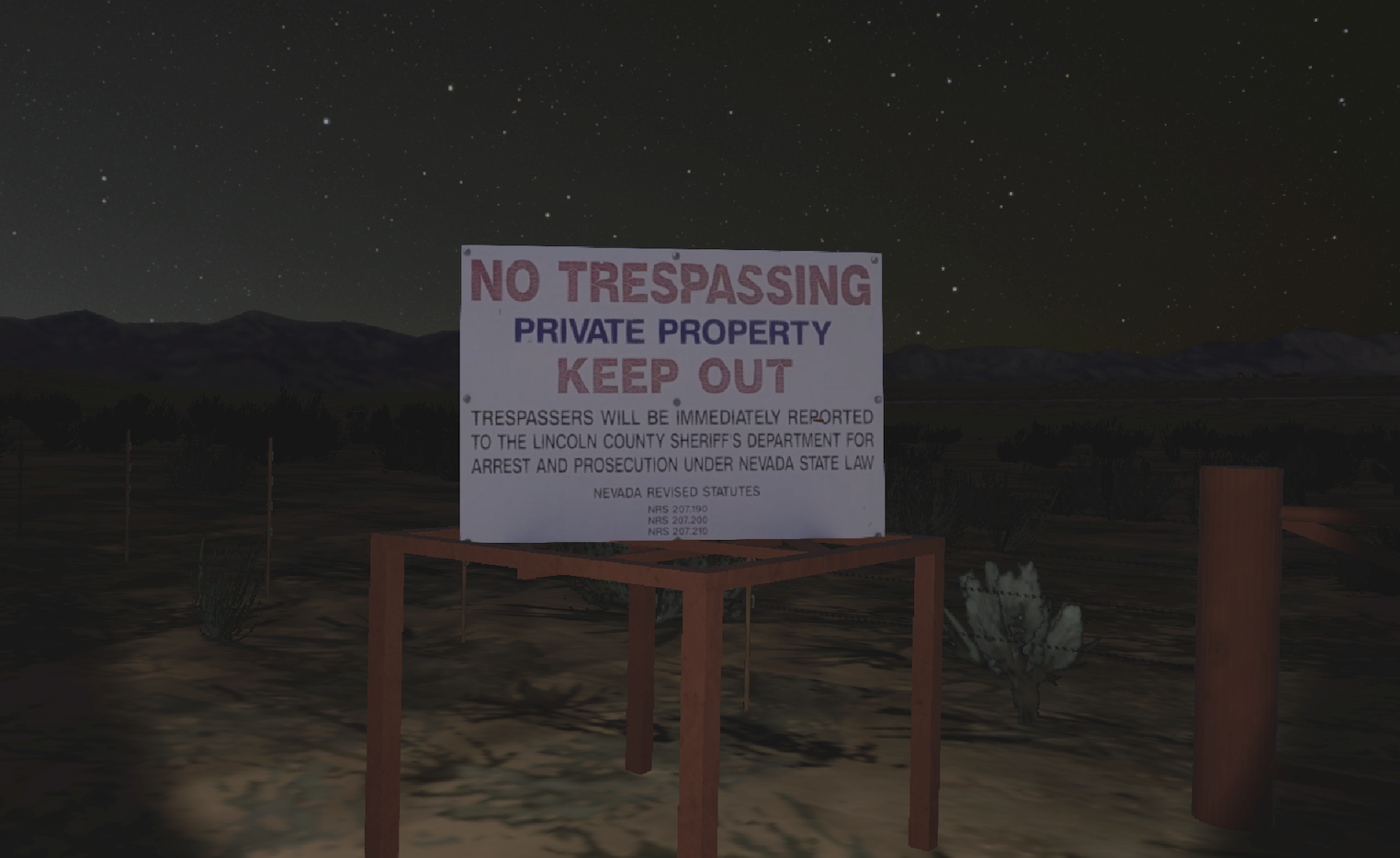
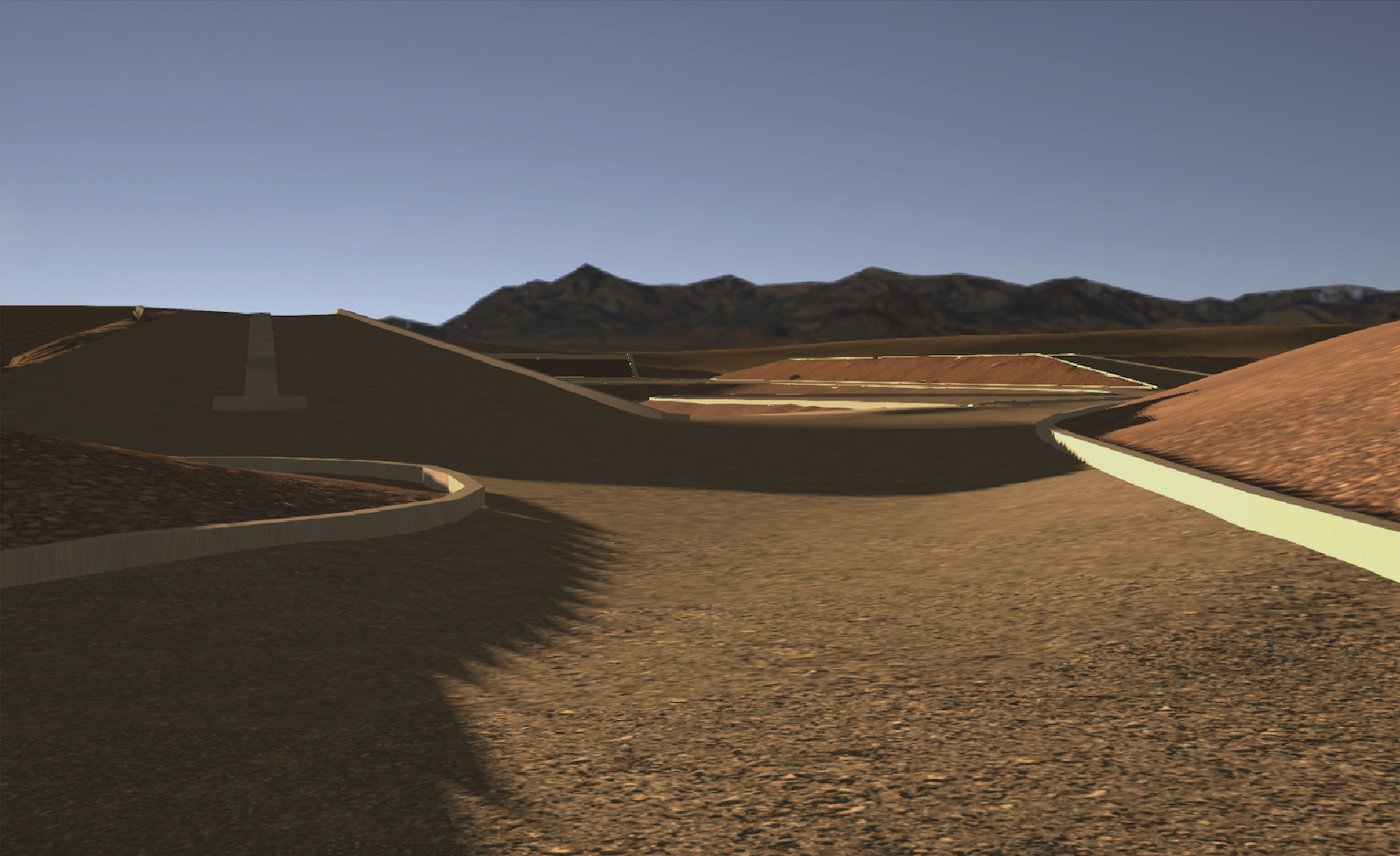
Lily Belmira’s City by Michael Heizer [Free Version] begins outside a fence. Beyond it, a partial reconstruction of Michael Heizer’s City (1970–2022) takes the form of a browser-based walking simulator. Belmira derived the terrain from public LiDAR data and Google Maps satellite imagery, then constructed the sculptural forms by hand. The player moves with the W A S D keys and the mouse. Holding SHIFT allows the player to accelerate their pace.
Released on itch.io on 29 July 2026, the HTML5 game converts one of contemporary art’s most tightly regulated viewing experiences into an explorable digital environment. The Nevada work resembles a premium edition governed by private ownership and an appointment system. Belmira’s free version begins in a browser tab. Trespass is part of the level design. This subversive playfulness is not unique and the artist explicitly acknowledges it.
City opened to visitors in 2022. For 2026, the Triple Aught Foundation scheduled trips from 5 May to 19 November, Tuesday through Thursday, with no more than six visitors aged sixteen or older. Admission costs $150 for adults and $100 for students, and each group receives approximately three hours on site. The season is sold out, subject to cancellations. Over-tourism is out of the question.
Some of these restrictions follow from logistics. The foundation cites remoteness and restricted transport capacity. Weather can make the journey unsafe. Erika Balsom’s account for Frieze identifies how limited attendance shapes perception. City deliberately denies the visitor a complete view: its routes and earthworks disclose themselves through movement before receding as the body changes position. The journey through a region shaped by extraction and nuclear militarization also enters the encounter before the visitor reaches the gate. None of this appears as subject matter, yet it conditions perception. The solitude on which Heizer’s work depends remains inseparable from the privilege produced by scarce access.
Belmira translates this duration into first-person movement. The model allows players to relate the terminal complexes to the intervening earthworks and alter the viewpoint at will. They cross the site without fatigue, thirst and desert exposure. Itch.io estimates a session at roughly thirty minutes, about one-sixth of the allotted time in Nevada. A simulated camera can traverse the coordinates while avoiding the material resistance that governs a visit.
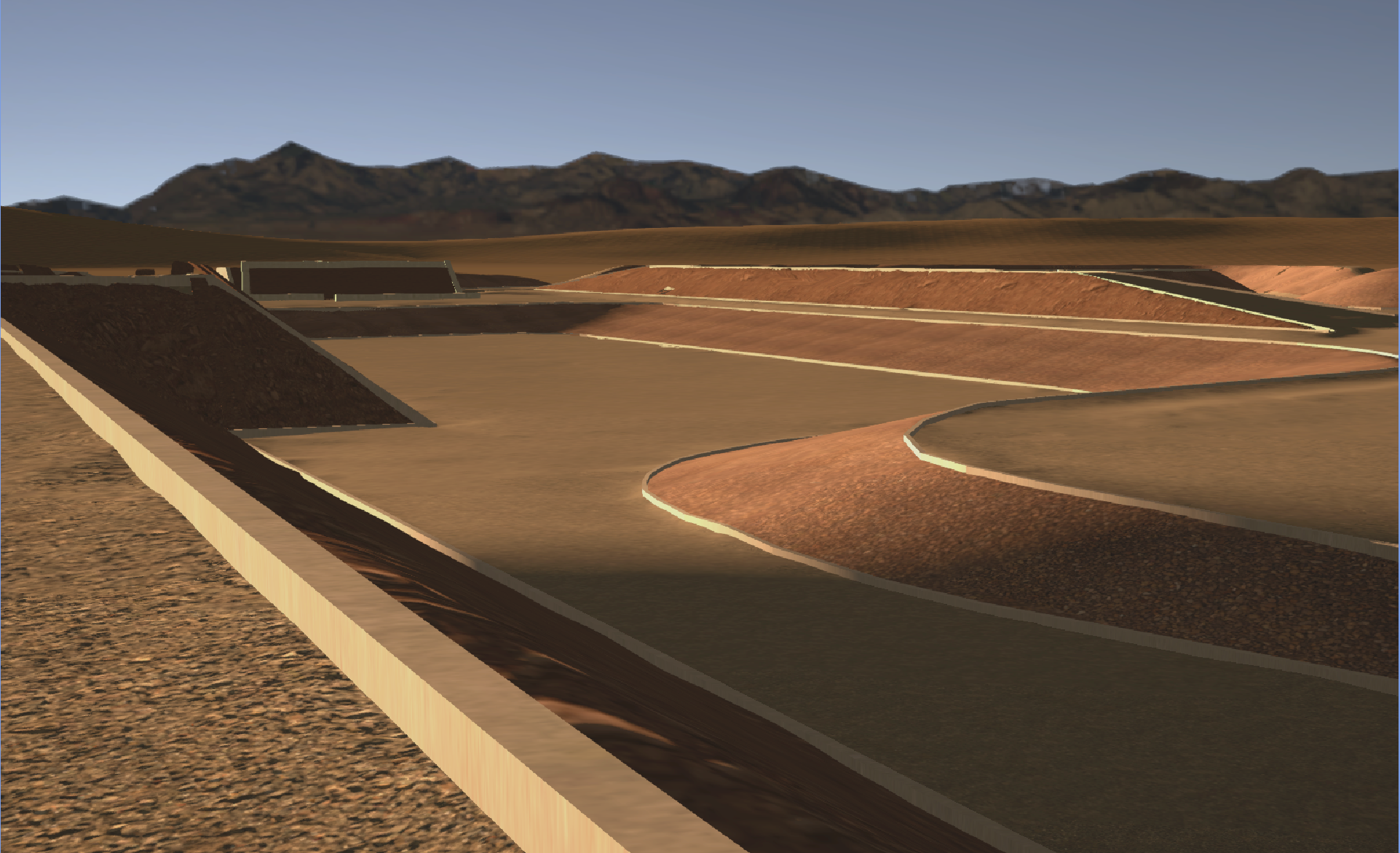
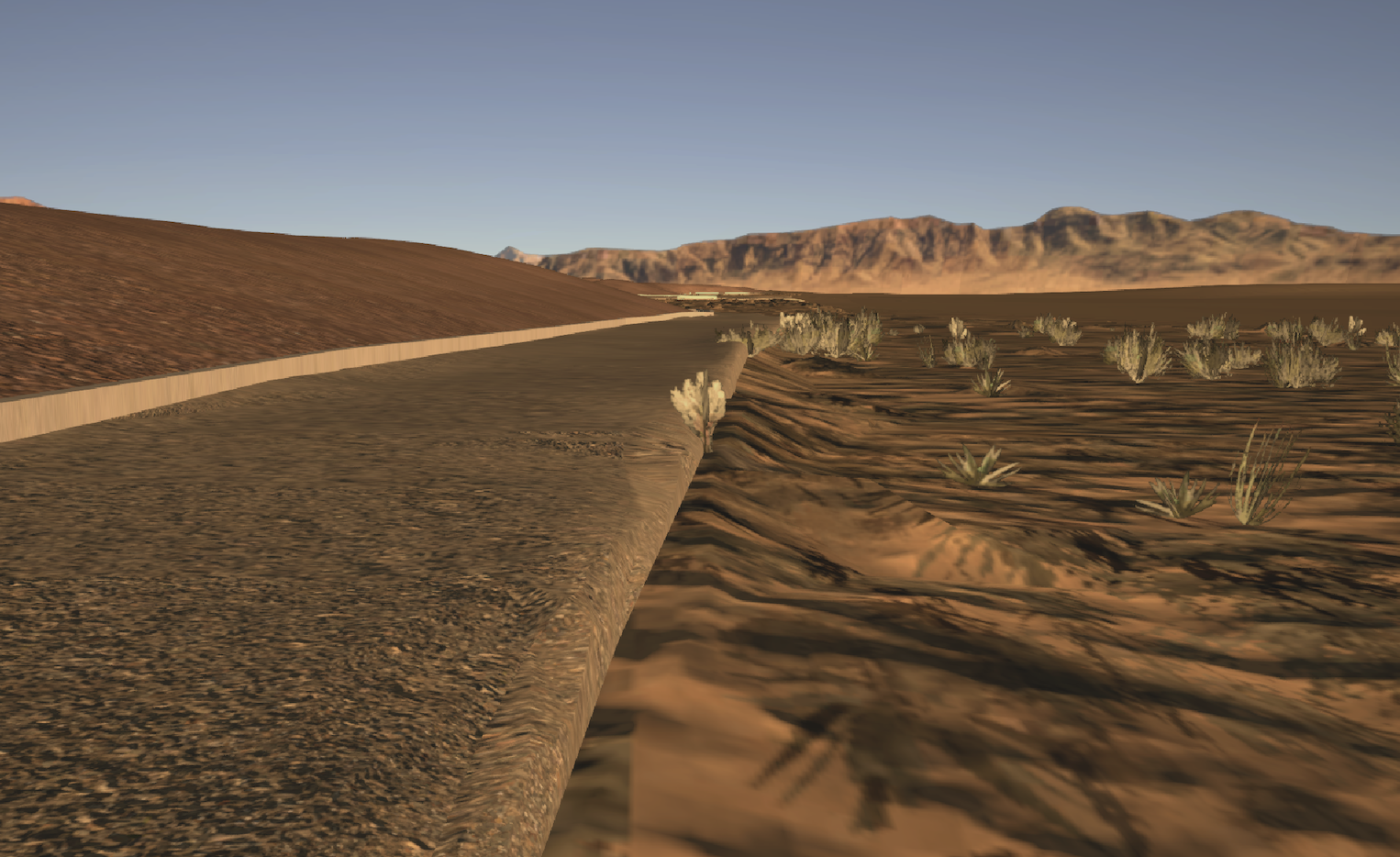
The visible coarseness of the model (“the downloadable version has better shadow quality”) keeps that difference legible. Simplified mountains and repeating ground textures identify the project as an interpretation assembled from remote measurements and public images. Its approximations separate geospatial capture from embodied place. Early coverage, however, has often subordinated that qualitative distinction to a ready language of democratization. Artforum describes the work as a replica, while Devorah Lauter in ARTnews presents it as a means of visiting the site virtually, although her report acknowledges the simulation’s physical limits.
Such terms identify a new route to Heizer’s forms, yet they can confuse access to a representation with access to the sculpture. Belmira makes its spatial organization explorable while the temporal and social conditions of Garden Valley remain outside the executable and the experience. These accounts register a genuine expansion in circulation. Their language nevertheless risks converting a quantitative gain into experiential equivalence. More people can explore a model of Heizer’s spatial organization. The duration, physical resistance, social conditions, and meteorology of Garden Valley remain outside the executable.
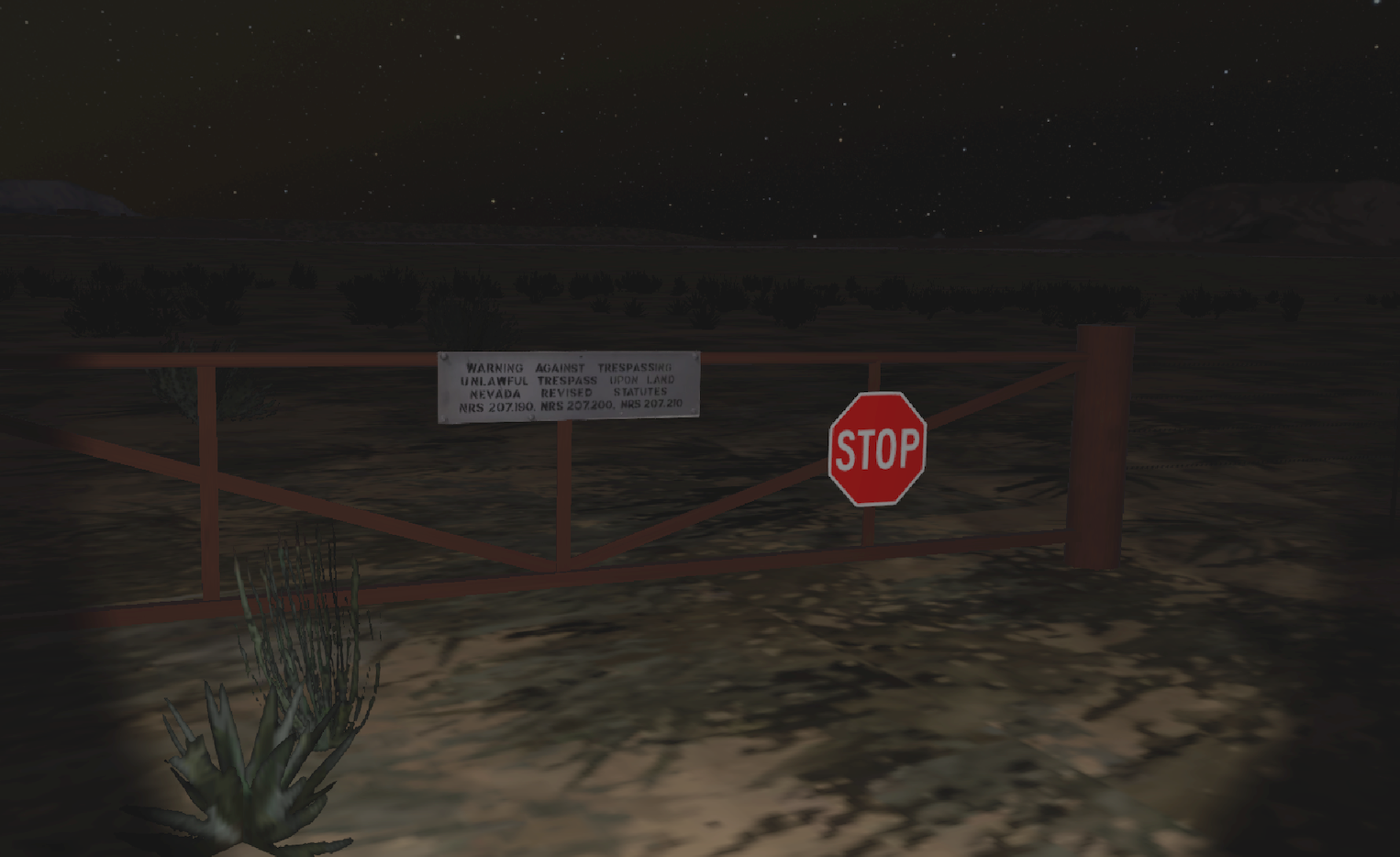
The fence concentrates the game’s institutional critique. On the physical site, unauthorized entry constitutes trespass. Triple Aught identifies the land as private property and prohibits visits without prior arrangement. Within the simulation, that prohibition becomes a rule to circumvent, a goal to archive, a rewarding puzzle: progress depends on finding the breach. The player rehearses unauthorized movement through a digital proxy, while the property regime in Nevada is intact.
Moreover, Triple Aught asserts control over the sculpture’s visual circulation. Its website invokes federal copyright and prohibits unauthorized image-making and distribution.
Belmira constructs her model from geospatial sources that lie outside this approved and sanctioned visual economy. LiDAR records the terrain without observing the foundation’s conditions of spectatorship. A property can be closed to uninvited visitors while remaining measurable or visible from afar. Ditto for Google Earth (just ask Barbara Streisand).
Remote measurement, however, cannot settle the history of the ground it records. Triple Aught acknowledges that City occupies the ancestral territories of the Nuwu (Southern Paiute) and Newe (Western Shoshone). In 2022, Alicia Harris has challenged the persistent description of such desert sites as vacant, since it obscures Indigenous relations to place and ongoing legal struggles. Fawn Douglas has asked what relationship City sustains with Indigenous people beyond the foundation’s acknowledgement.
The problem returns through Belmira’s technical process. LiDAR reduces the ground to elevation, while satellite imagery supplies a surface. A gem engine (Unity) converts those abstractions into an environment governed by geometry and collision. The resulting Garden Valley contains no social encounter, and its contested legal history leaves no mark on the terrain. The paradox persists: a free browser game widens the circulation of Heizer’s forms while repeating the conversion of land into a reusable asset.
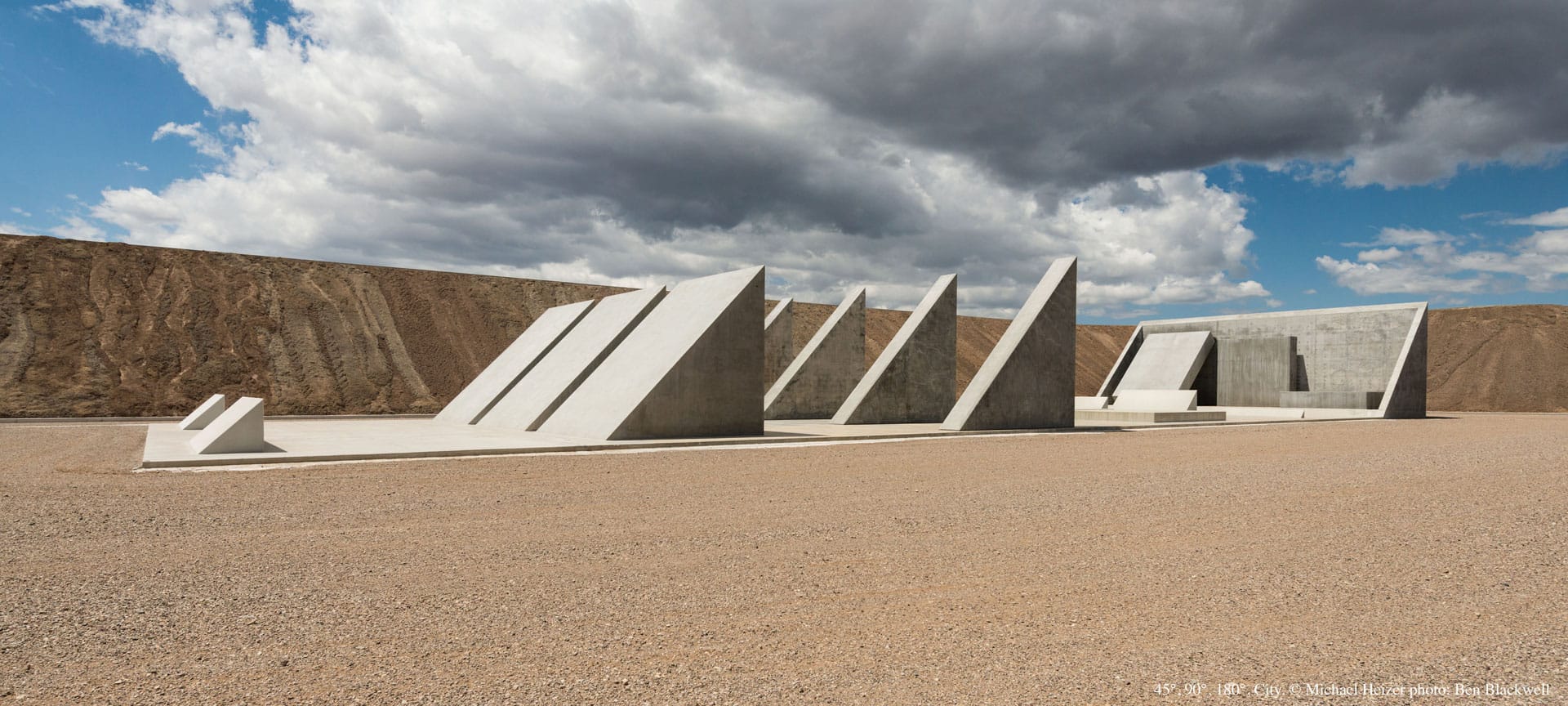
The 2015 proclamation establishing Basin and Range National Monument protected federal land surrounding City and instructed the management plan to permit reasonable use of existing roads for public access. It did not prescribe admission to the privately held sculpture. Triple Aught retains discretion over entry.
Interestingly, Belmira’s accompanying reflections move from institutional criticism toward speculation about Michael Heizer’s relationship with his archaeologist father, Robert Heizer. She began the project intending to diminish City’s authority, then found beauty in the forms she was modelling. As the reconstruction progressed, she developed a speculative empathy for the artist she had set out to oppose. This psychological reading remains conjectural. Nevertheless, its uncertainty gives the project an unexpected emotional tension. Sustained attention complicates antagonism, and the critical copy becomes susceptible to the original’s formal power.
City by Michael Heizer [Free Version] depends on the discrepancies it preserves. Its visible shortcuts, accelerated movement, breached fence, and desert reduced to data prevent seamless substitution. Belmira opens a route through an iteration of City that is materially and conceptually separate from its reference.
Nevada remains elsewhere.