EVENT: F(R)ICTION: ART ET JEUX (OCTOBER 15–NOVEMBER 15 2026, MONTRÉAL, QUÉBEC)

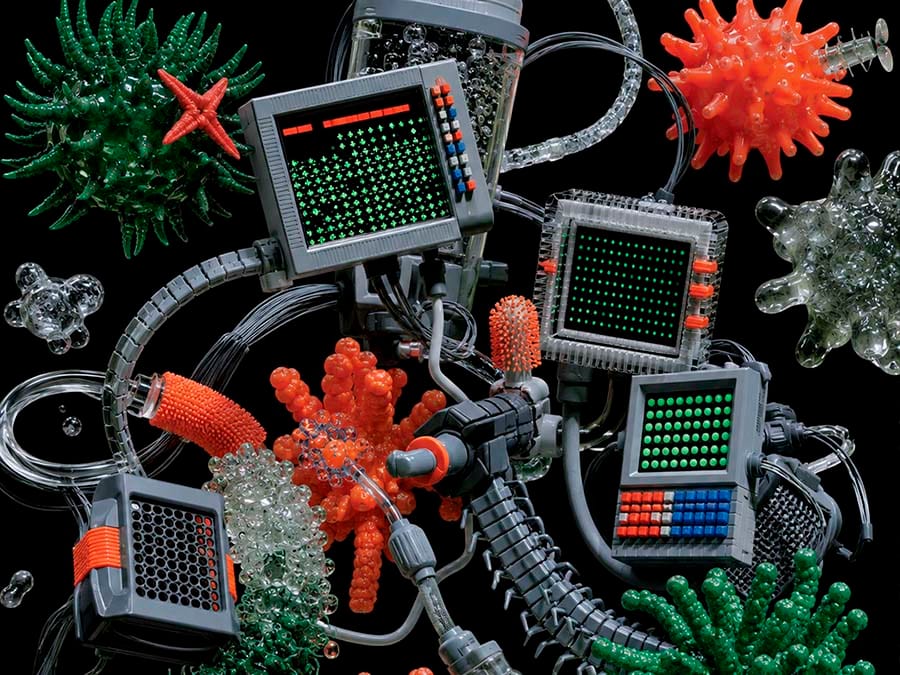
F(R)ICTION: art et jeux
8th ELEKTRA International Digital Art Biennale
Curated by Lynn Hughes and Ida Toft
October 15–November 15, 2026
Arsenal art contemporain Montréal
2020 rue William, Montréal, Québec
The exhibition is open Wednesday through Friday from 11 a.m. to 9 p.m. and Saturday and Sunday from 10 a.m. to 7 p.m.. Final admission is one hour before closing. General admission is C$25, with reduced rates for students, visitors aged 65 and over, and younger visitors. Children ten and under enter free. Tickets permit subsequent visits at no additional charge, subject to capacity.
From October 15 to November 15, ELEKTRA’s eighth International Digital Art Biennale will occupy Arsenal art contemporain in Montréal with F(R)ICTION: art et jeux (F(R)ICTION: Art and Games), an exhibition curated by Lynn Hughes and Ida Toft.
The scale is substantial: approximately forty participating creators, 35 playable works and more than one hundred hours of gameplay. This is, by far, one of the most exciting game art event of 2026.
The quantity of artworks on display is only part of the proposition. Hughes and Toft have organized F(R)ICTION around two histories that have frequently developed beside each other. One begins within contemporary art, where artists appropriate videogame interfaces, engines, virtual environments and ludic structures. The other develops inside experimental game-making, including independent and research-based communities whose practitioners have investigated what games can do since at least the 1980s. The exhibition proposes contact between these histories instead of absorbing one into the other.
This distinction immediately gives F(R)ICTION greater historical specificity than another exhibition organized around the proposition that videogames have become art. Institutional recognition is already well established. The more difficult task now concerns genealogy: which practices are incorporated into the history of game art, which remain identified primarily with game design, and what becomes visible when these categories occupy the same exhibition?
The title provides the curatorial method. Remove the parenthetical R fromF(R)ICTION and “friction” becomes “fiction.” ELEKTRA describes these as the exhibition’s corresponding ideas of encounter and imagination. Its account of friction draws explicitly on anthropologist Anna Lowenhaupt Tsing, whose 2005 book Friction: An Ethnography of Global Connection uses the physical dependence of movement upon contact as a model for heterogeneous and frequently conflicting social interactions. Tsing’s familiar example is the wheel that moves only when it meets the road. ELEKTRA transfers that proposition to artistic fields: difference between practices is treated as a condition through which something can move. To be clear, Tsing’s “friction” emerged from an anthropological study of globalization, resource extraction and uneven relations of power in Indonesia. It describes considerably more than productive interdisciplinary contact. Hughes and Toft borrow its mechanical principle rather than its entire political argument. The distinction clarifies the exhibition’s premise, since the participating practices have never entered art institutions on equal terms. Experimental videogames, queer games, Indigenous game-making, artists’ games and gallery installations have developed through different economies of production, systems of distribution and communities of criticism. Their convergence should retain those differences.
ELEKTRA is particularly well positioned to organize such an encounter. The Montréal organization began its annual festival in 1999 and established the International Digital Art Biennial in 2012. Its inaugural BIAN, organized around the theme PHENOMENA, attracted more than 30,000 visitors. Subsequent editions addressed embodiment, materiality, technological perception and other concerns central to digital art. The seventh Biennale, ILLUSION in 2024, brought more than thirty artists to Arsenal for an exhibition concerned with post-truth, AI and the increasingly unstable border between factual and synthetic images. The 2026 edition therefore represents a marked concentration of ELEKTRA’s broader digital-art remit around games as a medium with its own historical disagreements.
There is another relevant precedent. Fourteen years ago, in the same year that ELEKTRA launched BIAN, Lynn Hughes co-curated Joue le jeu / Play Along with Heather Kelley and Cindy Poremba at La Gaîté Lyrique in Paris. That remarkable exhibition converted roughly 5,000 square meters into a playable environment encompassing independent videogames, physical-digital hybrids and social games. Its stated purpose was to move away from familiar commercial blockbusters and present contemporary game culture through emerging forms of design and interaction.
Hughes’s involvement with games extends well beyond that exhibition. At Concordia University she helped establish Hexagram, co-founded the Technoculture, Art and Games research centre with Bart Simon, and later participated in the creation of the Milieux Institute for Art, Culture and Technology. Her research and artistic production have concentrated on interaction design, sensor-based games, participatory performance and experimental play.
Ida Toft approaches the subject through another route. An artist and researcher involved with experimental game creation since 2007, Toft completed a Concordia research-creation doctorate on vibrotactile media and artistic game development. Brittle Configurations examined four games in which vibration becomes a primary expressive modality and proposed situated, relational design against universal prescriptions of “good game design”. Toft is also ELEKTRA’s production director. The curatorial pairing therefore grows from a particularly Montréal-based history in which studio art, research-creation and experimental game design have already been in sustained contact.
The historical range of the announced F(R)ICTION roster makes such an argument tangible. Suzanne Treister provides one early route from contemporary art into videogame imagery. During the late 1980s she began making paintings based on imaginary games after spending time in Soho amusement arcades. Following the purchase of an Amiga in 1991, she produced Fictional Videogame Stills (1991–92) with Deluxe Paint II, photographed directly from the monitor, followed by her Software series of fictional software packages. In a GameScenes’ 2010 interview, Treister described these works as invented games whose objectives, identities and virtual spaces departed deliberately from the conventions she encountered in commercial software. Treister is especially pertinent to the historiographic logic of F(R)ICTION. Her imaginary screenshots precede the stabilization of “game art” as a curatorial category and belong to an artistic practice that had already been concerned with speculative systems, technological belief and fictional institutions. Her recent retrospective Prophetic Dreaming at Modern Art Oxford returned Fictional Videogame Stills to the context of more than three decades of work.
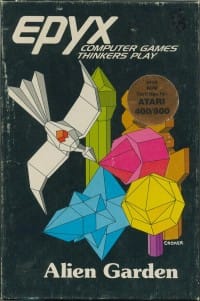

Bernie DeKoven and Jaron Lanier push the chronology toward game design itself. Their presence in the ELEKTRA roster recalls Alien Garden, published by Epyx for Atari 8-bit computers in 1982, designed by DeKoven and programmed by Lanier with Robert Leyland. In an interview with game scholar Jesper Juul, DeKoven remembered the project as an attempt to challenge assumptions about what constituted a videogame. Alien Garden had no enemy and no prescribed violence. Players encountered a field of crystalline organisms whose behavior had to be discovered experimentally, while difficulty emerged partly from choices made during play. The design was produced under an extreme technical constraint: approximately 4K of available memory.
Including DeKoven and Lanier complicates histories that locate experimental games primarily in the indie culture of the 2000s. DeKoven’s wider work on play, including The Well-Played Game, predates the personal-computer game industry as it is now understood. Lanier subsequently developed Moondust for the Commodore 64, another early attempt to combine interactive computation with musical and visual composition. Whether one chooses to classify such works retrospectively as “art games”, “software toys”, experimental videogames or something else, their inclusion makes categorization itself part of the historical problem.

A later lineage appears through Anna Anthropy. ELEKTRA introduces Anthropy through Dys4ia (2012), her autobiographical game about hormone replacement therapy and trans experience, and through Rise of the Videogame Zinesters, published the same year. The book argued for small-scale videogame production as a form of personal expression available beyond professionalized development culture. Here the significance lies partly in distribution. A work can alter videogame culture without first entering a museum, and an inexpensive development tool can become as consequential to experimental practice as a technically advanced engine.
Pippin Barr has worked at the boundary between games, criticism and contemporary art from another direction. His projects routinely convert cultural institutions and standardized situations into playable systems. The Artist Is Present (2011) transformed Marina Abramović’s MoMA performance into a game about museum hours, queuing and waiting. Art Game (2013) subsequently turned artistic production, curatorial selection and professional failure into a procedural satire. His projects make the act of playing function simultaneously as criticism and performance.
The roster expands that alternate-game history through figures such as Robert Yang, Liz Ryerson, Kara Stone, Squinky D. Squinkifer, Melos Han-Tani and Davey Wreden.

Yang’s work has concentrated on queer identity, intimacy and digital architecture, with Radiator 2 among his best-known releases. Wreden occupies another position within experimental commercial culture through The Stanley Parable and The Beginner’s Guide, games that turn narration, authorship and interpretive authority back upon the player. ELEKTRA’s decision to put these makers beside gallery-based artists avoids treating independent games as a preparatory category waiting for art-world validation
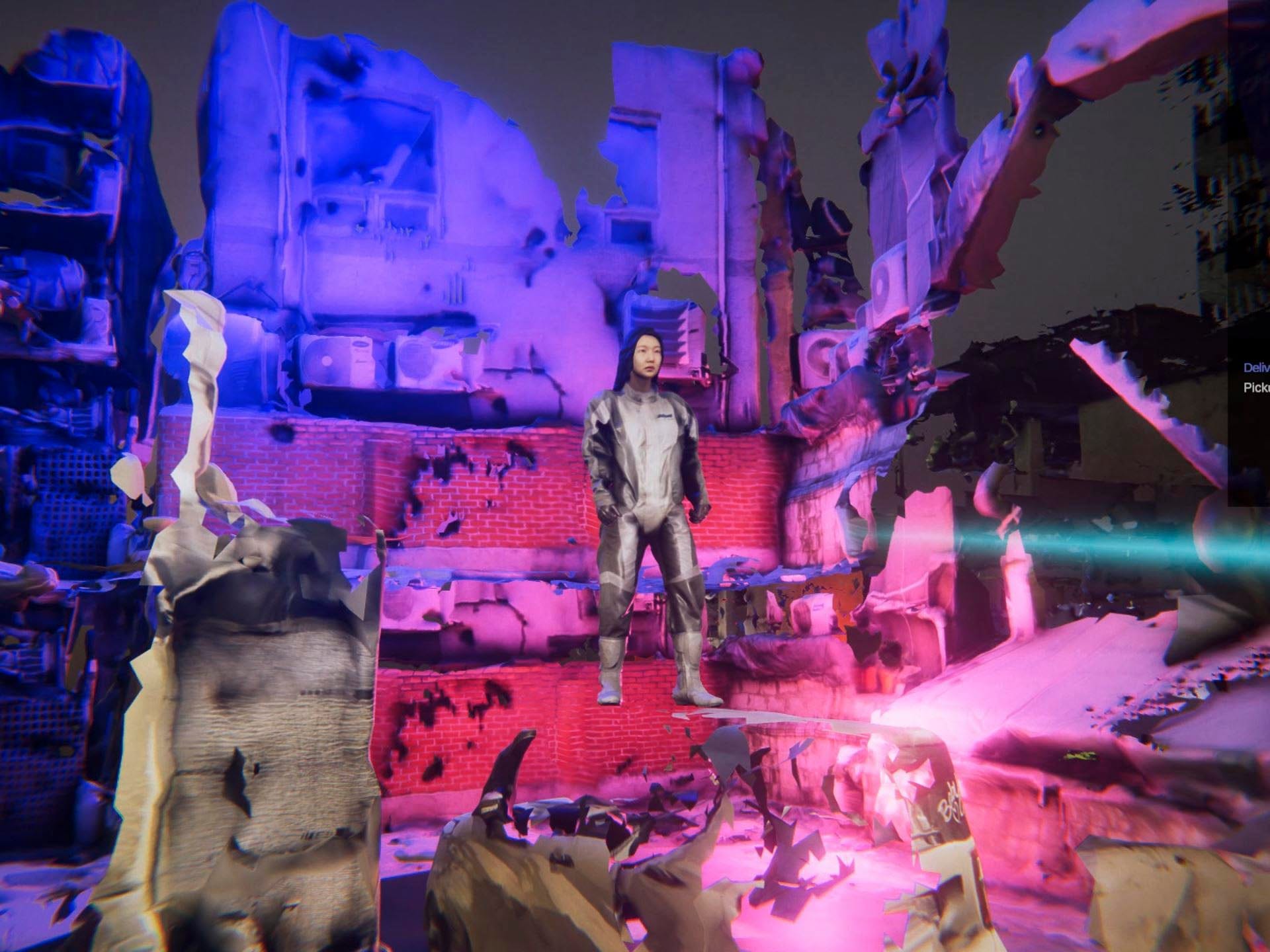
At the contemporary-art end of the exhibition, Ayoung Kim represents how thoroughly game engines have entered current moving-image and installation practice. Kim combines text, video, VR, AI and game-engine production within speculative narratives concerned with geopolitics and unstable realities. Her Delivery Dancer universe received the LG Guggenheim Award in 2025.
Leo Castañeda provides an even more immediate connection between game installation and major contemporary-art institutions. His practice crosses painting, virtual environments, sculptural furniture and game design. The Whitney Museum commissioned Camoflux Recall Grotto for the 2026 Whitney Biennial, where players inhabit an organic drone and cultivate “cyberflora” within an environment drawing on the Brazilian Amazon, the Florida Everglades and Latin American art histories. The work alters its pace as its simulated ecology changes, replacing rapid progression with a variable relationship among cultivation, resource collection and ecological excess. Castañeda moves from the Whitney Biennial to ELEKTRA’s roster within the same year, a useful indication of how permeable the institutional border around videogame practice has become.

Kara Stone’s Known Mysteries (2024) carries F(R)ICTION’s concern with experimental game design into the material infrastructure of digital culture. Set in a near-future Canada, the narrative follows Sorrow as she investigates the connection between her parents’ deaths and an oil company turned technology conglomerate that dominates her hometown. The game’s climate politics extend into its means of circulation: Known Mysteries was created for Stone’s Solar Server, an autonomous web server powered from her Calgary apartment by solar energy. Highly compressed video, found footage, low frame rates, and reduced file sizes are therefore aesthetic and infrastructural decisions at once. A carbon-impact study commissioned from AfterClimate further complicates easy claims about “green” computing by accounting for embodied hardware emissions, electricity sourcing, and data transmission. Stone’s work gives the exhibition’s idea of friction a particularly concrete form: ecological limitation becomes a production method rather than a theme added after the fact.
Danielle Brathwaite-Shirley has similarly established videogame structures inside contemporary-art institutions while retaining an explicit politics of participation. Their games and installations create archives of Black trans experience through interactive choices, performances and custom interfaces. In THE LACK: I KNEW YOUR VOICE BEFORE YOU SPOKE, presented at ONX Studio in New York in 2024, bespoke dance mats converted bodily movement into the controller for a choose-your-own-adventure work. Their earlier projects have appeared in exhibitions such as Radical Gaming at HeK and Game Society at the National Museum of Modern and Contemporary Art in Seoul.
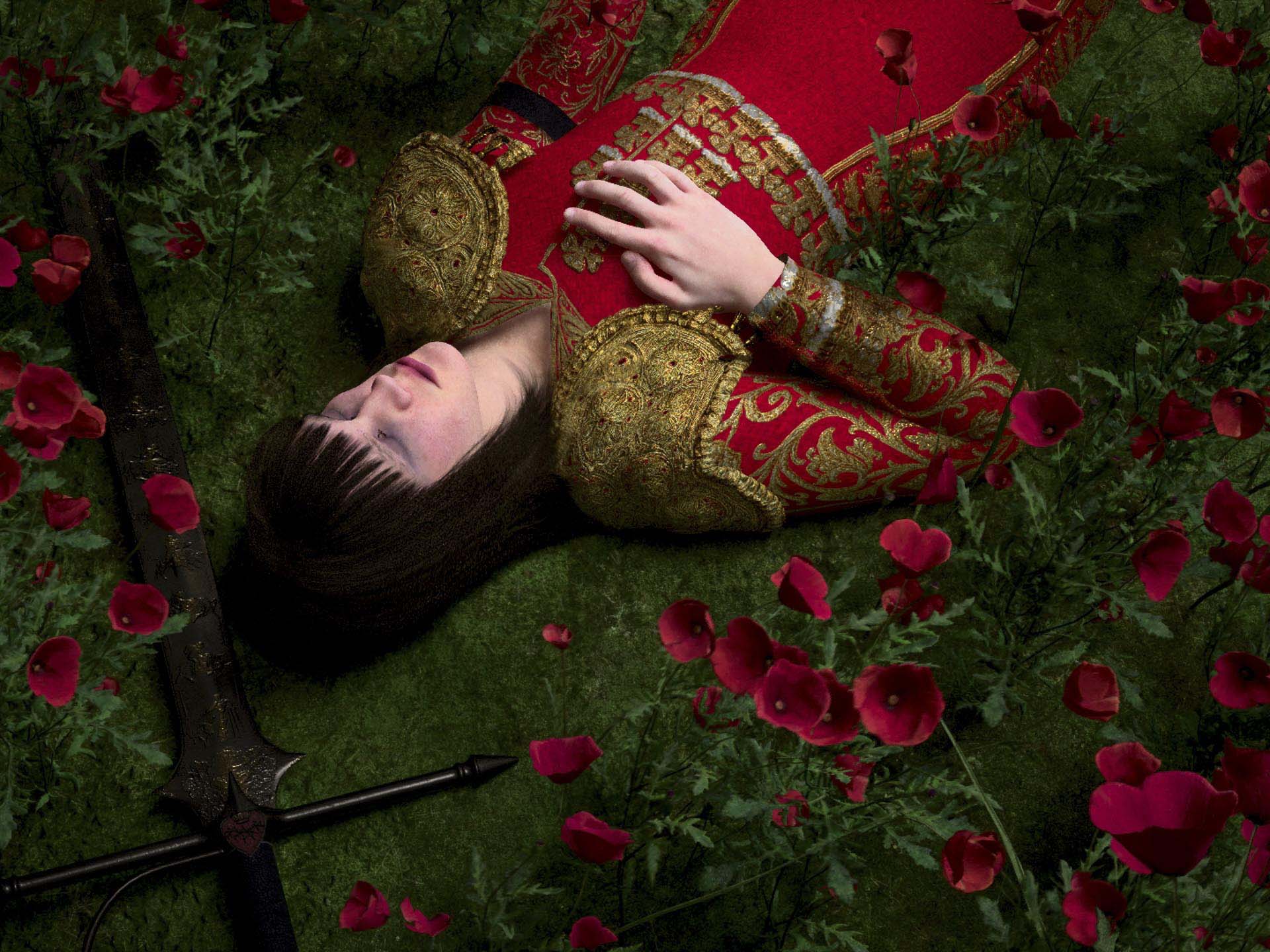
Mélanie Courtinat approaches player agency through deliberate interference with familiar videogame structures. ELEKTRA describes her work in terms of tutorials, boss battles and imposed rules that interrupt assumptions of autonomy. Courtinat is represented by Indulto (2025), a 15-to-20-minute interactive installation structured in three acts around the conventions of the tutorial and the boss fight. Its title refers to the exceptional pardon granted to a bull in bullfighting, although Courtinat turns that apparent possibility of mercy into a problem of predetermined agency. The player controls an androgynous torero progressing toward an unavoidable confrontation while the combinations of attacks taught by the game become increasingly illegible and impossible to execute. When the fight finally occurs, the camera deliberately turns away; afterward, the player is offered the choice to kill or spare the bull, yet either command produces the animal’s death. Indulto therefore places the rhetoric of player choice under considerable strain: the interface continues to solicit decisions even after meaningful agency has disappeared. Its treatment of violent spectacle also fits F(R)ICTION particularly well, since Courtinat uses familiar videogame grammar against itself, turning the friction between instruction and impossibility into the work’s operative structure. The project was first presented as Courtinat’s solo exhibition at New Galerie in Paris in October 2025 and has subsequently circulated through exhibitions including Screentime/s at Casino Luxembourg before its presentation at ELEKTRA.
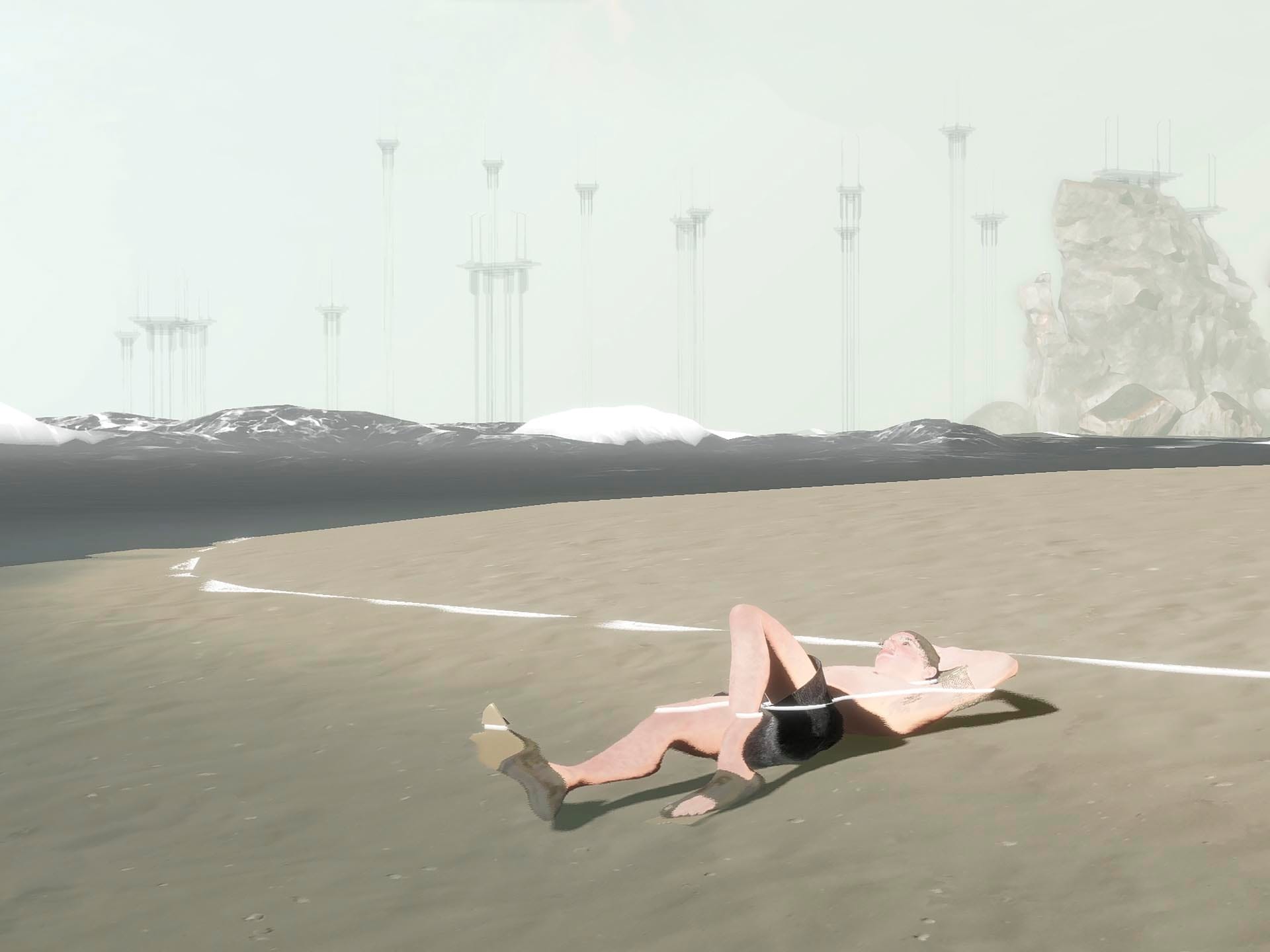
Jonathan Coryn’s Player Non Player (2024) approaches interaction through intimacy, vulnerability, and physical proximity. Set on a melancholic island punctuated by brutalist structures, the game introduces four troubled characters whose desires gradually emerge through a hybrid of puzzle game and dating sim. The player can caress, hold, and otherwise attend to these figures rather than dominate them through conventional action mechanics. The bleached, sparsely populated environments and deliberately unstable, ragdoll-like bodies give these encounters an uneasy corporeality, visible in images such as the prone figure stretched across an almost deserted shoreline. Coryn describes the work as a queer game concerned with grief, friendship, love, sexual identity, and gender identity. It was developed in close relation to Agar Agar’s album of the same name, sharing characters and narrative material with the music project. Player Non Player was nominated at A MAZE. / Berlin in 2023 and subsequently received the festival’s Most Amazing Game Award.
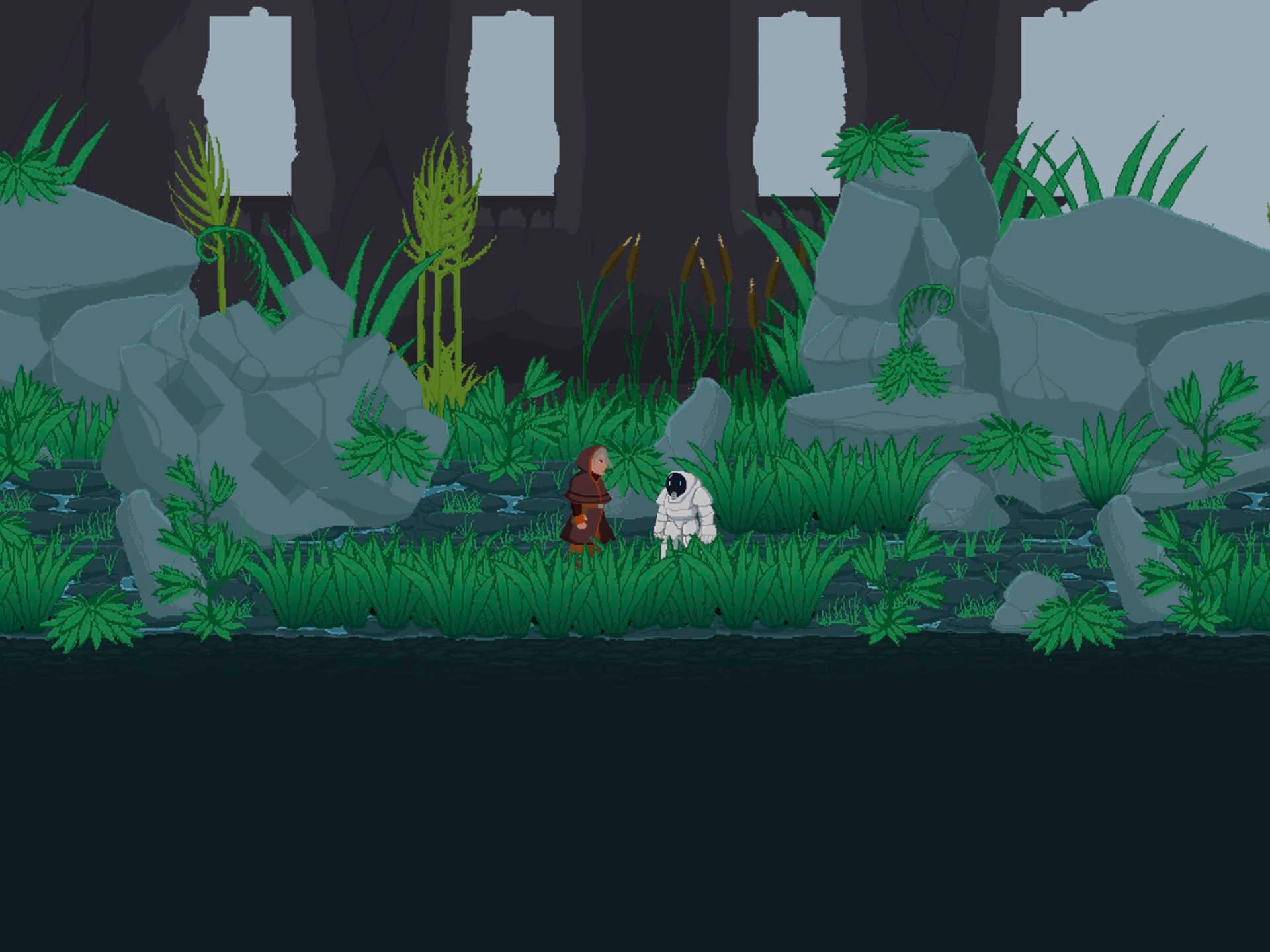
Other participants make the exhibition’s historical field considerably wider than a genealogy of European and North American gallery games. Maize Longboat’s work emerges from Indigenous game design and digital media education. As a former associate director of the Skins workshops developed through Aboriginal Territories in Cyberspace and the Initiative for Indigenous Futures, Longboat has worked on adapting community narratives through experimental digital media. Terra Nova (2019), created with Ray Caplin, Mehrdad Dehdashti and Beatrix Moersch, uses a split-screen structure in which an elder land-keeper and a younger inventor act across connected worlds. The project received imagineNATIVE’s award for best emerging digital or interactive work.
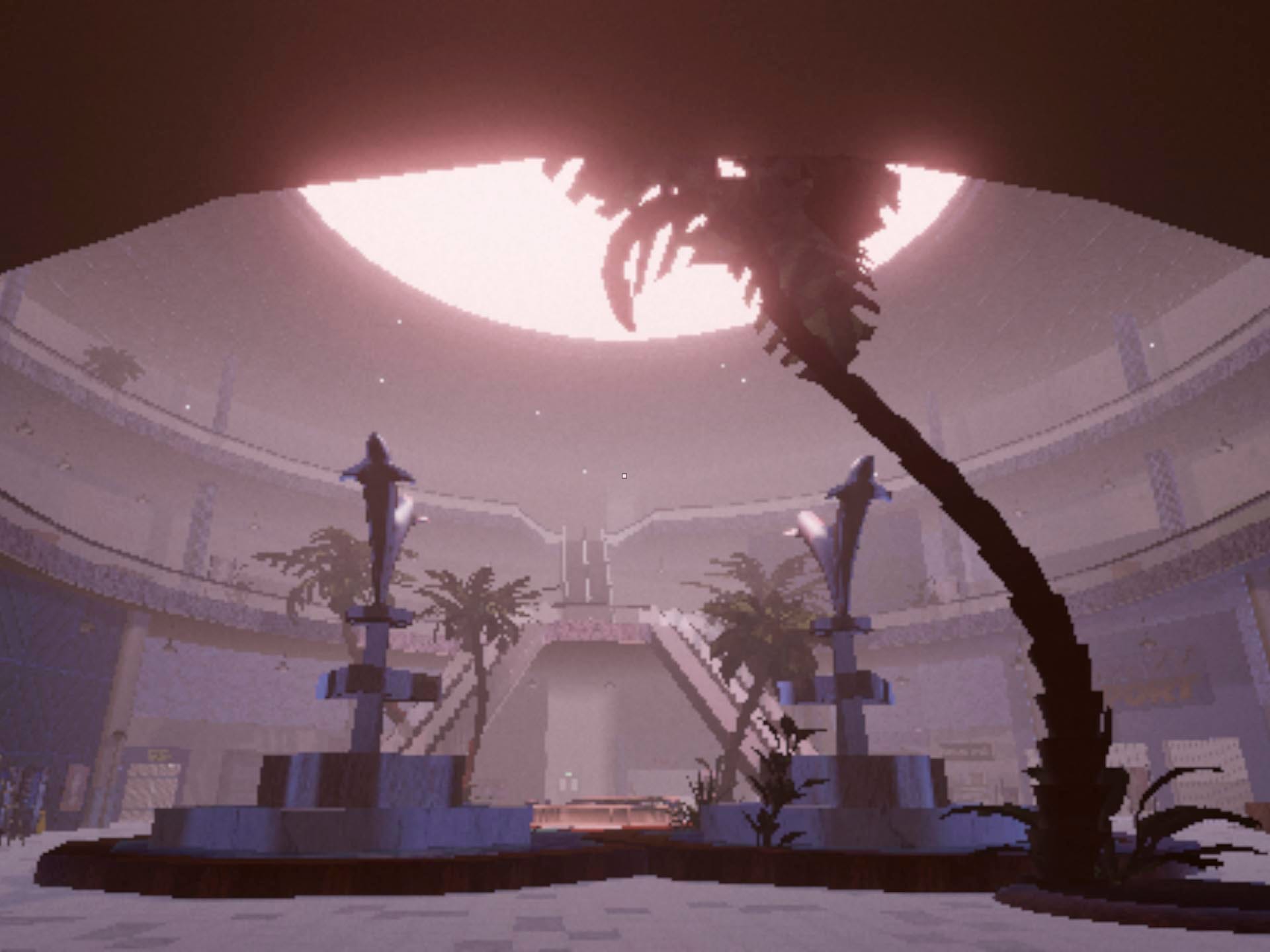
Medulla Studio’s Where Do Dead Malls Go? turns one of contemporary digital culture’s most familiar images of abandonment into a problem of care. The first-person narrative game created by the indie studio located in Lille, France and comprising Stella Jacob, Victor Meas-Chazard, Alice David, and Lotta Vernhettes, places the player in the role of a newly hired custodian at the Daylight Mall, a once-prominent shopping center approaching obsolescence but still inhabited by people unwilling to leave. Its PlayStation 1-derived aesthetic draws on the visual language of the “dead mall” and liminal-space imaginary, although the project complicates the pleasures of virtual urbex by asking what responsibility follows exploration. The remaining inhabitants of the mall embody different responses to the decline of late capitalism and asks players to consider what such spaces might become after their commercial function disappears. The project began at Cnam-Enjmin/GOBELINS in 2020–21 and originally paired the fictional game with a documentary TikTok series about abandoned malls and their rehabilitation. It later received the 2021 Daniel Sabatier Prize, CNC support, and the 2023 All4Games Young Talents award. It was also shown at Zero1 Festival in 2026.
Nathan Powless-Lynes, Theo Jean Cuthand and vanny extend the presence of Indigenous game-making within the announced roster. Powless-Lynes’s Hold My Hand! was shown with Terra Nova in Indigenous Futurisms: Explorations in Art and Play in 2019, using cooperative movement and literal hand-holding as its central mechanic. The inclusion of such practices changes the historical frame of an exhibition about experimental games. Questions of game form become inseparable from authorship, cultural transmission and the infrastructures through which digital stories are made.
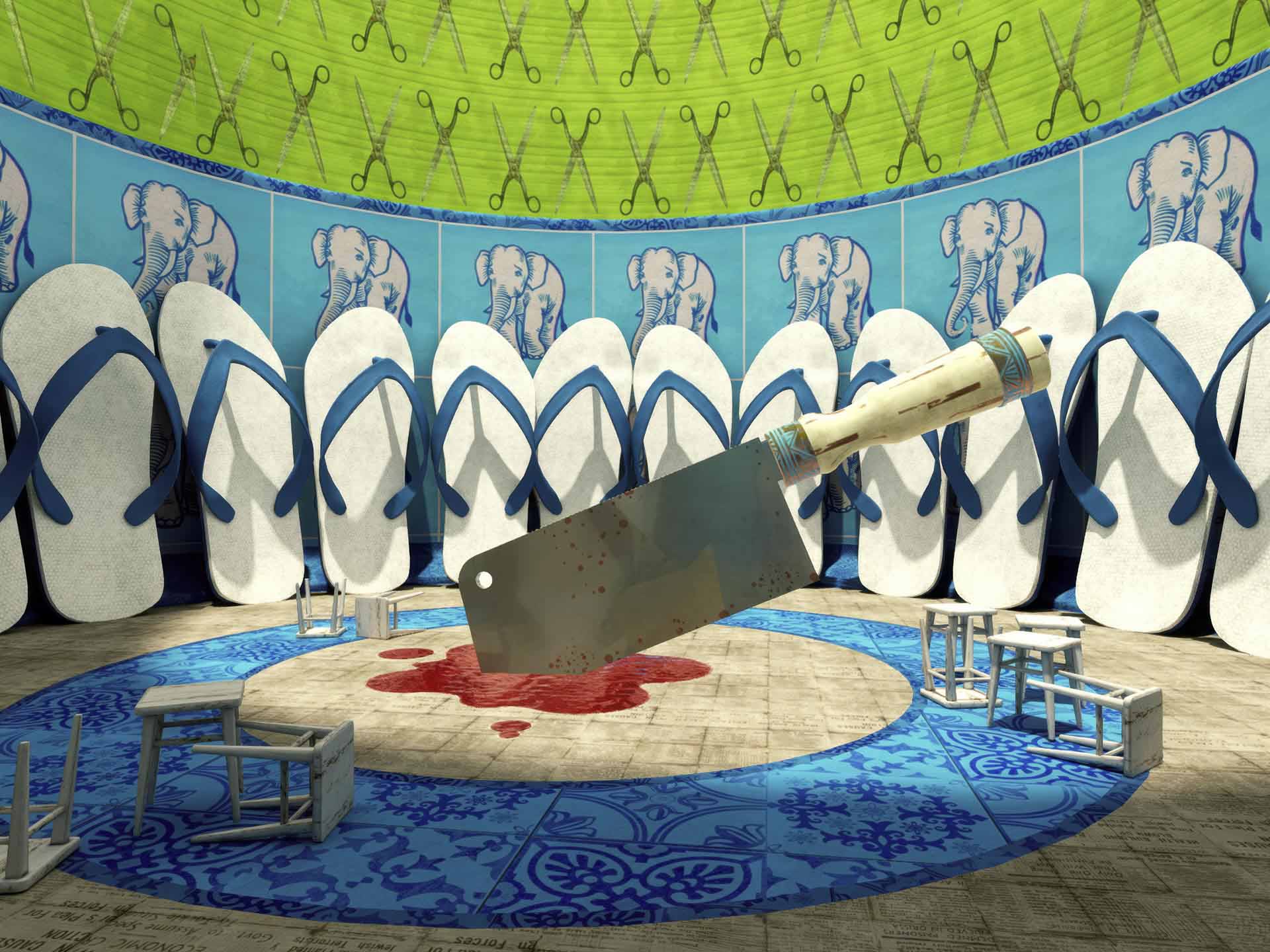
Studio Oleomingus introduces yet another relationship to history. The Chala, India-based studio has described videogame spaces as sites for record, resistance and postcolonial writing. The Indifferent Wonder of Edible Places examined historical erasure through an architectural world that could be explored and interpreted without yielding a single stable account.
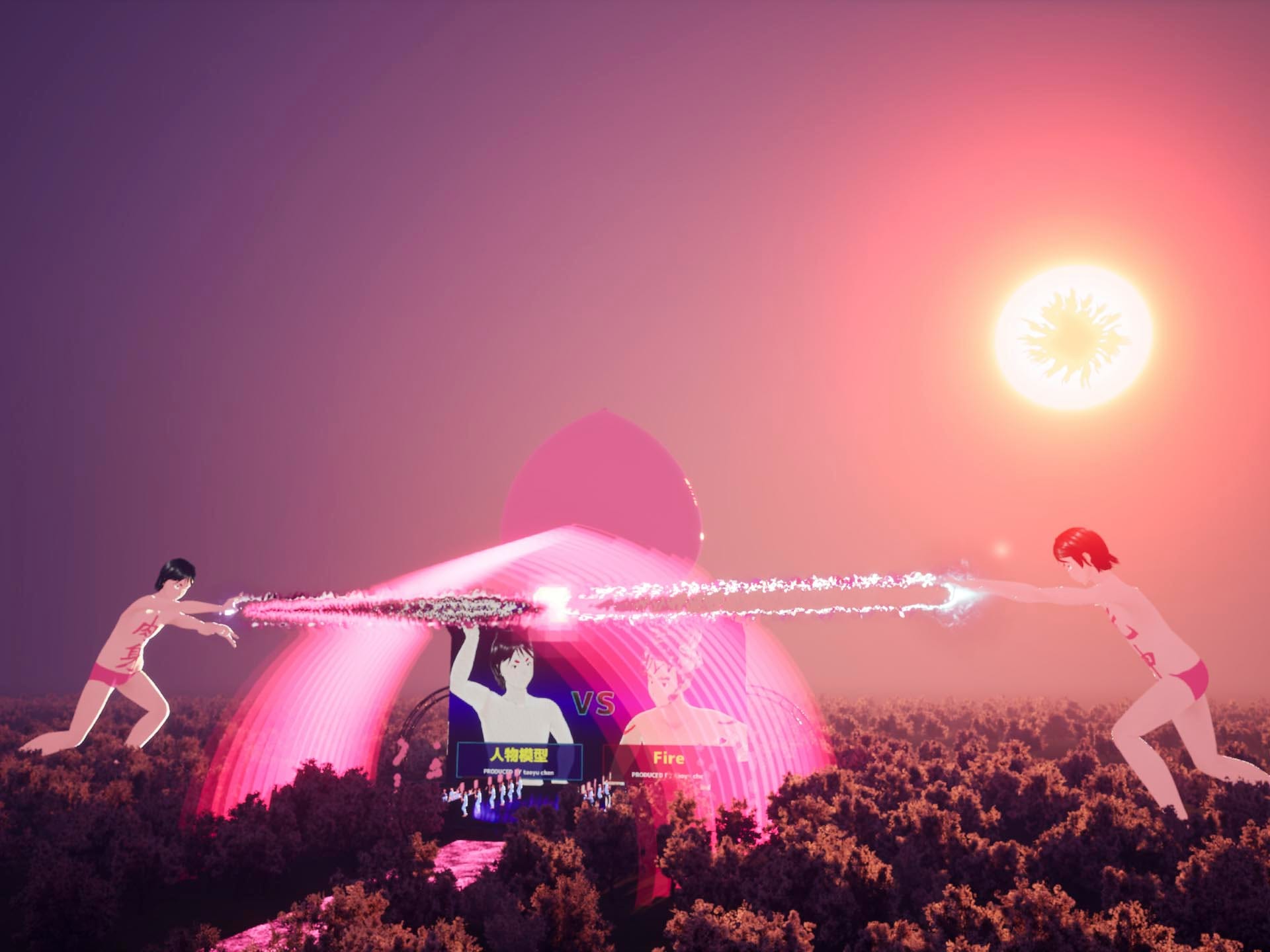
Riven (Taoyu) Chen’s Traveling Through a Peach Garden (2025) turns spiritual cultivation into a playable system. Built in Unreal Engine as a semi-open world, the work invites players to collect natural and metaphysical elements while following two contrasting paths: Five Elements Augmentation, oriented toward physical longevity, and the Taiyi Golden Flower Manual, which moves toward ego dissolution and transcendence. Inspired in part by Carl Jung’s The Secret of the Golden Flower, the game links East Asian metaphysics to questions of embodiment, identity, and structured systems. Its branching progression culminates in three philosophical endings associated with ego death, nothingness, and the collapse of the superego. Presented previously at SIGGRAPH/ISEA 2025 and PHI Montréal, the work also emerges from Chen’s interest in traditional Chinese medicine, spiritual practice, queer embodiment, and decolonial approaches to virtuality.
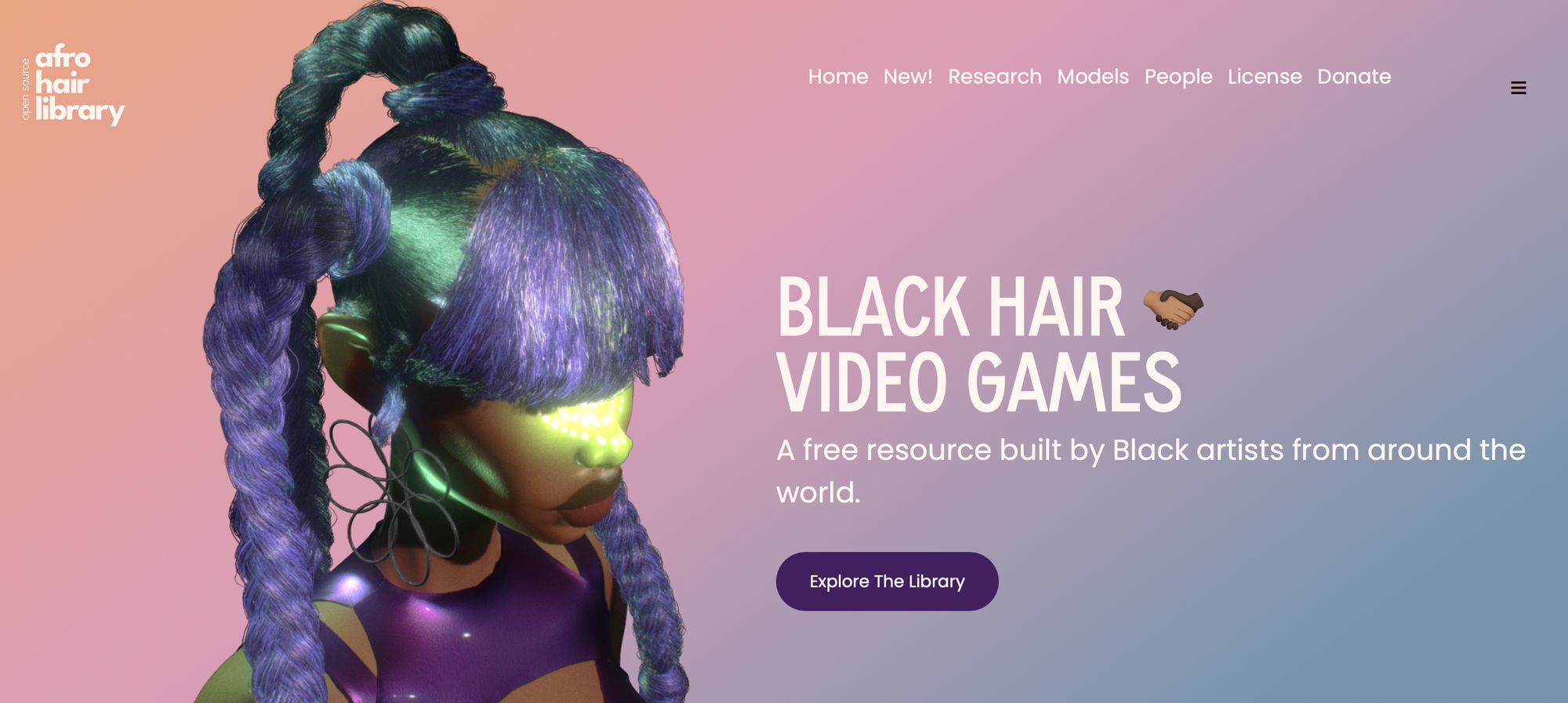
A.M. Darke’s practice brings critical game design into contact with the politics of digital representation at the level of assets themselves. Darke, an associate professor at UC Santa Cruz, founded the Open Source Afro Hair Library, a 3D archive created in response to the limited and frequently inaccurate representation of Black hair in digital production. Here the politics of games enters through tools, models and standards of representation as much as through finished gameplay.
The size of the exhibition becomes conceptually useful at this point. Thirty-five playable works cannot be absorbed like thirty-five photographs. Each contains an implied duration determined by learning controls, experimenting, failing, restarting and watching other people play. More than one hundred hours of announced gameplay make completion impossible during a conventional visit, and the institution openly accommodates incompletion. This decision addresses a persistent difficulty in exhibiting videogames. Museums and galleries often preserve the object while compressing the time required to understand it. A controller beside a monitor technically permits interaction, although queues, unfamiliar interfaces and the expectation of moving efficiently through a gallery work against sustained play. F(R)ICTION gives visitors permission to return with a single ticket. The exhibition consequently treats duration as part of the work instead of an inconvenience surrounding it, and encourages repeated visits.
Montréal itself enters the history being assembled. The city has long sustained relationships among commercial development, independent production, game studies and digital-art research. Concordia’s TAG centre and Milieux have provided institutional spaces where these activities overlap, while ELEKTRA has developed its own digital-art infrastructure since the late 1990s. Several participating creators are based in Québec, including Pippin Barr, Raphaëll Maïwen, Laureline Chiapello, Riven (Taoyu) Chen, Squinky D. Squinkifer and Owen Hellum. The exhibition can consequently be understood partly as an international survey and partly as an account of a local intellectual and artistic culture that helped make this particular curatorial proposition possible.
The main Arsenal exhibition is accompanied by a smaller project already underway at Galerie ELEKTRA. Tout guérit, même ça (Everything Heals, Even This) runs from September 11 through December 12 and brings together Kikiyama, Nathalie Lawhead/Alienmelon and Ahreum Lee. Its premise is considerably darker than the familiar association between games and escapism. The exhibition concentrates on frustration, anxiety, repeated failure and situations in which playing means encountering something that cannot be mastered cleanly. ELEKTRA explicitly describes desire, failure and repetition as part of the experience, with humor and absurdity preventing discomfort from settling into a single emotional register.
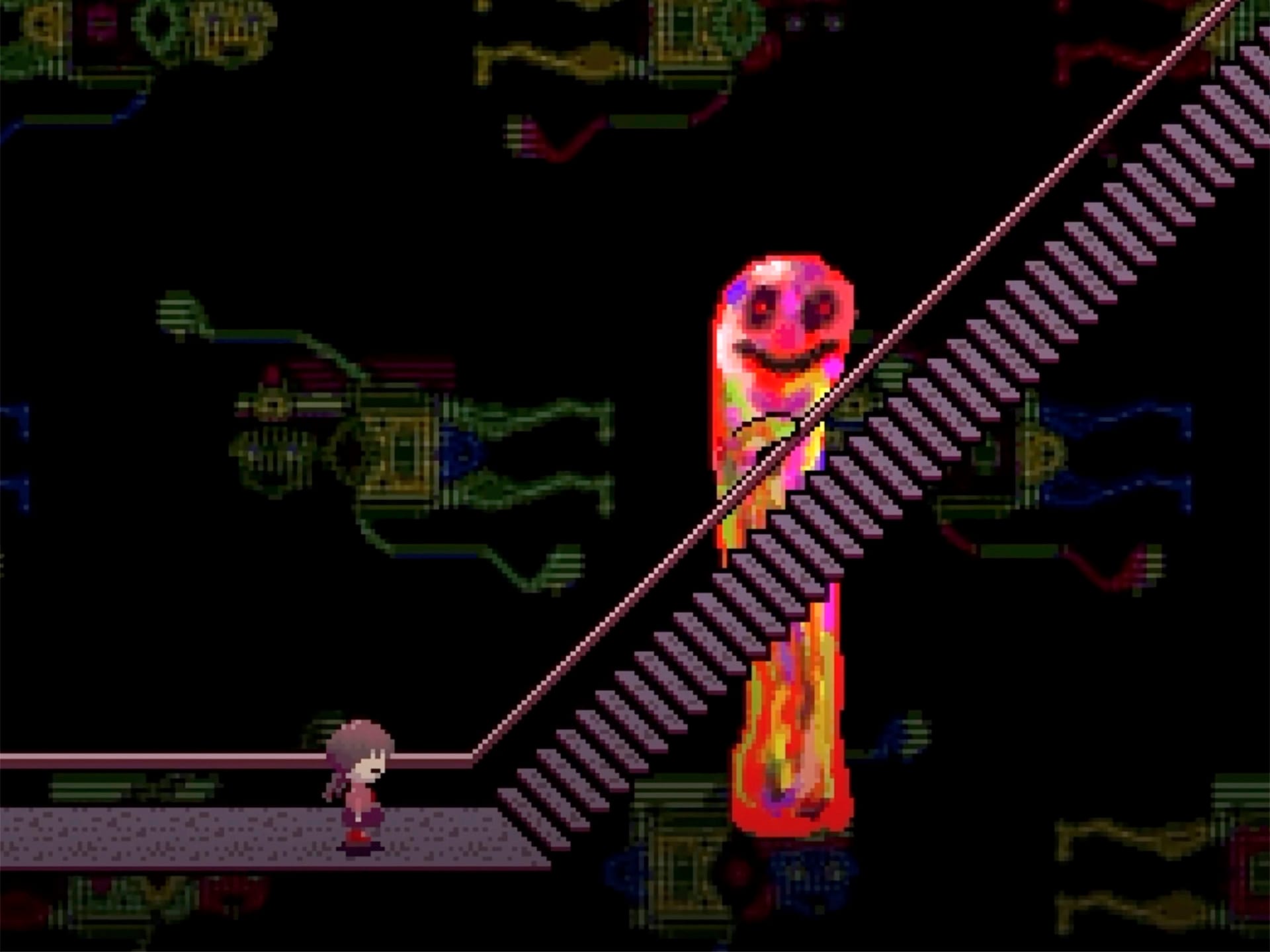
Kikiyama’s Yume Nikki provides an important historical reference for this companion exhibition. Originally created in RPG Maker and copyrighted from 2004, the game dispenses with conventional combat and explicit narrative direction. Madotsuki enters interconnected dream environments, wandering through dark spaces and collecting “Effects” that alter her appearance or abilities. PLAYISM’s current edition still describes the game in unusually direct terms: there are no particular goals and almost no dialogue. Exploration itself supplies the structure.
Nathalie Lawhead’s presence connects this tradition of strange freeware and experimental games with net art. Lawhead has produced interactive computer work since the late 1990s, drawing heavily on early-web iconography, broken software and glitch aesthetics. Everything is Going to Be OK, the interactive zine from which ELEKTRA takes the exhibition title, uses dark comedy and deliberately unstable interaction to address survival and psychological distress. Lawhead’s Tetrageddon Games and Electric Zine Maker extend the same commitment to software as an expressive medium whose roughness and eccentricity remain visible.
As a companion to F(R)ICTION, Everything Heals, Even This performs a useful corrective. Experimental play does not require empowerment, fluency or successful mastery. A player may remain confused or trapped within repetition. The resistance encountered in these works gives the Biennale’s friction metaphor a material form.
The Temporary Library of Quebec Media Arts at Arsenal develops the historical argument through print. Curated by Alessandro Ludovico (the legendary founder of Neural magazine) and Nathalie Bachand, it places a substantial selection of Québec media-art publications inside the exhibition, including approximately thirty publications devoted specifically to artistic and independent videogames. The project belongs to Ludovico’s Temporary Library series, initiated in 2017 and previously realized in Germany, Norway, Denmark, Switzerland, Portugal and Colombia.
Its afterlife is particularly valuable. Following the Biennale, the publications will enter Artexte in Montréal as a specially catalogued collection and will also be incorporated into the Neural Archive in Bari, which contains nearly 8,000 titles and objects, around 2,000 of which have already been indexed online. The library therefore givesF(R)ICTION an archival dimension that exceeds the exhibition dates. A temporary display produces a permanent research resource.
The public program pushes outward from exhibition history toward production. On October 17, artists including Danielle Brathwaite-Shirley, Temitope Olujobi, Afrane Makof, Mélanie Courtinat, Jonathan Coryn, Stella Jacob and daffodil & friends will participate in talks and live playthroughs at Arsenal. The format is appropriate for works whose operation may be as revealing as their installation.
On October 24, vanny leads a Bitsy workshop devoted to short interactive narratives. Participants will work within the browser-based engine’s deliberately restricted pixel grid and simple conditional logic. On November 7, Lee Wilkins shifts attention from software to material infrastructure through a workshop in which participants build a simple solar-powered circuit. ELEKTRA frames that session through the electricity, networks and servers required to sustain videogame culture, connecting game production to energy use rather than allowing the apparent immateriality of software to remain unexamined.
A separate discussion at Concordia’s 4th Space on October 26 addresses generative AI and creative agency. Thomas Gauthier-Caron and Christian Beltrami will consider workflows in which AI systems can create, test and revise material, with particular attention to the continuing role of human judgment. Lux Æterna, curated by Alain Thibault at Hôtel SonoLux from October 16 through April 1, 2027, extends the Biennale into moving-image and sound works concerned with light, color, generative systems and mathematical models
F(R)ICTION is especially interesting as a historiographic exhibition. Its roster contains several figures the site has followed across very different moments: Suzanne Treister’s early videogame fictions, Pippin Barr’s institutional simulations, Alan Kwan’s Bad Trip, Studio Oleomingus’s postcolonial interactive spaces, Maize Longboat and Nathan Powless-Lynes in Indigenous Futurisms, Mélanie Courtinat’s The Siren, and Danielle Brathwaite-Shirley’s gallery-based game installations.
This continuity also indicates how much the vocabulary around these practices has changed. “Game art,” “art game,” “experimental game,” “indie game,” “interactive installation” and “artist’s videogame” emerged from distinct contexts and often carried different assumptions about audience, authorship and value. F(R)ICTION does not need to collapse these terms into a single category. Its stronger proposition comes from preserving enough difference for contact to remain perceptible.
The exhibition therefore enters a phase of videogame curating in which legitimacy is a comparatively exhausted question. The historical problem is more demanding. It concerns whose experiments are remembered, which communities supplied the formal innovations later recognized by contemporary art, and how a museum or gallery can exhibit software without separating the work from the practices through which it was made and played.
Friction, in this context, is a useful curatorial condition. The game does not have to become an artwork by crossing a museum threshold. The artwork does not have to imitate a commercial videogame to become playable. A history capable of accommodating Treister, DeKoven, Anthropy, Kim, Longboat, Brathwaite-Shirley, Courtinat and the other participants has to leave those different routes visible.
Disclosure: GameScenes editor Matteo Bittanti is a participant in F(R)ICTION: art et jeux.