GAME ART: ARIA DEAN’S L.A. NOIRE SCULPTURES (2024)

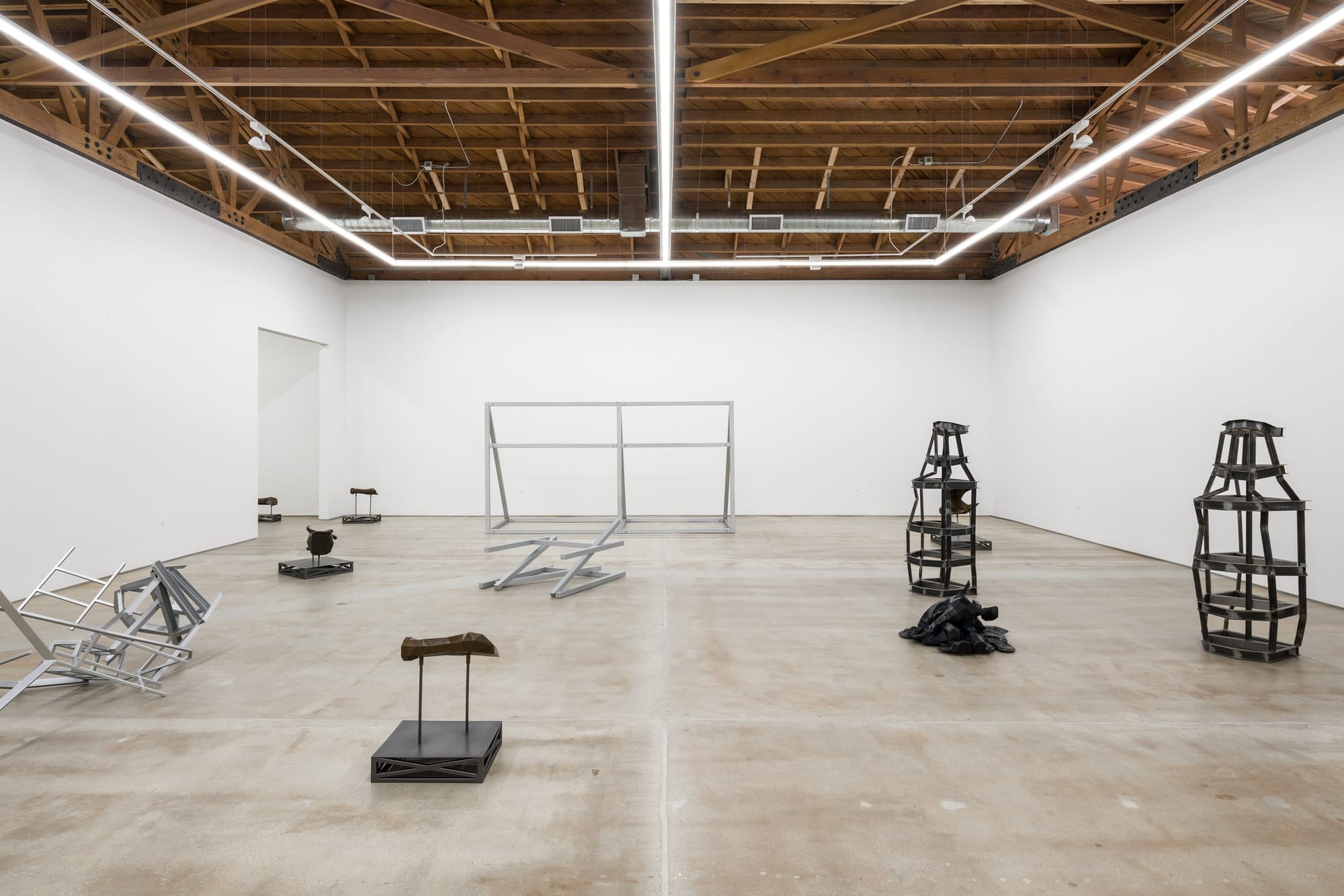
Aria Dean’s 2024 solo presentation, Facts Worth Knowing at Château Shatto in Los Angeles, revisits Hollywood’s forgotten iconography through digital reconstruction and sculptural transformation. The exhibition centers on the long-lost Babylon set from D.W. Griffith’s 1916 epic Intolerance, an enormous, now-vanished structure once built in East Hollywood. Rather than replicating this monument directly, Dean reanimated it via its digital reincarnation within L.A. Noire (2011), a video game that anachronistically inserted Griffith’s Babylon into its recreation of postwar Los Angeles. Using assets extracted from the game alongside references to subsequent physical replicas – such as mall façades and amusement park renditions – Dean digitally recomposed these elements into a series of cast and welded sculptures. These resulting forms are not representations in the traditional sense but fragments that gesture toward multiple pasts, with their lineage fragmented across film, gaming, and urban mythology. The project draws attention to how replicas and simulations overtake the authority of the so-called original, forming a recursive loop of representation and decay.
To achieve this, Dean began by extracting 3D models of the Babylon set embedded within L.A. Noire using asset-ripping tools commonly employed in game modding communities. These software utilities allow users to access and export low-poly mesh data from the game’s proprietary engine. Once isolated, these geometries – such as the elephants, gates, and scaffold structures – were converted into standard 3D formats (likely .OBJ or .FBX) and imported into modeling software for manipulation. Dean worked within digital sculpting and CAD environments to fragment, distort, and recombine these forms. She deliberately preserved artifacts of the original resolution – jagged edges, collapsed geometry, perspectival skew – treating them not as flaws but as indicators of the object's digital provenance. The modified models were then translated into physical form through fabrication processes including CNC machining, 3D printing, mold-making, and bronze casting. In some instances, she rendered game-derived scaffolding as skeletal welded-steel structures, foregrounding the visual logic of video game wireframes.
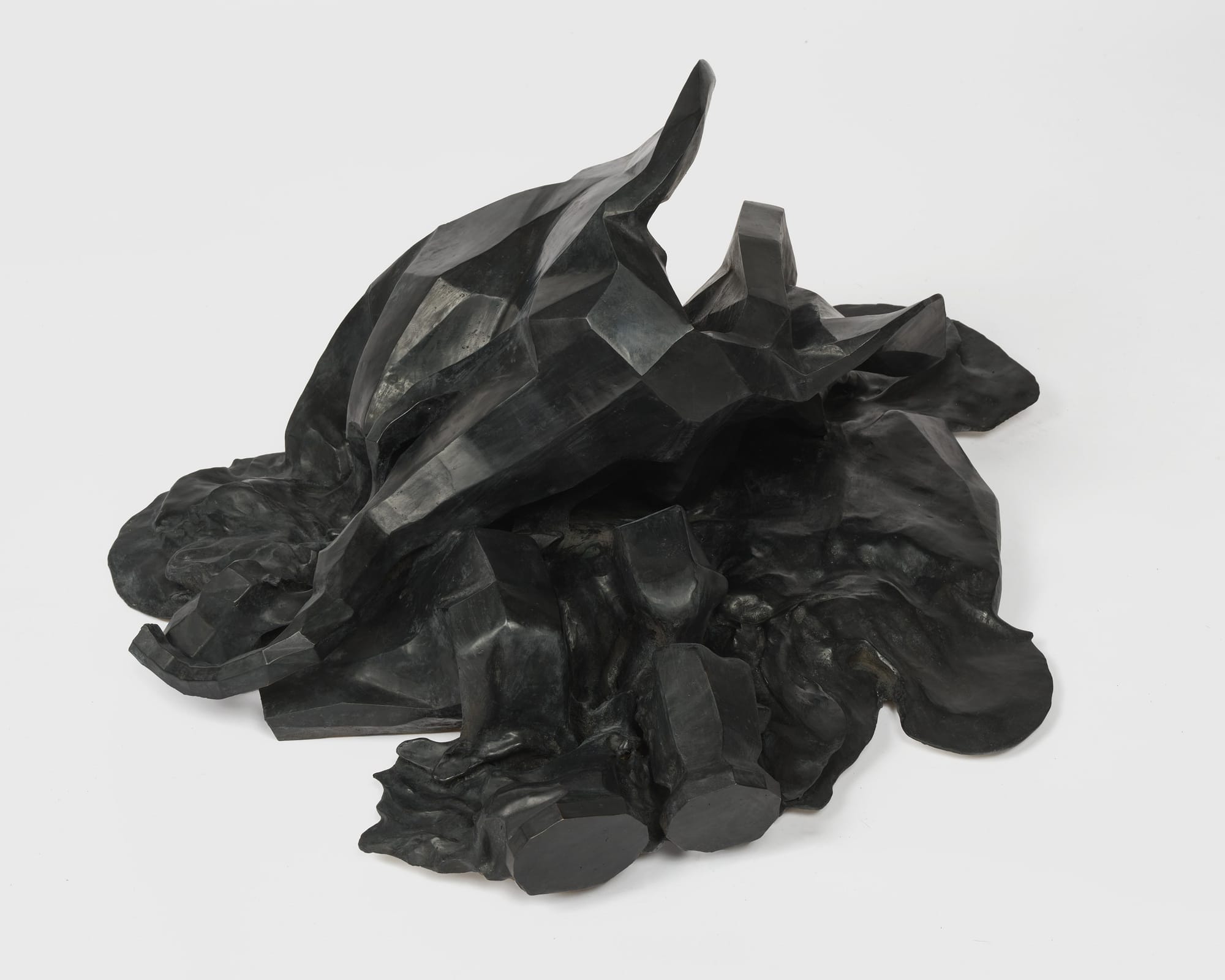
The gallery was populated by hybrid structures in bronze and steel: ghosts of elephants, colonnades, and scaffolding from Griffith’s original film set. These forms had been pulled apart, their completeness denied. Some works appeared to erode into the floor or collapse into abstract shapes, while others stood on thin supports or were dismantled into flattened fragments. One piece included a distorted elephant reduced to geometric masses, barely traceable by a contorted feature or outline. The sculptures emerged from 3D modeling processes that referenced not just L.A. Noire’s digital Babylon, but also the faux-ancient recreations built around Hollywood in recent decades, most of which have since been demolished. Dean synthesized these references into minimalist skeletal structures and heavy cast forms, stripping them to their essential silhouettes. Her figures were often reduced to frameworks that suggested architectural support systems now lacking anything to uphold. Several of the twisted steel works seemed caught mid-collapse, as if the gallery itself had been overrun by the wreckage of history’s theatrical ambitions. The space resembled an excavation site for an entirely fictional civilization: an archaeological dig of something that was never really there to begin with.
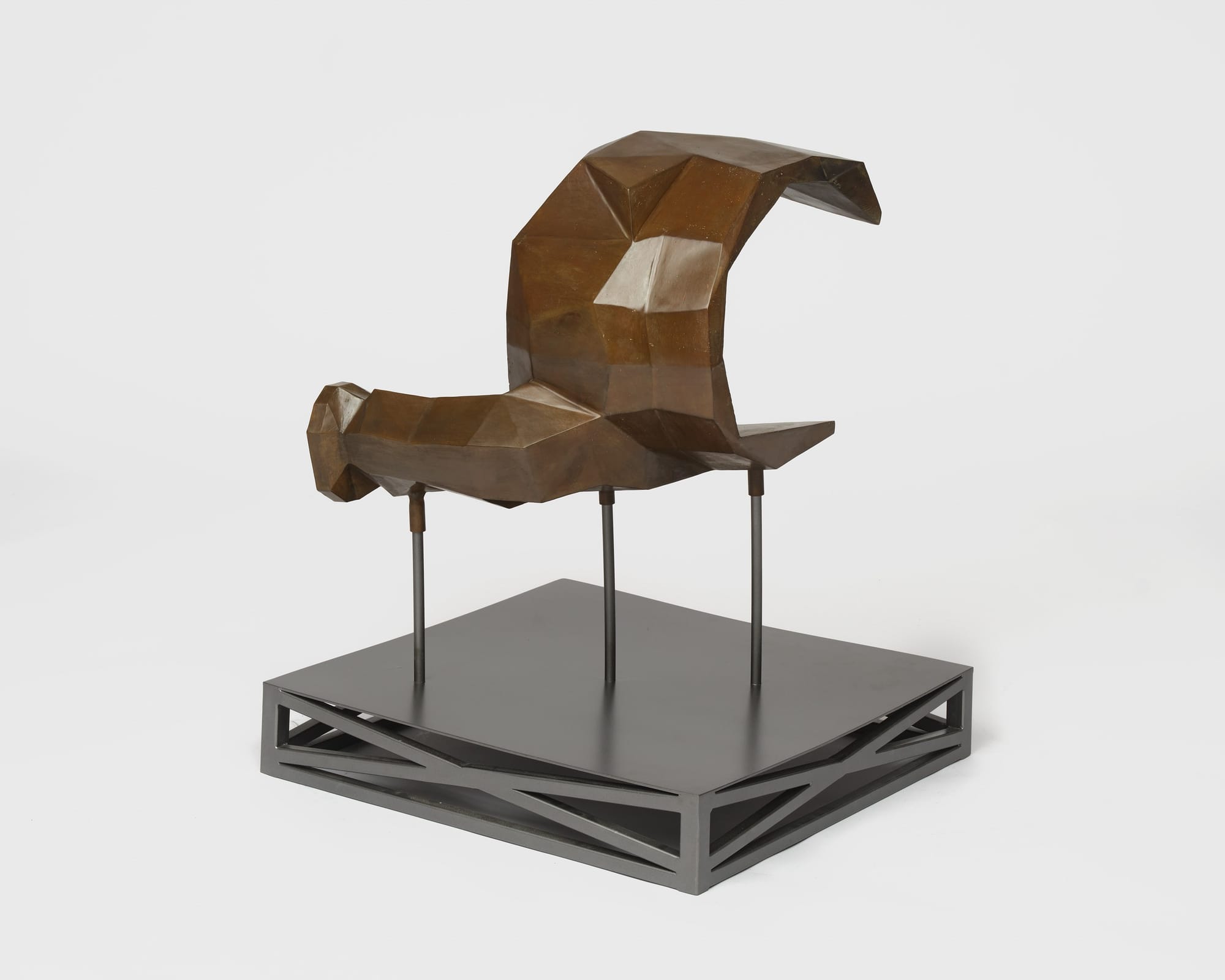
This accumulation of references – from classical antiquity to Hollywood spectacle to video game hyperrealism – is not incidental but central to Dean’s conceptual approach. Her method involves piling fictions atop one another, forming a layered image of Los Angeles as a city built on simulations. This conceptual layering is inseparable from the tools she uses. Dean’s grasp of digital modeling, combined with her experience using Unreal Engine in earlier works, enabled her to navigate the aesthetics and limitations of real-time rendering environments. While Unreal was not used in this sculptural series directly, her broader engagement with game engines informed how she treated game assets, as source code to be queried, altered, and physically enacted.
One prominent sculpture, comprised of misaligned bronze and steel elements, was based on a combination of Griffith’s original design and its digital recreation within L.A. Noire. Dean’s method of translating that in-game environment into a tangible sculpture foregrounds the absurdity of origin: a physical copy generated from a virtual replica of a cinematic set modeled after an imagined ancient past. This process typifies the condition often described as post-cinematic, where representations circulate without clear beginnings, operating freely between material and digital domains. Dean neither conceals the limitations of the source material nor smooths its translation. The low-resolution geometry typical of video game environments remains visible in the surfaces of her casts, and the perspectival distortions introduced by the game’s camera persist in the warped forms. These distortions are deliberately preserved, embedding traces of digital authorship within the object’s physical structure. Her work invites reflection on how reality is shaped through layers of mediation, each with its own distortions and omissions.
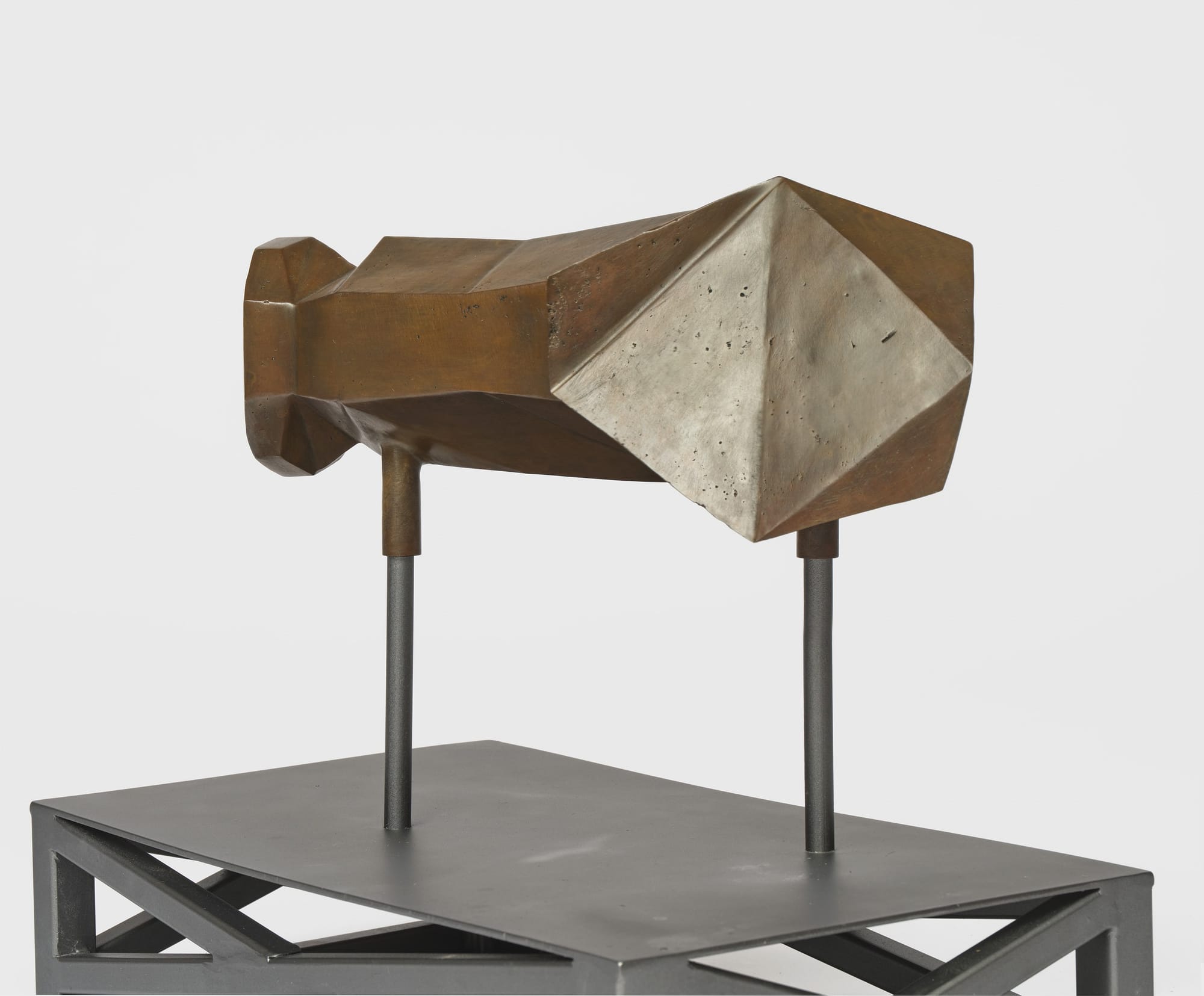
Facts Worth Knowing also marks a shift in Dean’s emphasis. Earlier in her career, she was celebrated for foregrounding Blackness within theoretical and aesthetic discourses that critiqued visibility and ontology in digital culture. In this exhibition, however, such references are withheld. Even though the project draws on the legacy of Griffith – whose earlier film The Birth of a Nation (1915) is foundational to cinematic racism – Dean avoids didactic confrontation. Instead, the omission itself becomes part of the meaning, gesturing toward structural exclusion rather than staging it directly. This withholding unsettles expectations of clarity or ideological transparency. Rather than foregrounding race or identity explicitly, she turns her attention toward form, historical context, and the conditions of display. The exhibition materials drew on canonical writings in sculpture, referencing debates about presence, materiality, and space. The sculptures resonate with the aesthetics of mid-century Minimalism, with their industrial materials, modular components, and spatial tension. But in contrast to Minimalism’s often static perfection, Dean’s works evoke corrosion, fragmentation, and loss.
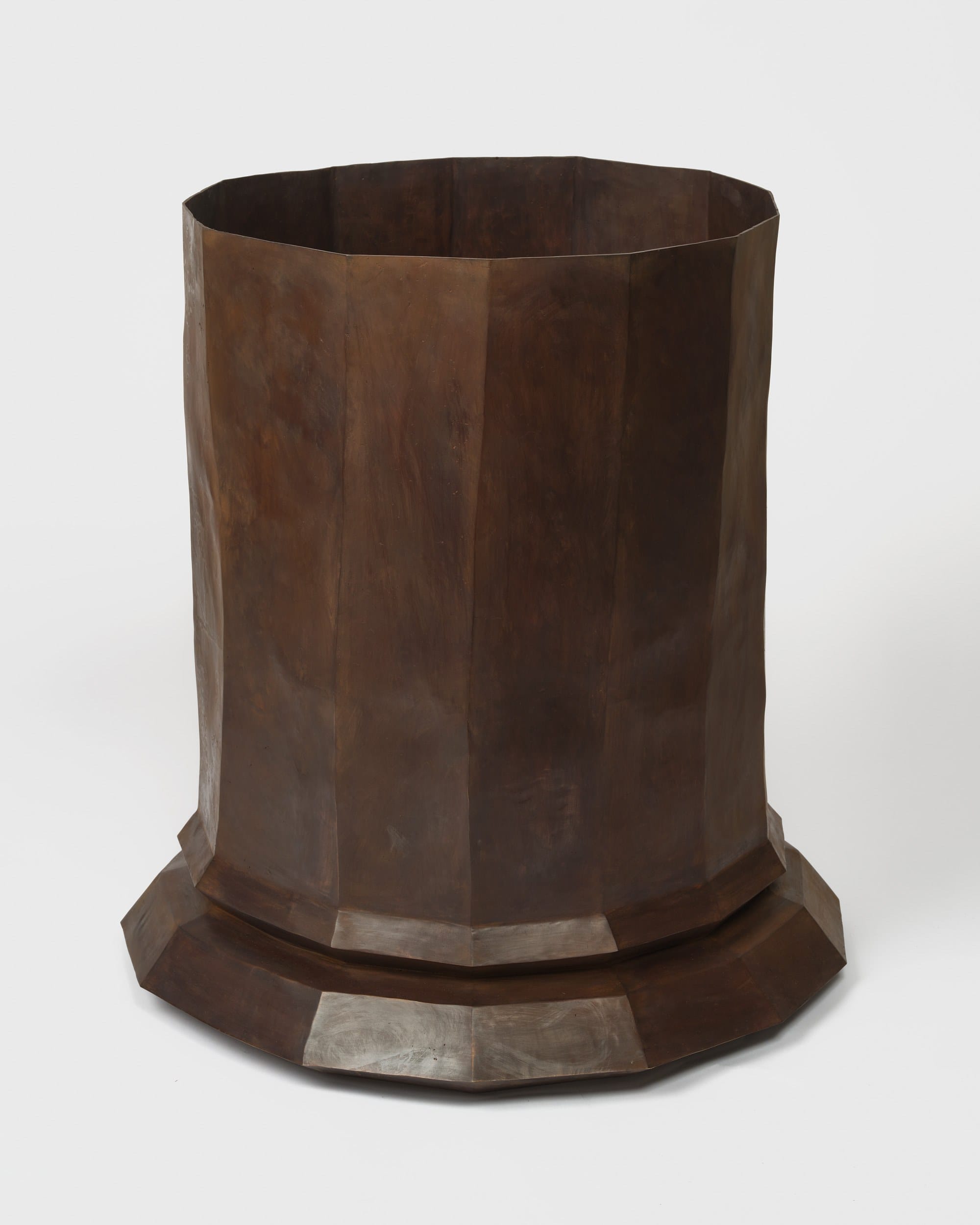
Dean’s sculptures reverse traditional hierarchies of form and content. Instead of presenting the viewer with a singular object imbued with significance, she offers absences, supports, and debris. The missing elements become the center of attention: what isn’t there speaks louder than what is. Her approach challenges the conventional logic of sculpture as a medium of monumentality or permanence. These works emphasize erosion and repetition, drawing attention to how meaning is not fixed in a single iteration but shaped through ongoing circulation, appropriation, and forgetting. Dean treats digital models as raw matter, exposing their instability and instability, and making that instability foundational to the work’s conceptual architecture. Her workflow – from digital extraction to sculptural realization – functions not only as a means of production but as a form of critical inquiry. Each step in the translation from game model to gallery object becomes a site where materiality, authorship, and technological memory are interrogated.
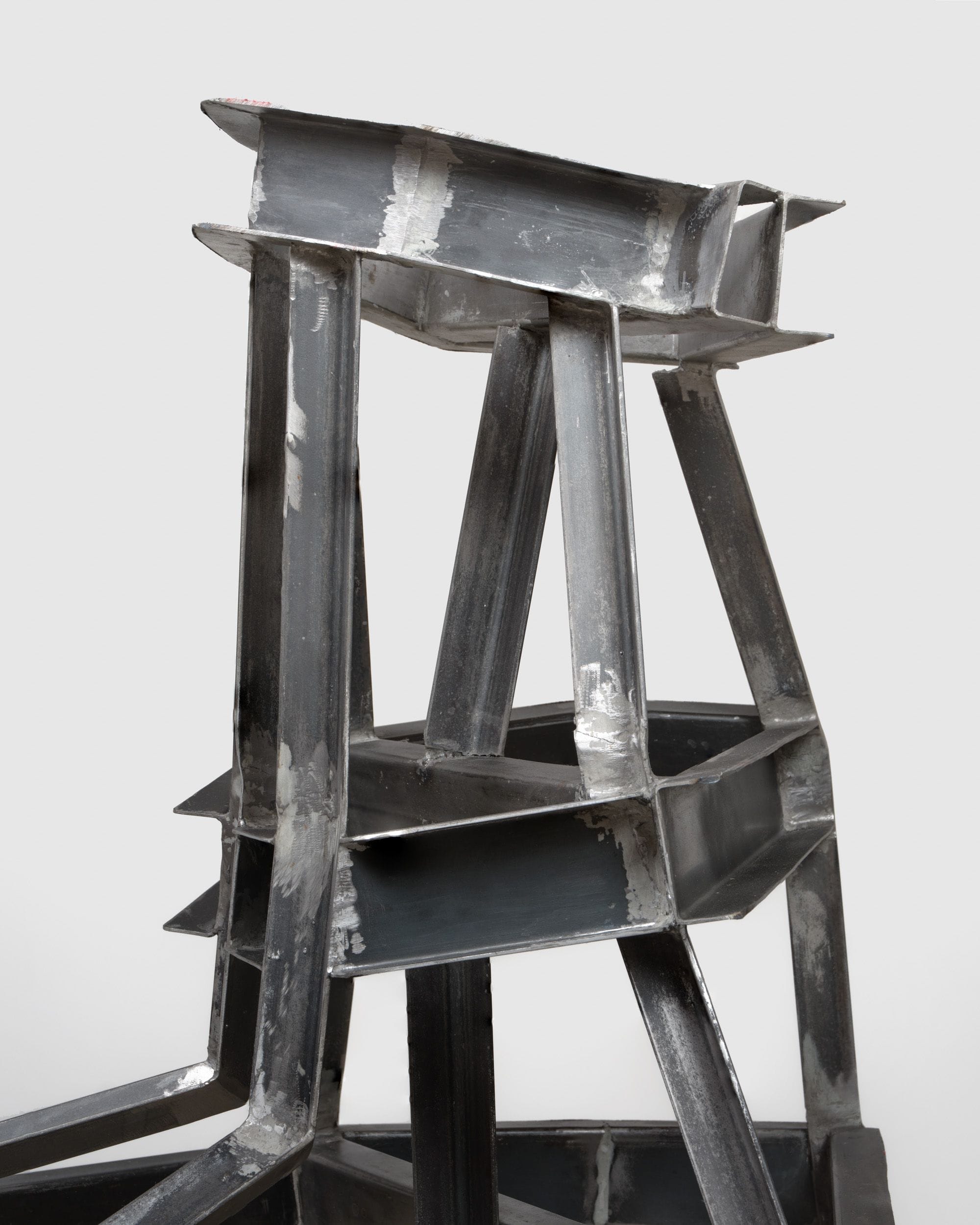
Ultimately, the exhibition refuses to resolve itself into a definitive statement. Instead, it stages a complex meditation on the status of images and forms that survive through reproduction alone. By engaging with digital surrogates, historical sets, and architectural ghosts, Dean composes a sculptural environment in which time collapses. Her work illustrates how the residue of the past endures not as a stable legacy but as fragments in constant recombination. Through this process, she reflects on what remains when the original is long gone, when the history we inherit arrives already corrupted, fractured, and reshaped by the systems that replicate it.
Dean’s practice is distinguished by her ability to interrogate and unsettle the boundaries between digital and physical, reality and fiction. By reconfiguring materials sourced from a video game, she challenges traditional sculptural forms and phenomenological experiences. Her work uniquely addresses the intersection of contemporary digital aesthetics and historical references, questioning how reality is constructed and understood within mediated spaces.
Aria Dean (b. 1993, Los Angeles, USA) is an artist, writer and filmmaker based in New York. Selected solo and group exhibitions of her work have been presented at the Institute of Contemporary Arts, London; The Power Plant Contemporary Art Gallery, Toronto; The Renaissance Society, Chicago; Whitney Biennial 2022, Whitney Museum of American Art, New York; REDCAT, Los Angeles; Made in L.A. 2020, Hammer Museum, Los Angeles; MIT List Visual Arts Center, Cambridge; Tai Kwun, Hong Kong; Centre d’Art Contemporain Genève, Geneva; Institute for Contemporary Art at Virginia Commonwealth University; Albright-Knox Art Gallery, Buffalo; Schinkel Pavillon, Berlin; de Young Museum, San Francisco; and Knockdown Center, New York. Dean has delivered lectures and presentations at various universities and institutions, including Harvard University, Cambridge; Yale University, New Haven; California Institute of the Arts (CalArts), Santa Clarita; The Studio Museum, Harlem; MMK Museum of Modern Art, Frankfurt; Serpentine Galleries, London; New Museum, New York; DIA Art Foundation, New York. Dean’s writings have appeared in several publications, a selection of which are available as Bad Infinity, published by Sternberg Press in 2023.
All images courtesy of Château Shatto, Los Angeles and the Artist.