EVENT: EVERY THING COMPUTER (OCTOBER 23–NOVEMBER 18 2026, SAN FRANCISCO)
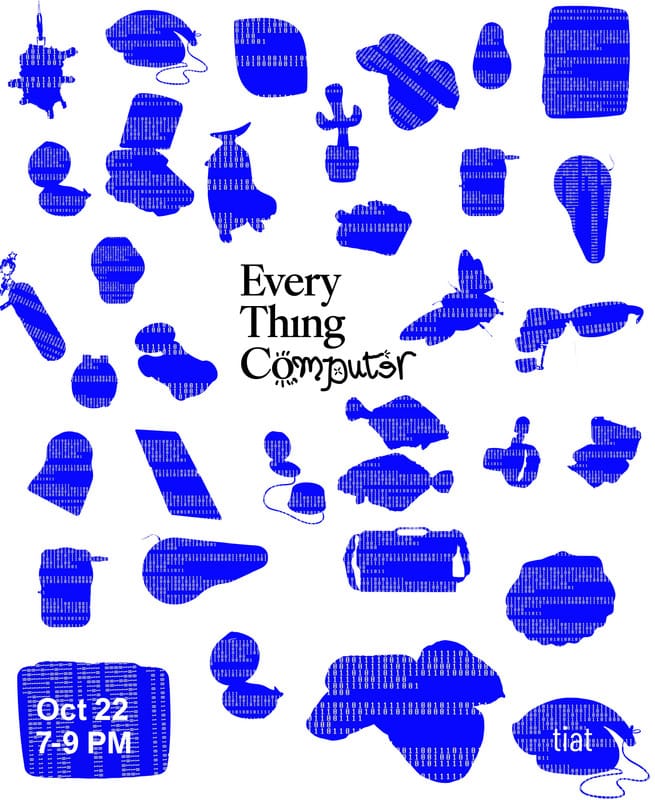
tiat, San Francisco, October 23–November 18, 2026
151 Powell Street, San Francisco. Regular gallery hours ended Saturday, November 14. The free closing reception is Wednesday, November 18, 7–9 p.m.
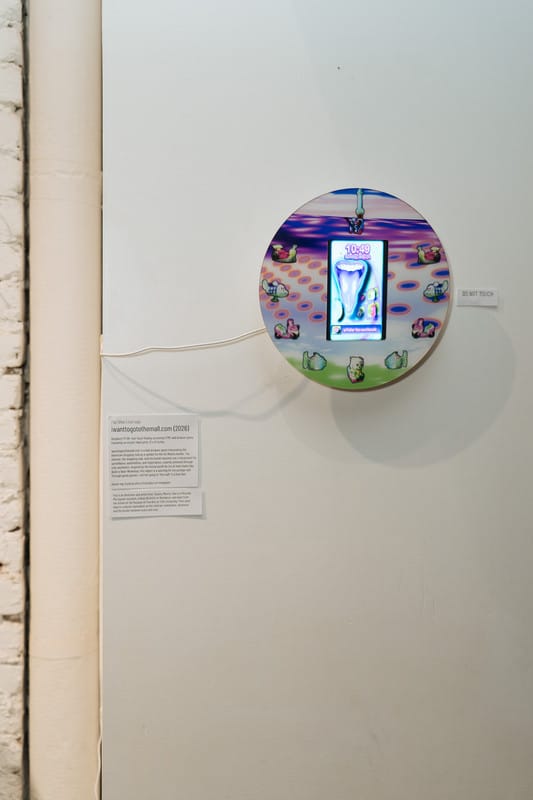
A strawberry does the work of an early iPhone’s slider in Pao Silva Lizárraga’s iwanttogotothemall.com (2026). An enormous tongue hangs over it. In tiat’s installation photograph, a wall notice reading “DO NOT TOUCH” sits inches from the touchscreen’s invitation to “slide to unlock”. Online, at least, the strawberry wins. Before the first click in this game about the US–Mexico border, an American company has already taught your hand what to do.

San Francisco’s Vacant to Vibrant program found tiat a home in a former eyewear shop near Union Square. Gallery founder Ash Herr and Era’s Liz Dorman issued the open call for the 43 works in Every Thing Computer. Dorman invoked the Homebrew Computer Club, which first met in a Menlo Park garage in 1975. Within a year its newsletter had printed Bill Gates’s complaint about hobbyists copying Altair BASIC without paying. As the editor observed, the letter was the only “software” the newsletter had ever reproduced from the computer’s manufacturer.
At the opening on October 22, three singing MacBooks closed their lids in turn. Each time, a salvaged ThinkPad underneath booted into Jeffrey Alan Scudder’s Aesthetic.Computer operating system. A visitor to 3x AC Blank (2026) can type a word to call up a musical keyboard, then copy the program and change what the keys play.
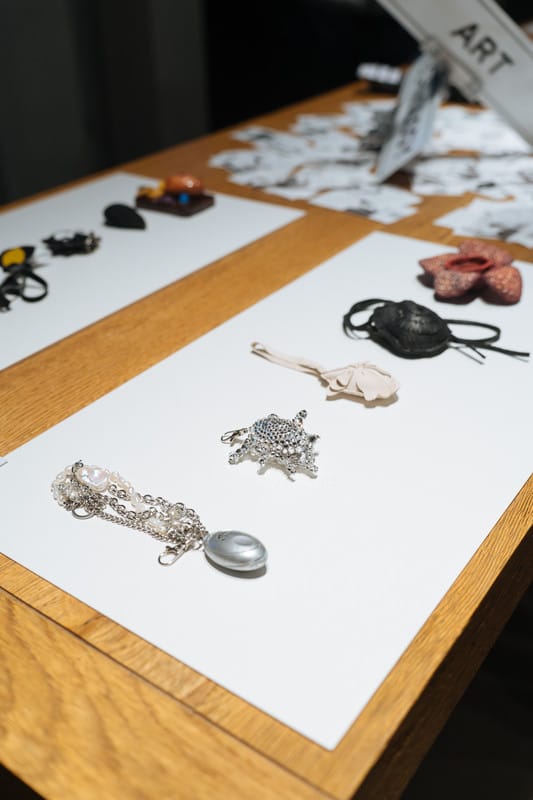
Era, the exhibition’s sponsor, gave thirty makers the same small AI device for Primavera (2026). Some enclosed it in bark or woven cloth. Juliyen’s cutting board offers recipes in the voice of a French guide. The more unlikely the object, the better it advertises the kit. Era’s motto, “To choose is to express,” fares less well among the other exhibits.
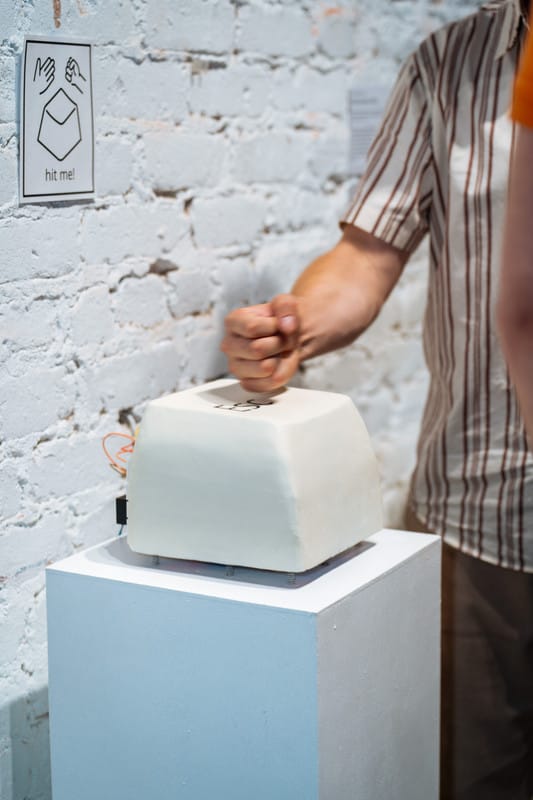
Press Chloe Molinos’s esc. (2026), an oversized Escape key, and it cries “OUCH!” It takes a little more nerve to press twice. Rest a fingertip on the sensor of Jana Yan’s I <3 My Computer (2026) and each heartbeat lights one pixel of a heart on a silicone screen. You supply the rhythm of a declaration the artist has already composed.
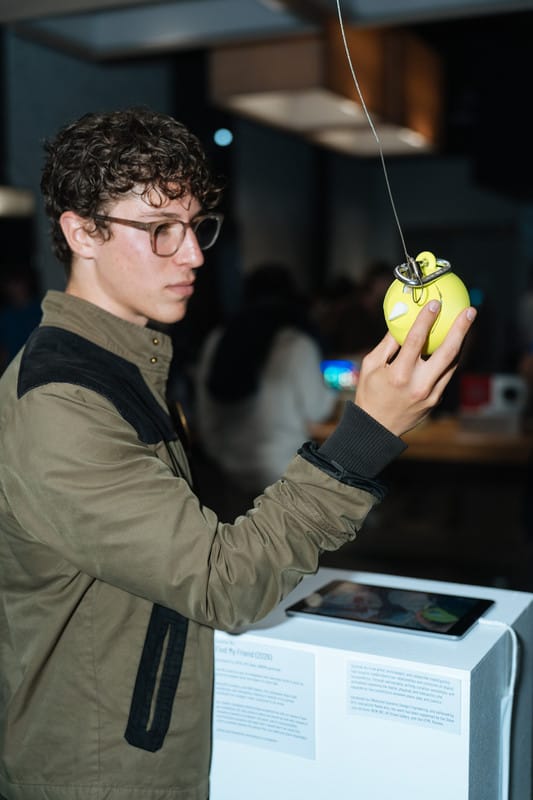
Queenie Wu gives friendship a little more privacy. In Find My Friend (2026), two compasses modeled on best-friend necklaces exchange coordinates outdoors. Each needle points toward the other person. Someone walking straight away from you gives it just as much to point to.
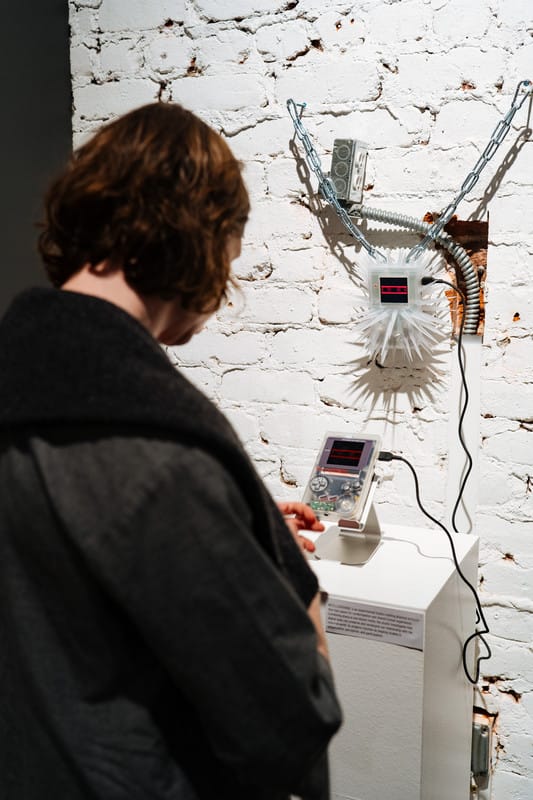
A shopper in Los Angeles could meet a stranger at New York’s Lincoln Center through the satellite link in Kit Galloway and Sherrie Rabinowitz’s Hole in Space (1980). Both parties had to turn up at the same time. So did a pair of Tetris players sharing a Nintendo link cable. NOCELLCOVERAGE keeps the cable and dispenses with the appointment. In Signature (2026), a visitor signs in on a modified Game Boy with a sequence of button presses. Its partner has a spiked silver case and no controls of its own. Each signature plants a pylon in a wireframe world. The figure moving among them replays the gestures of people who have gone home.
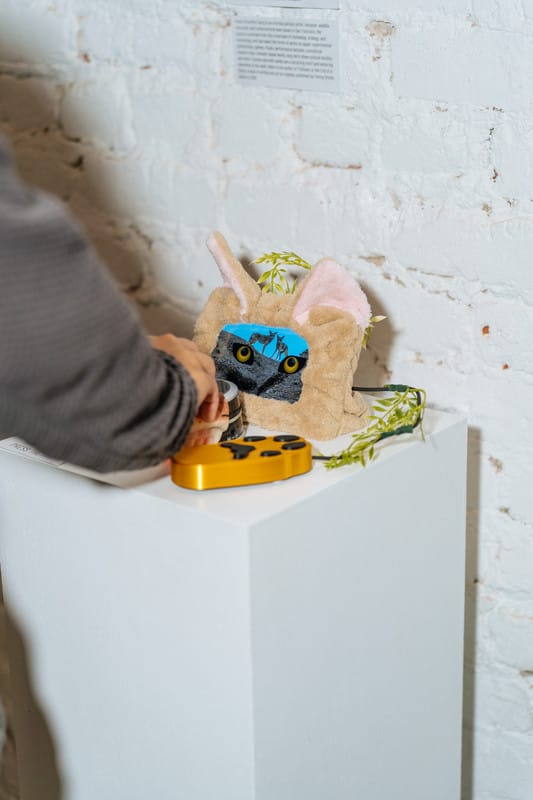
Helen Shewolfe Tseng’s Coyote Computer (2026) has a pink snout with a speaker for a nose. Press a paw pad and a San Francisco coyote seems to answer. Tseng drew on five years of field recordings for that instant of apparent obedience. Ethan Chang’s Stochastic Parrot, made with Quincy Kuang and Matthieu Huss, gives a furry body to a term for a machine that assembles words without grasping their meaning. The bird listens from its perch on a shoulder and can interrupt. A person who stops to chat with the wearer acquires an AI companion, too.
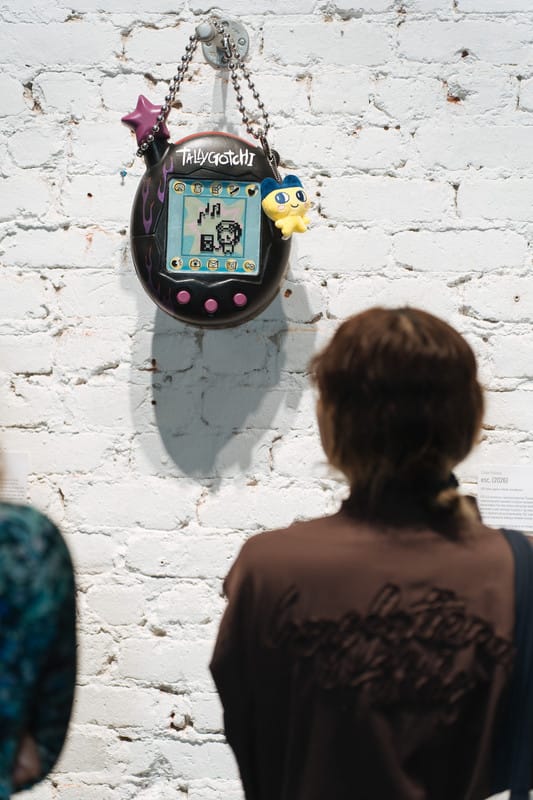
A Tamagotchi was small enough to fit in a pocket and demanding enough to organize a child’s afternoon. In Tallygotchi (2026), Ally B enlarges the toy into a mint-green leather handbag with a chunky chain. The foals in Joey Serricchio’s Pasture (2022) feed themselves on flowers and grow up to have young of their own. You can miss an entire generation without doing any harm.
As a child in Tijuana, Silva Lizárraga could count the pixels in advertising banners enlarged on the cheap. On weekend shopping trips across the border to San Diego, the pixels seemed to disappear. The artist remembers wanting shoes from Payless and something harder to acquire, the chance to “become full resolution”. After the family moved to Santa Ana, California, knowing how to shop like an American proved a poor guide to feeling like one. The adult has made a game to warn the child, who would have loved every gaudy pixel of it.
When Build-A-Bearville opened online in 2007, the toy chain called its users “citizens”. A code on a stuffed animal’s birth certificate admitted its digital double to the virtual world.
Silva Lizárraga takes the retailer at its word. In her mall, a banana icon opens a citizenship test. The first round offers the same glossy fruit in three colors. Of eighty-one possible sequences across four rounds, exactly one earns admission.
Choose blue first and the verdict is settled, though the mall politely solicits three more opinions. Six seconds after a refusal, the menu reopens.
On a second visit the border runs between the color that catches your eye and the one you think will let you in.
All images courtesy of tiat