EVENT: NAO USAMI, RESOLUTION OF A WOUNDED SKIN (OCTOBER 23–DECEMBER 20 2026, KYOTO, JAPAN)

Nao Usami
Resolution of Wounded Skin
October 23–December 20, 2026BlackBoxKyoto, Kyoto, Japan
An artist talk with Usami and media art historian MA Jung-Yeon, Professor at Kansai University, is scheduled for Saturday, November 21, from 6:00 to 8:00 p.m., with in-person attendance and online streaming planned.
BlackBoxKyoto is located on the third floor of the Taniguchi Building, 171-1 Kashiwaya-cho, Nakagyo-ku, Kyoto. Opening hours are Friday through Sunday and public holidays, 1:00–9:00 p.m. Admission is ¥1,000, with no advance reservation required.
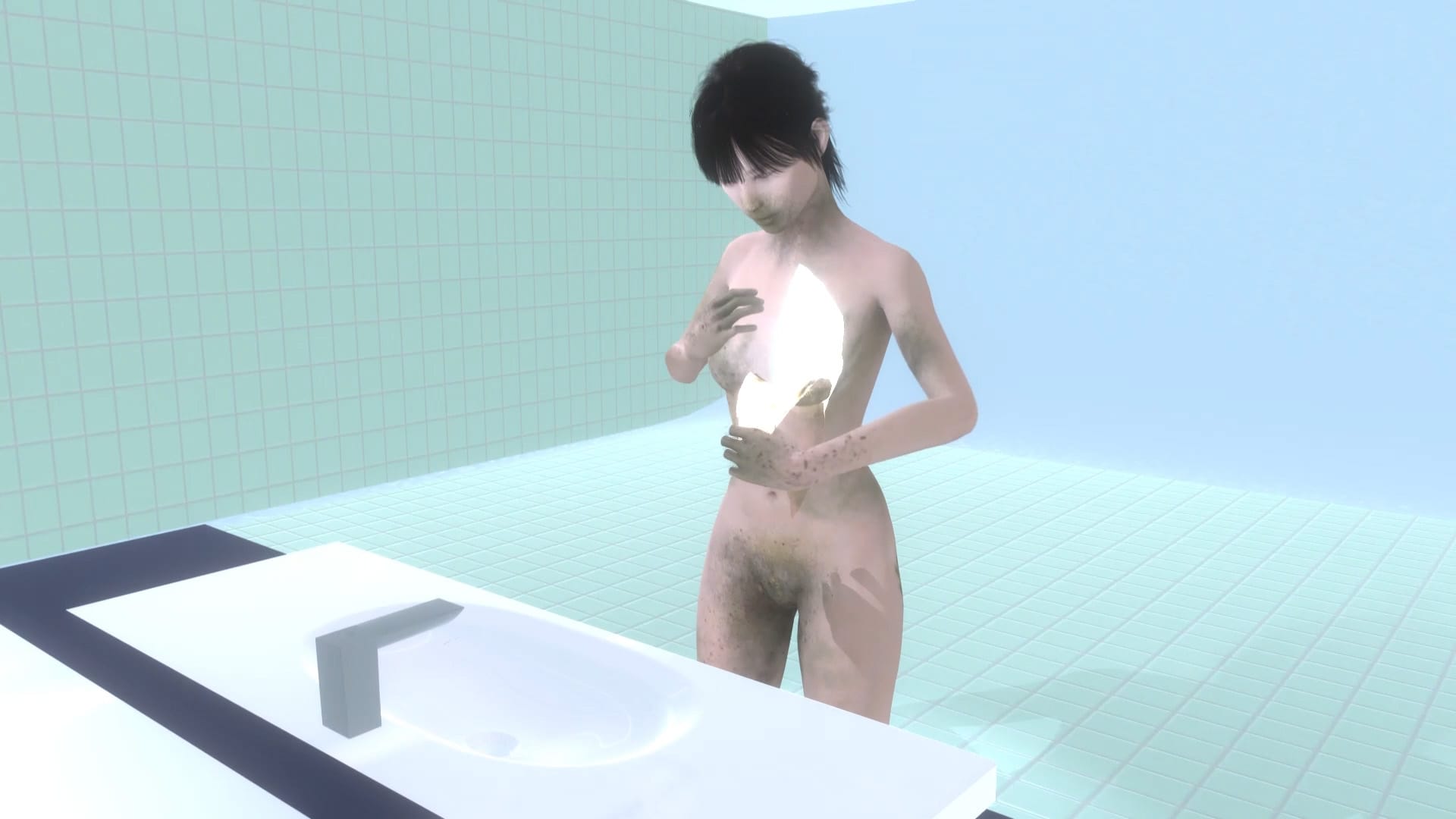
In Replay over and over (2023), a character comes under attack and the player’s controller ceases to respond. However urgently the player attempts to intervene, the onscreen body remains immobilized. This deliberate interruption of gameplay is central to Resolution of Wounded Skin, a solo exhibition by Japanese artist Nao Usami at BlackBoxKyoto, running through December 20, 2026.
Bringing together videogames, animation, and installation, the exhibition examines the relationship between digital representation and bodily experience, with particular attention to sexual violence and the possibility of inhabiting bodies beyond established social classifications.
Nao Usami, I stitch my skin to the ground, 2023. Source: Nao Usami
At the center of the exhibition is I stitch my skin to the ground (2023), a twenty-minute videogame project comprising Replay over and over and Ambiguous Lucy (2021). Developed around accounts of sexual violence and the resulting estrangement from one’s own body, the project explores the relationship between player agency and physical vulnerability.
In Replay over and over, Usami disables the character’s movement during an assault, translating the involuntary freezing response associated with traumatic experiences into a disruption of the game’s control system. The mechanic isolates the discrepancy between intention and action, making the player’s inability to intervene an integral part of the work’s formal structure.
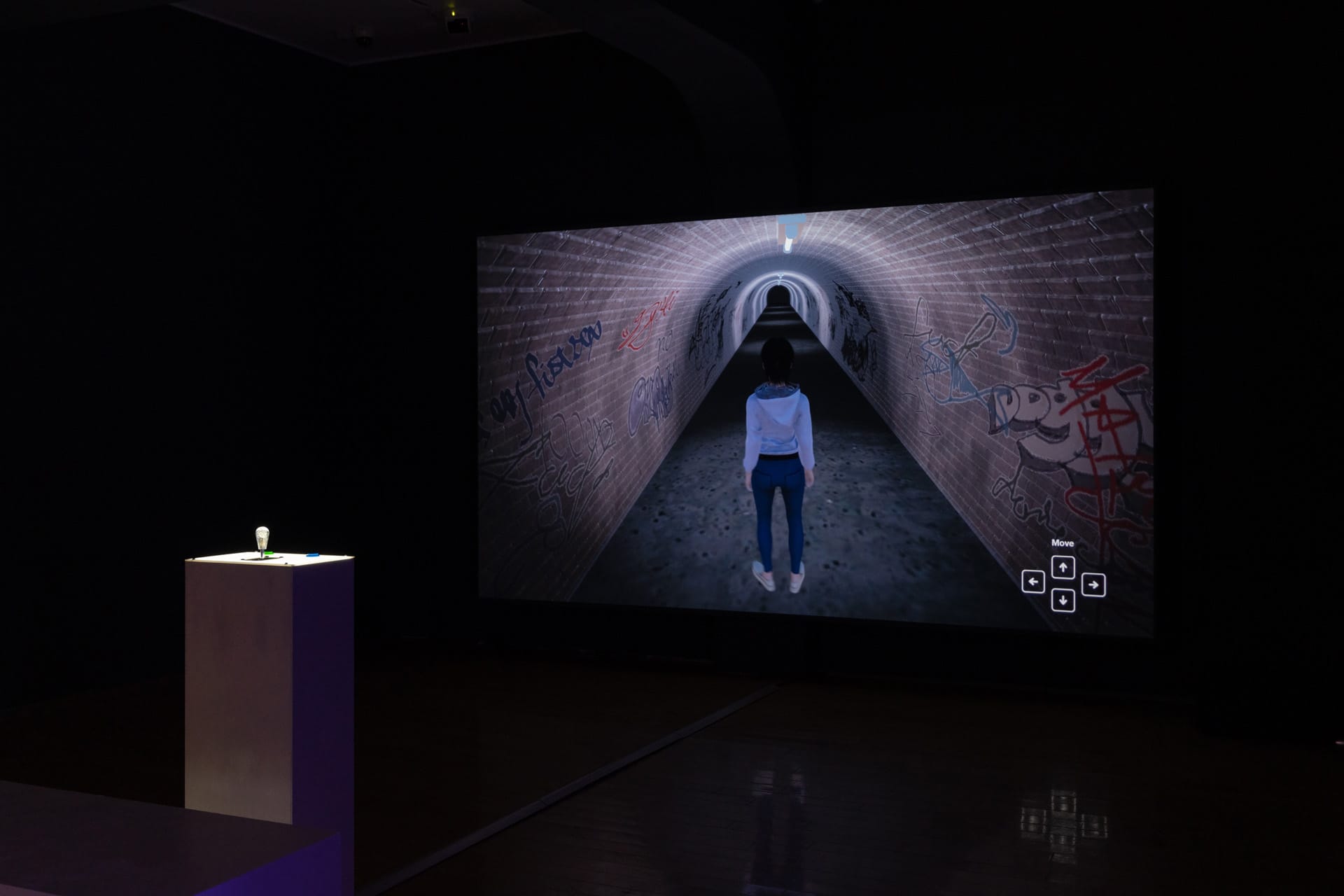
The project received an Honorary Mention in the New Animation Art category at the 2024 Prix Ars Electronica. The jury interpreted its subsequent opportunities for bodily transformation through the concept of “reparative play”, recognizing the relationship between altered gameplay conventions and the reconstruction of personal agency. The proposition remains ethically demanding: a temporary loss of control cannot reproduce the experience of sexual assault, although it can make the familiar connection between input and movement unexpectedly unreliable.
Nao Usami, Ambiguous Lucy (2021)
Ambiguous Lucy pursues a different possibility. Its protagonist enters a world where human bodies merge with animals, vegetation, and mechanical objects. Rejecting conventional classifications of gender, Lucy adopts an indeterminate bodily form before selecting another entity with which to combine. The title references Lucy, the approximately 3.2-million-year-old Australopithecus fossil, introducing an evolutionary dimension to Usami’s interest in bodily identity. Here, videogame choice becomes a means of imagining forms of existence that exceed familiar distinctions between human and nonhuman life.
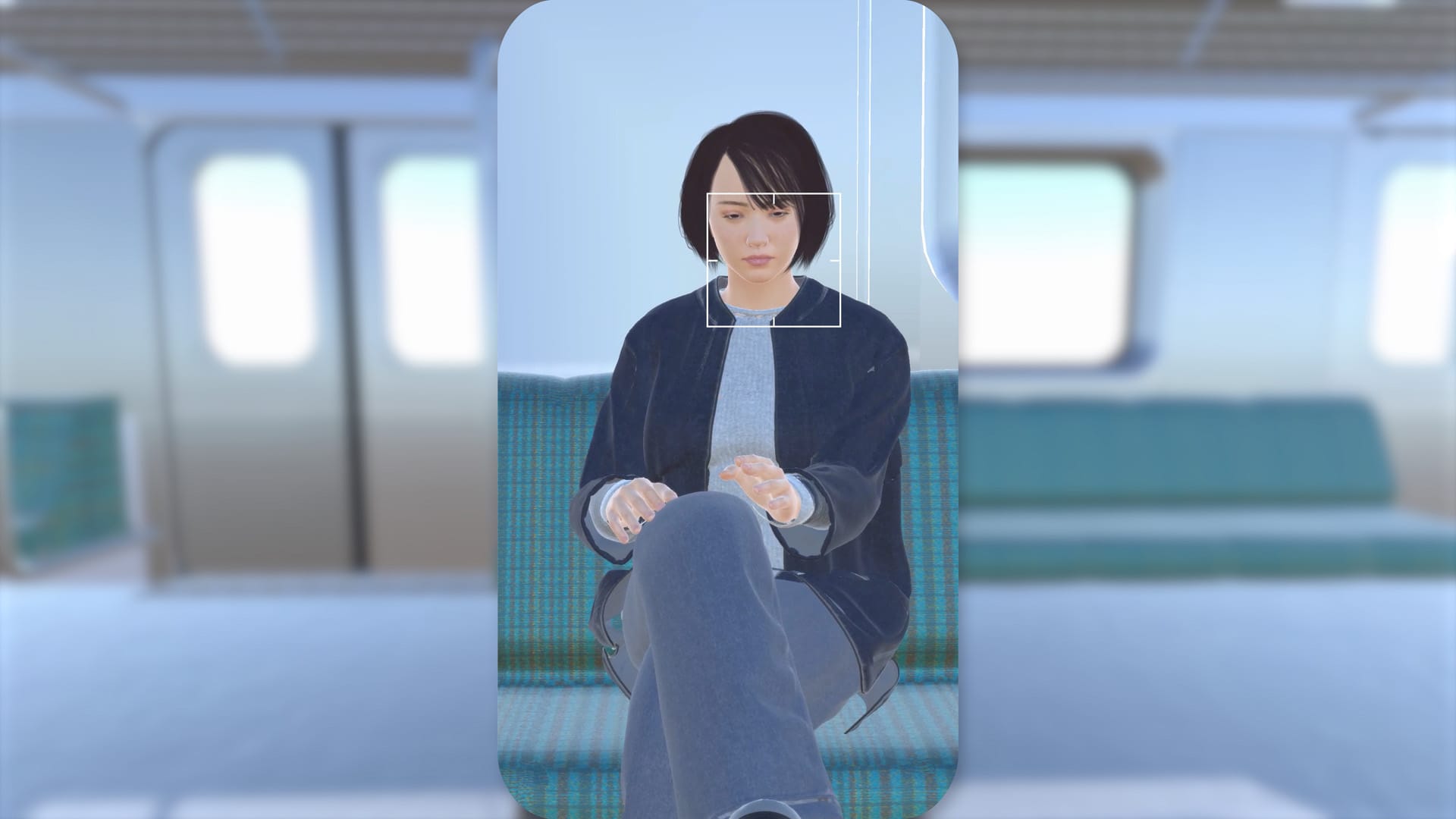
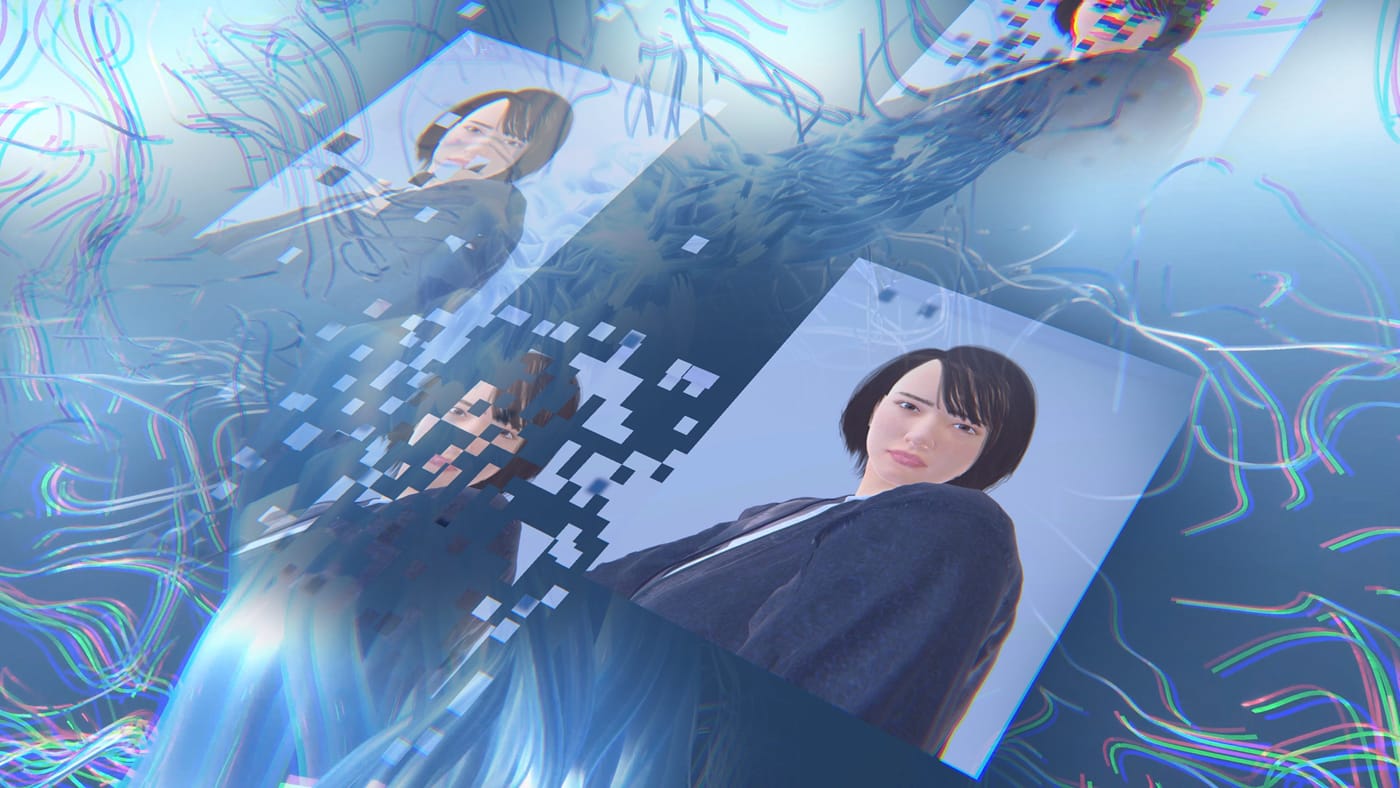
The exhibition also includes Clean Up My Pixels (2025), a sixteen-minute single-channel video combining 3D computer animation with performances filmed in public spaces. The work addresses digital sexual abuse, including nonconsensual photography and AI-generated pornographic imagery. Scenes of cleaning performed in railway stations and streets express the protagonist’s desire to remove traces of experiences that persist across digital networks and in bodily memory. According to the artist, these interventions draw inspiration from Mierle Laderman Ukeles’s Maintenance Art performances. Usami extends the earlier artist’s engagement with cleaning and repetitive labor into a situation where images can circulate indefinitely, often beyond the control of those represented.
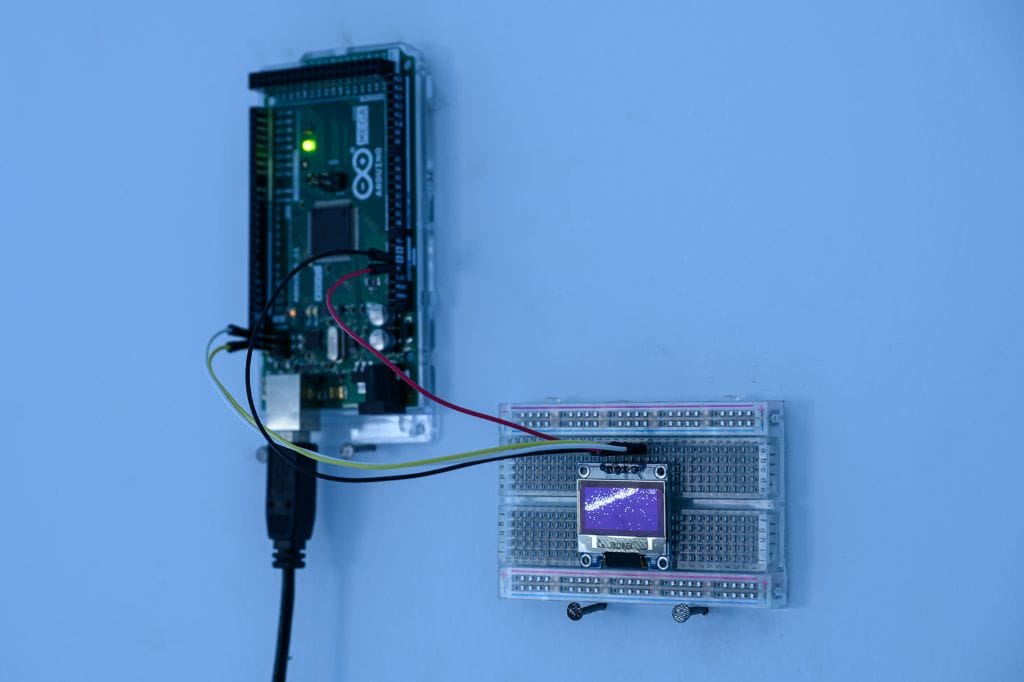
An earlier work, Pixel Animation (2019), shifts attention to the material construction of digital imagery. Using a small display measuring 128 × 64 pixels, Usami programs an Arduino microcontroller to generate looping animations of waves and tidal movements. The work revisits the restricted visual resolution of early videogame hardware, when computational limitations required economical graphic representation. Within the present exhibition, its modest technical apparatus provides an instructive counterpoint to the sophisticated 3D environments of Usami’s subsequent projects. The exhibition’s title acquires a further implication: resolution concerns the technical properties of an image as well as the uncertain relationship between visibility and bodily knowledge.
Born in Tokyo in 1994, Usami completed an MA in Film and New Media at Tokyo University of the Arts in 2020. Her practice has increasingly incorporated interactive videogames alongside VR and motion-capture performance, including Apes Return to Sea (2024), developed with dancer and choreographer Moe Kobayashi. She presented I stitch my skin to the ground at TOKAS-EMERGING 2023 and has subsequently participated in international screenings and residencies. Earlier this year, her New York exhibition, See Me, Feel Me: A Collective Story, Share Resilience, at All Street Gallery brought together Clean Up My Pixels and I stitch my skin to the ground, accompanied by a discussion of surveillance and sexual exploitation in public and online spaces.
BlackBoxKyoto, which opened on May 22, 2026, is an experimental project space dedicated to moving-image art. Developed by the Japanese company nenex, the venue accommodates approximately ten to twelve spectators in a darkened screening environment designed for concentrated encounters with audiovisual works. Its inaugural program featured an archive of films by Nao Yoshigai, followed by Ryotaro Sato’s Outlet (2026), an exhibition examining the circulation and reuse of 3D models and videogame assets, which we previously covered here. The venue also functions as a testing site for ArtEX, an evolving distribution platform intended to establish provenance and ownership records for digital artworks. Its technical ambitions offer a revealing context for Usami’s exhibition. The gallery is developing mechanisms to authenticate digital objects and regulate their circulation, while Usami examines the consequences of images produced and distributed without the consent of the people represented. These are distinct questions of ownership and bodily autonomy, connected by the problem of determining who retains control over a digital representation.
All images and videos courtesy of BlackBox and Nao Usami