EVENT: GABRIEL MENOTTI (MAY 1—14 2026)
Magic Circles
Digital video, color, sound, 22 min 42 sec, 2024–25 Canada.
Online laboratory, four-channel video series, and pop-up exhibition. Produced by Sojung Bahng. Part of the MetaMetaverse SSHRC Insight Development program. Companion exhibition: Distribution of the Sensorial, Zentrum für Netzkunst, Berlin, October 2025.
Directed by Gabriel Menotti
The title carries a double meaning. From Huizinga, it borrows the concept of the bounded space in which play becomes possible: a threshold separating ordinary time from something else. But it also names a social form: people drawn together around something provisional, requiring collective maintenance to survive. Both senses are at play here: Magic Circles is partly a test of whether they can be held in tension. In late 2024, Menotti assembled a small cohort of artist-researchers, each committed to a different virtual world, each pressing against its particular limits. DC Spensley had spent decades making performances that exist only inside shared online environments; Debbie Ding was extending a psychogeographical practice into the architectural constructions of VRChat; Jan Berger was searching for the outlines of a fairer art world among Roblox’s teenage communities; and Hortense Boulais-Ifrène was holding open a question that resists resolution: what becomes of Chris Marker’s work in Second Life, now that the world he built it in is no longer what it was. Conceived as a sui generis residence rather than a workshop, the project ran for eight weeks of shared work and mutual reflection. Its final form makes a claim about where artistic production ends and public address begins. A four-episode video series presents interviews with each participant conducted inside their world of choice, refusing to extract the work from its environment for the sake of institutional legibility. The virtual space is used as an interlocutor. The companion exhibition Distribution of the Sensorial pushed the project’s implicit politics into explicit form, taking VR accessibility as its subject: the question of who is permitted to access these worlds, and at what cost.
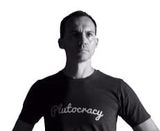
Gabriel Menotti is Associate Professor at Queen’s University, Kingston, Ontario. He holds dual doctorates — from Goldsmiths, University of London (Media and Communication) and the Pontifical Catholic University of São Paulo (Communication and Semiotics) — and moves between scholarship, curatorial practice, and research-creation with deliberate friction rather than institutional comfort. His work is organized around the conviction that media are best understood from the position of the functionary — the projectionist, the curator, the pirate — rather than from that of the theorist at a safe remove. His book Movie Circuits: Curatorial Approaches to Cinema Technology (Amsterdam University Press, 2019), rooted in experience as a projector operator and exhibition-maker, proposes what he calls an ‘indisciplinary’ media scholarship: one that grasps cinema in process, as a continuing, self-differing practice. The volumes Practices of Projection: Histories and Technologies (Oxford University Press, 2020) and Besides the Screen: Moving Images through Distribution, Promotion and Curation, both co-edited, extend this attention to infrastructure and circulation over content and text. His research into videorec — the recording of game playthroughs — traces an alternative genealogy for machinima that bypasses its cinematic pretensions, locating the form instead within the subcultures of speedrunning, tool-assisted play, and Let’s Play, and arguing that such recordings do not merely document performance but in many instances constitute it. This argument anticipates his current work on virtual worlds as dialogical fields, environments where identity, sociability, and embodiment are negotiated in real time, and where the conditions of production are themselves an artistic subject. He coordinates the Besides the Screen research network and festival and convened Museums Without Walls, a curatorial survey on media infrastructures and cultural institutions.