RESOURCE: GAME POEMS JOURNAL

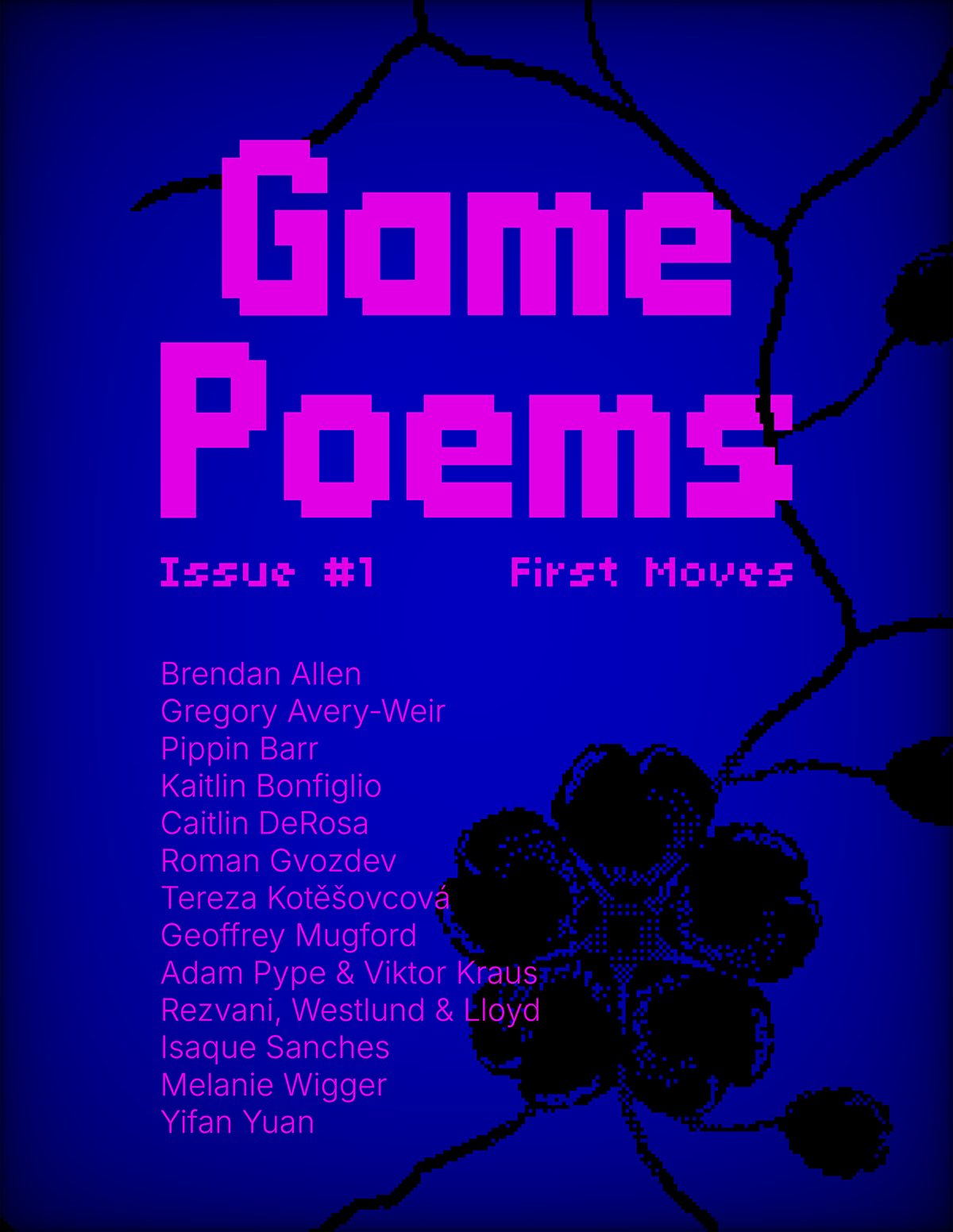
A new open-access journal is proposing a simple provocation: if poetry can be published, edited, archived, and cited, why not publish games in the same way, i.e., playable, peer reviewed, and contextualised as artistic research?
Founded and edited by Jordan Magnuson (Senior Lecturer in Games and Media Art at Winchester School of Art, University of Southampton), Game Poems has debuted online with its inaugural issue, Issue #1: “First Moves”, a curated set of short interactive works designed to be played in minutes, presented alongside brief artist statements and editorial framing.
Game Poems describes itself as an online literary magazine dedicated to the “artistic and poetic potential” of short-form videogames, and it puts the artefacts first: each contribution is published as a playable work inside the journal itself, rather than as screenshots, documentation, or a critical surrogate.

That emphasis is also methodological. In the University of Southampton’s announcement of the launch, the project is characterised as treating videogame-making as a poetic practice in its own right, foregrounding mechanics, images, sound, constraint, ambiguity, and lyric modes of expression over a model in which the game merely illustrates written text.
The journal’s infrastructure borrows from academic publishing without reproducing its usual object (the article) as the privileged (or exclusive) output. According to the journal’s submissions guidelines, issues are edited by a rotating collective, drawing from invited contributions as well as an open call; all submissions, including editor submissions, undergo blind peer review by “first readers.”
Game Poems is also explicit about distribution. The magazine is not simply a browser-based collection: it lies at the intersection of several social, technical, and cultural networks: independent games, digital literature, poetry, and game studies communities.

Legally, the project opts for permissive reuse: the magazine releases published games under Creative Commons Attribution 4.0 (CC BY 4.0), while noting that creators retain ownership and can later distribute or sell under other terms.
Issue #1: “First Moves”
The debut issue gathers 13 new short-form games by contributors spanning poets, scholars, students, independent developers, and established designers.
Issue #1 contributors are Brendan Allen, Gregory Avery-Weir, Pippin Barr, Kaitlin Bonfiglio, Caitlin DeRosa, Roman Gvozdev, Tereza Kotěšovcová, Geoffrey Mugford, Adam Pype & Viktor Kraus, Ash Rezvani, Brittany Westlund & Kate Lloyd, Isaque Sanches, Melanie Wigger, and Yifan Yuan.
Even from that roster, the editorial pitch is clear: “First Moves” treats smallness as an aesthetic and conceptual constraint: games that can be read in a single sitting, emphasizing attention to form.

Magnuson’s broader body of work has long tested how minimal interaction can carry affect and argument. On his itch.io profile, he frames his practice around “little game poems and notgames” that use basic interaction and computation to address subjective experience and difficult emotional material. A paradigmatic example is Loneliness (2010), a minimalistic experimental microgame described built around a single affect.
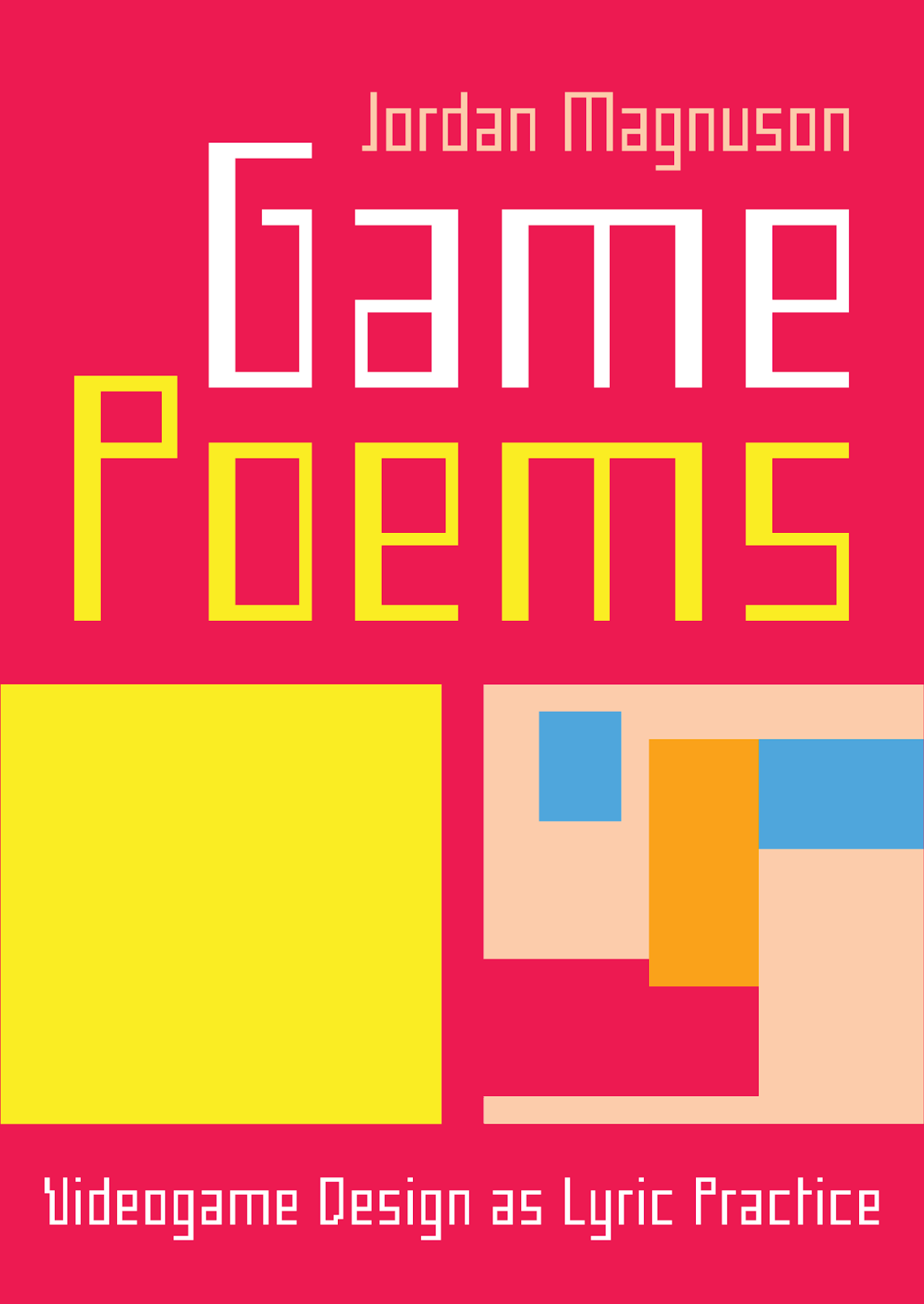
In parallel, Magnuson has articulated “game poems” as a research concept in published form. His open-access monograph Game Poems: Videogame Design as Lyric Practice (Amherst College Press, 2023) treats “game poems” through formal characteristics (brevity, subjectivity, poetic address, and so on) and closes with a practical guide to making them.
A great deal of experimental game culture already circulates through festivals, galleries, and platforms like itch.io, but it remains difficult to cite a playable work the way scholarship cites a poem, an essay, or a film, especially when the work is short-lived, buried in jams, or framed as “content” rather than publication. Game Poems proposes a different contract: games as primary texts, issued in stable “issues,” reviewed, presented with paratexts, and distributed under an explicit open licence.
The journal openly engages in conversation with electronic literature and interactive web publishing, while maintaining an indie-zine sensibility and an inclusive pitch to creators who may not identify with academia or the mainstream games industry.
In short, Game Poems is a truly innovative and unique peer-reviewed venue where playable microgames circulate as art objects with editorial framing. If the project sustains its cadence beyond “First Moves,” it could become a useful reference point for practice-based research in game studies.