EVENT: ELOUAN LE BARS’S SIDE QUEST (FEBRUARY 6–11 APRIL 2026, AUBERVILLIERS, FRANCE)
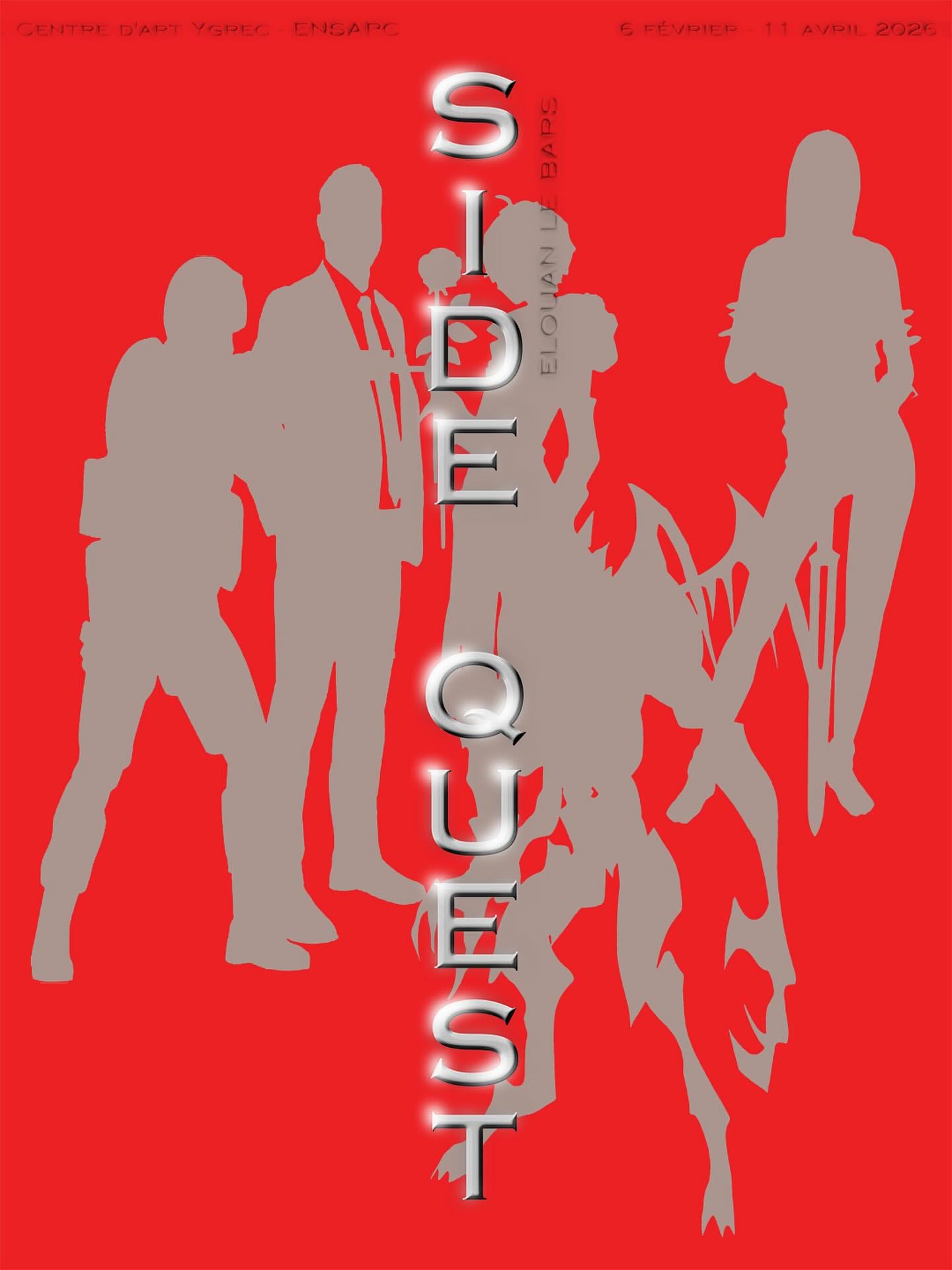
Side Quest — Elouan Le Bars
6 February – 11 April 2026 (opening: Friday 6 February, 5–9pm; Wednesday to Saturday, 2–7pm)
Curated by Guillaume Breton
Centre d’art Ygrec-ENSAPC, 29 Rue Henri Barbusse, 93300 Aubervilliers, France
At Centre d’art Ygrec-ENSAPC in Aubervilliers, Elouan Le Bars presents Side Quest (6 February–11 April 2026), a project conceived for the space and rooted in a bespoke video game developed from interviews with professional players. The result is neither a simple translation of gaming culture into an art context nor an illustration of “interactivity” as a curatorial buzzword. Instead, Le Bars treats game design as a specific kind of cultural logic, or, rather an apparatus that sorts behaviour, defines the imaginable, and trains people to accept its limits as if they were personal preference.
The exhibition takes its title from the side quest: the optional detour that runs parallel to a game’s primary objective. In contemporary online slang, accelerated by TikTok, the term has travelled far beyond videogames. “Side quest” now names the small deviations of everyday life: temporary fixations, minor missions, self-appointed tasks that sit beside the main storyline of work, optimisation, and social legibility. Le Bars leans into that semantic drift. The exhibition proposes a question that feels uncomfortably current: what happens when life starts to borrow its motivational structure from game systems, and when “progress” becomes a style of compliance rather than self-determination?
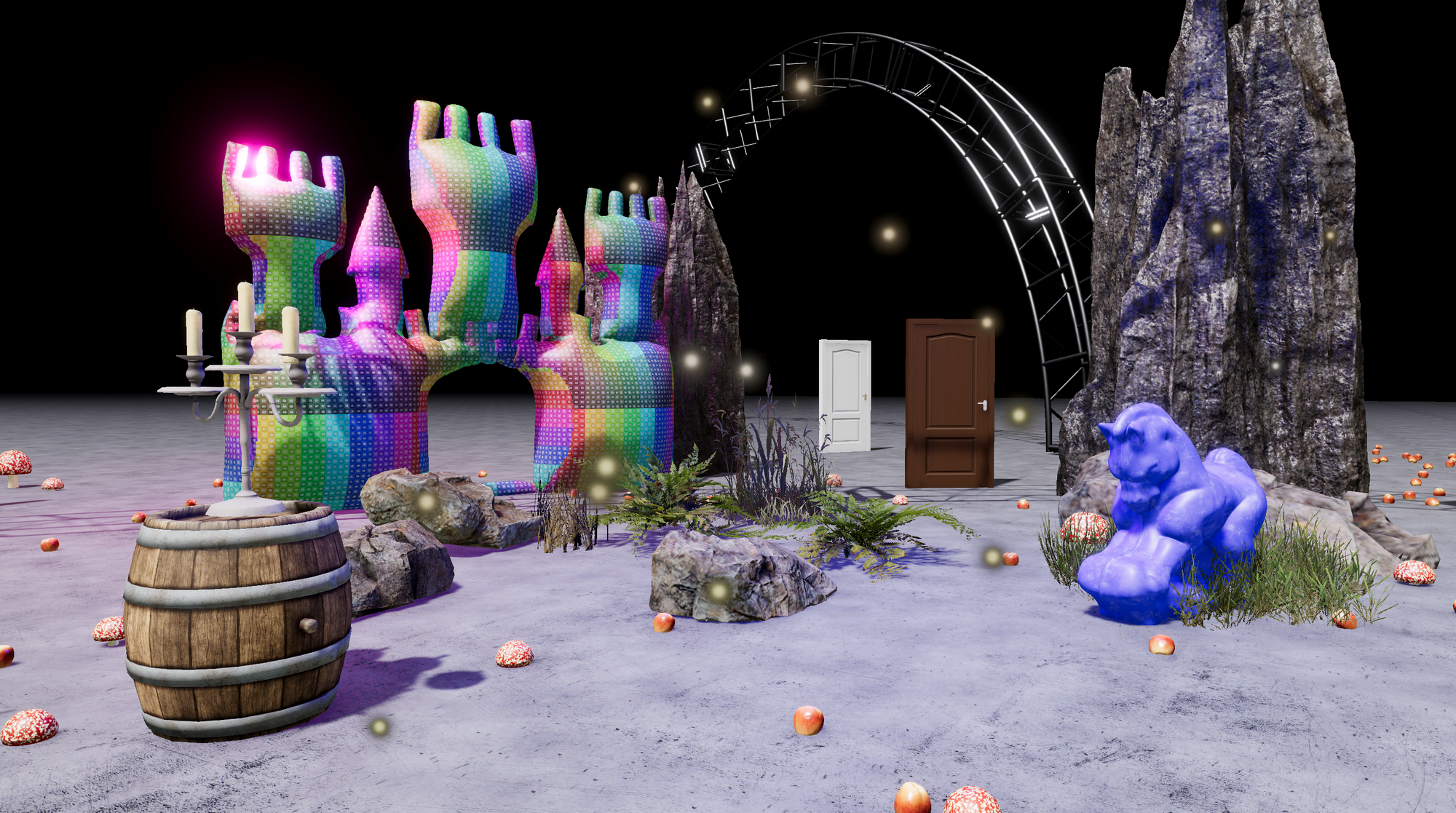
A key point of reference here is the branching narrative, one of game design’s best-known devices for producing the sensation of choice. Branching structures confront players with decisions that appear to shape the story’s direction, yet the menu of outcomes is authored in advance. The experience of agency is real enough at the level of feeling, but it is produced by architecture: pre-scripted paths, gated access, and an interface that presents constraint as freedom. In Side Quest, this logic becomes the exhibition’s underlying framework. The questions posed to the visitor imply psychological intimacy – identity, desire, motivation – while guiding them through a predetermined sequence of rooms, levels, and dreamlike environments. The work insists on a basic, often ignored fact: most “choices” are not expressions of interiority; they are responses to a designed situation.
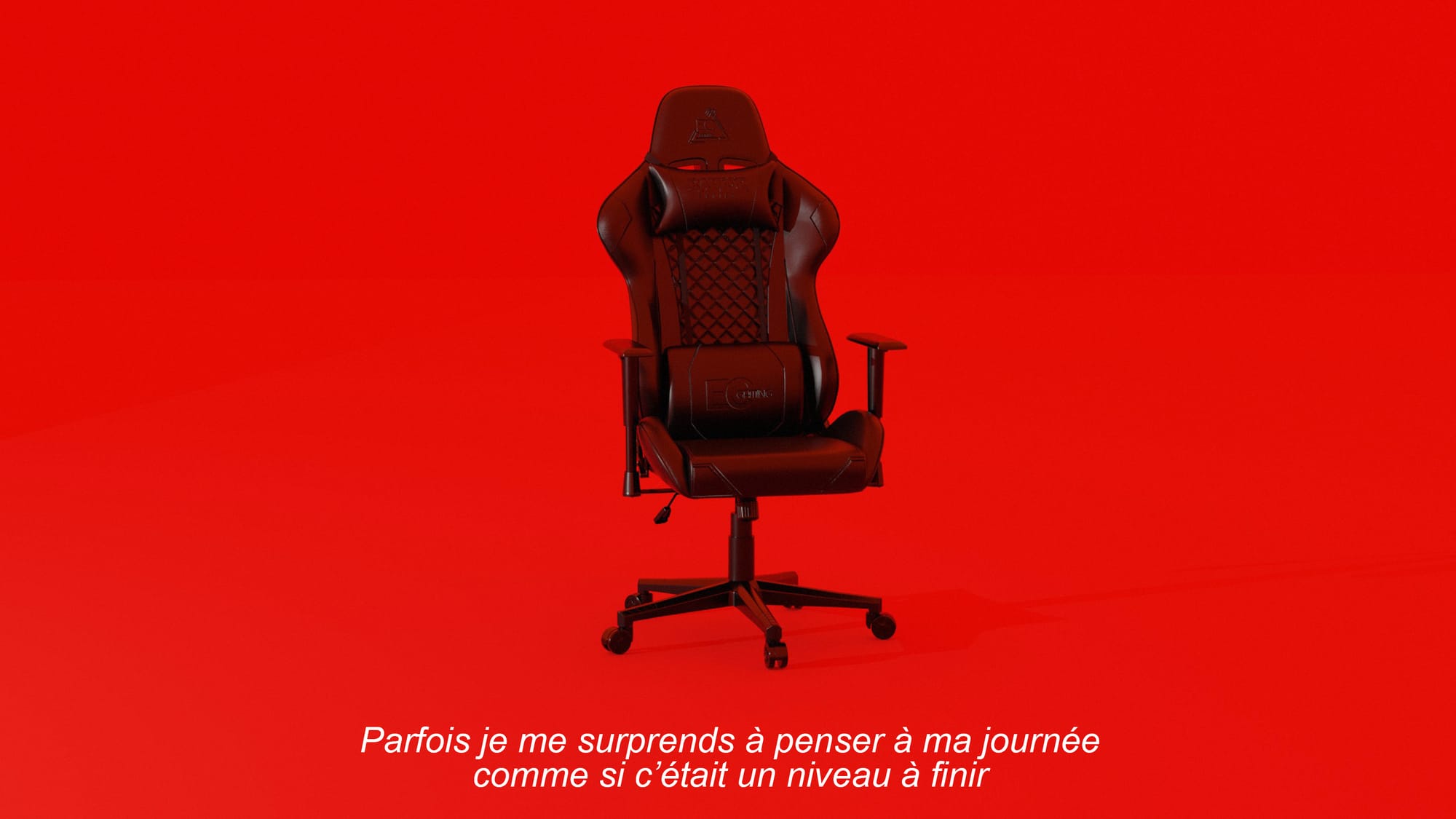
The voices of e-sports players run throughout the installation, giving the project a documentary pressure without offering documentary certainty. Doubts, aspirations, strategies, and self-discipline circulate through the space as an audible substrate. In e-sports, performance is quantified relentlessly; improvement is continuous, visible, and socially enforced. Side Quest connects that competitive ethos to broader conditions of contemporary labour, especially the demand to render oneself measurable, comparable, and permanently upgradeable. Rules, metrics, rankings, rewards: the familiar circuitry of gameplay doubles as a model for how achievement is organised and internalised beyond the screen. In this sense, the exhibition resonates with McKenzie Wark’s argument in Gamer Theory (2007) that game logics increasingly provide a template for how the world is perceived and managed.
Formally, Le Bars develops scenographic elements inspired by videogames through theatrical set-building techniques. Rather than hiding their construction, the installation foregrounds the material conditions of its own “world”: walls, partitions, transitions, and the infrastructural seams of the venue. The Centre d’art Ygrec-ENSAPC becomes legible as an environment under construction: a place where immersion is offered and interrupted in the same gesture. That double register prevents the work from collapsing into fan-service aesthetics, and it keeps attention on the mechanics that organise movement, attention, and expectation.
Elouan Le Bars (born 1998) works across video, installation, and game design. He graduated from the École nationale supérieure d’arts de Paris-Cergy in 2024, and his practice repeatedly tests the boundary between simulation and its managerial corollaries—how systems describe change, how they model risk, and how they distribute responsibility. His films, produced through live action or 3D modelling, begin from documentary materials (testimonies, interviews, digital artefacts, found objects) and often extend into installations where everyday objects act as carriers of power relations. A recent solo exhibition, Deux vérités, un mensonge, was presented in the project room of Frac Île-de-France – Le Plateau (2025). His work has also appeared in group exhibitions across France and internationally, and his films have screened at events including Cinéma du Réel (Paris), Actoral (Mucem, Marseille), and the Milan Machinima Festival, among others. Residencies include Sapporo Tenjinyama Art Studio (2024, Japan) and Villa Dufraine, Académie des Beaux-Arts (Chars, 2025).