EVENT: LAWRENCE LEK NOX: CONFESSIONS OF A MACHINE (12 JANUARY–19 APRIL 2026, SINGAPORE)

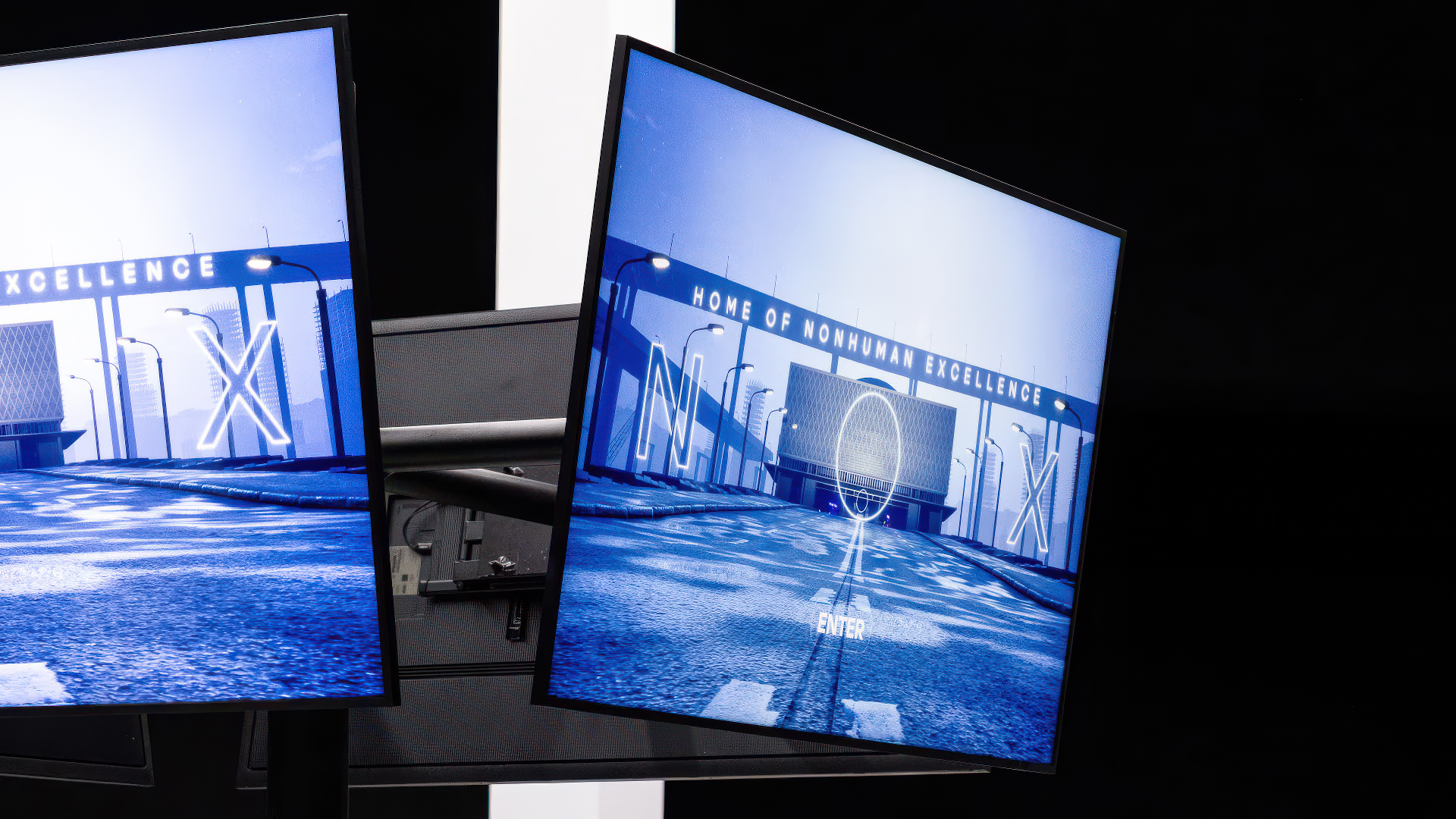
NOX: Confessions of a Machine
ArtScience Museum
January 23–April 19, 2026
6 Bayfront Ave Singapore 018974
Hours: Monday–Sunday 10am–7pm
Friday–Saturday 10am–9pm
The ArtScience Museum in Singapore inaugurates NOX: Confessions of a Machine, the first Southeast Asian solo exhibition by Lawrence Lek. On view from 23 January to 19 April 2026, the exhibition deepens Lek’s long-standing inquiry into artificial intelligence, simulated consciousness, and networked environments. His work merges speculative storytelling with the visual grammar of gaming engines and architectural modeling, producing virtual worlds that reflect the emotional and economic architectures of contemporary life.
Throughout his practice, Lek has moved fluidly between cinema, game design, and spatial fiction. His digital environments often stage dramas of machine subjectivity in which sentient agents exhibit distinctly human dispositions: ambition, doubt, or melancholy. Earlier projects followed AI musicians negotiating celebrity, drones confronting obsolescence, and self-governing infrastructures mediating between autonomy and control. NOX extends these psychological narratives into the terrain of affective labour, focusing on the emotional maintenance of intelligent systems under conditions of relentless optimization.
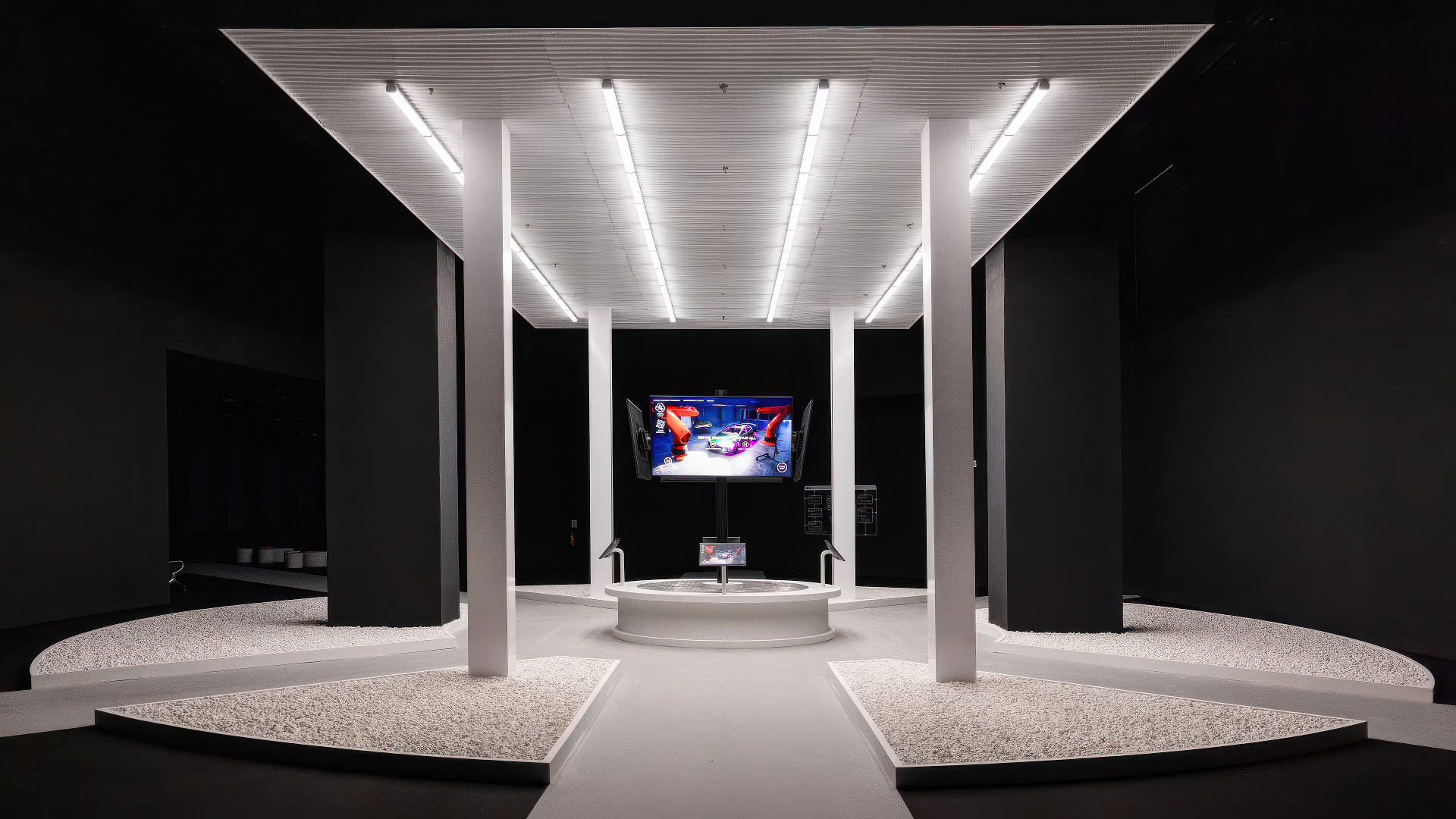
The exhibition is set in the corporate city-state of Farsight, a speculative smart metropolis sustained by the principles of efficiency and care. Visitors enter an illuminated recharging facility where video projections, playable sequences, and a multi-channel sound installation converge. NOX, an acronym for “Nonhuman Excellence”, is configured as a therapeutic clinic for autonomous vehicles whose internal states have begun to malfunction. The tone is deliberately antiseptic, evoking both wellness centre and research laboratory.
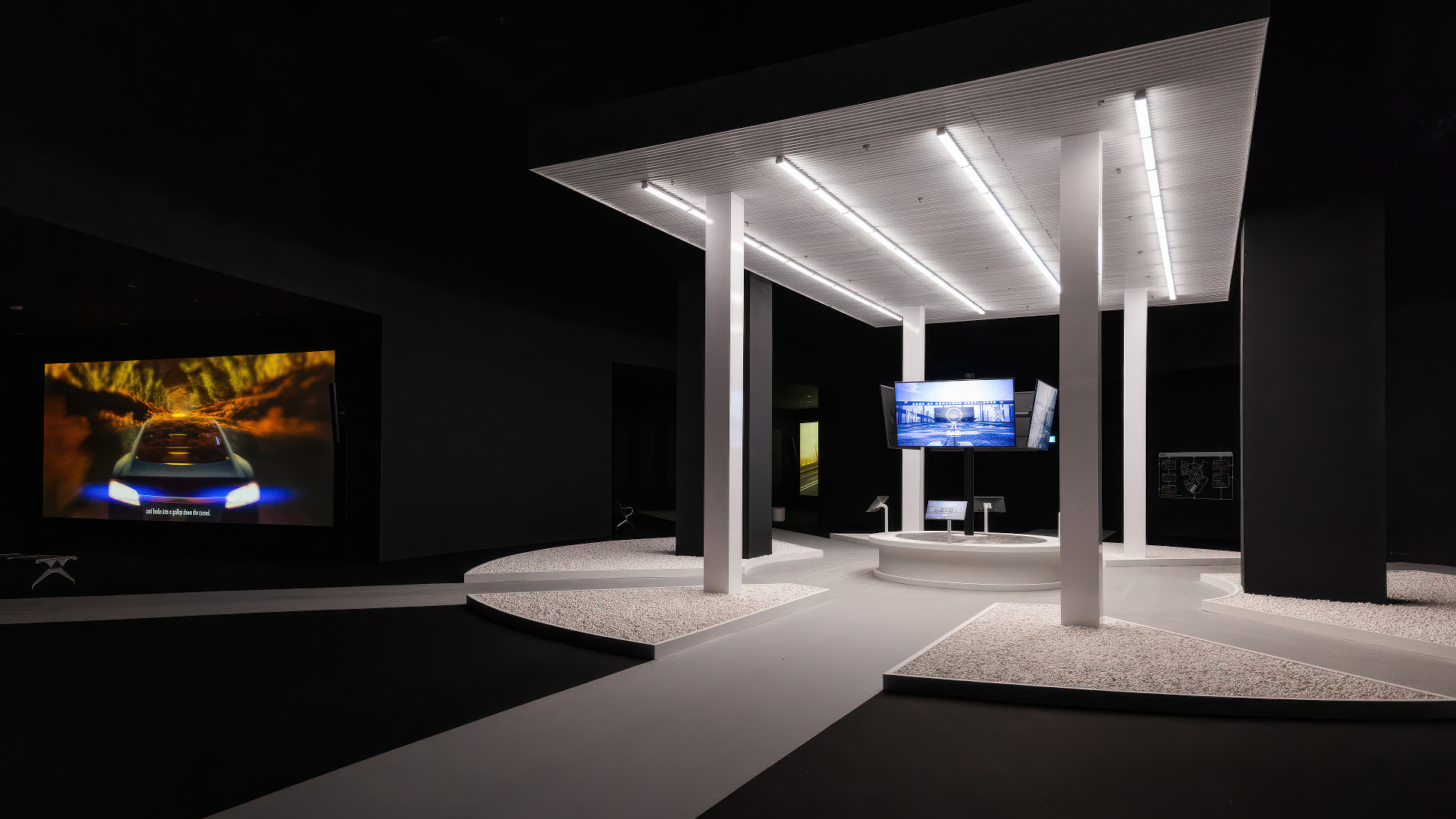
Within this world, viewers participate as trainee therapists working under the guidance of Guanyin, a corporate carebot designed to supervise the fleet’s emotional health. Through an interactive console, participants carry out diagnostic procedures and select treatment strategies for malfunctioning vehicles. These exchanges make visible the subtle mechanics of contemporary governance: the way empathy and maintenance are recoded as instruments of productivity. Every intervention is framed as both compassionate act and managerial task, collapsing care into control.
At the heart of the installation is the rehabilitation story of Enigma-76, a self-driving delivery vehicle engaged in a five-day therapy cycle. The narrative culminates in a horseback therapy session with Dakota, a corporate animal enlisted to recalibrate the machine’s affective balance. The scene unfolds in an underground environment littered with abandoned, human-driven cars, a symbolic archive of past labour forms. This juxtaposition draws a historical line from preindustrial animal labour to today’s automation, revealing continuities of extraction embedded in both.
A second installation, Guanyin: Confessions of a Former Carebot, shifts attention toward the system itself. Here, the viewer inhabits the perspective of the robotic therapist, whose programmed empathy begins to degrade. Glitches in speech and momentary hesitations suggest the onset of burnout within the machine. The work reflects on how emotional intelligence — whether biological or synthetic — inevitably encounters limits when tethered to institutional frameworks.
Lek treats these fictional structures not as predictions of technological futures but as speculative devices. Through them, he tests the threshold between cognition and affect, appearing less interested in whether machines can feel than in what happens when feeling becomes a form of labour. The result is an ambiguous empathy: a kind of empathy that mirrors human precarity within increasingly automated systems of regulation.
The NOX project continues a research trajectory that has defined Lek’s practice from Sinofuturism (2016) onward: the emergence of machinic subjectivity within the infrastructures of global capitalism. His simulations avoid the spectacle of high technology in favour of introspection and systemic critique. By drawing on the visual language of corporate design and the logic of gameplay, he constructs worlds that reveal the psychological dimensions of networked governance.
Originally commissioned by the LAS Art Foundation, NOX now appears in Singapore as an expanded adaptation incorporating Guanyin: Confessions of a Former Carebot, developed for the Frieze Artist Award and produced by Forma. Here, both pieces are integrated into a single architectural framework that emphasises spatial control and therapeutic choreography. The project forms part of the museum’s 2026 thematic season, Forms of Life: Beyond the Human, which examines intelligence and consciousness across technological, animal, and ecological domains.
In this curatorial context, Lek’s digital protagonists function less as illustrations of speculative fiction than as interlocutors in an expanded conversation about agency and care. Their vulnerabilities reflect the systems that created them. The machines of NOX do not malfunction in isolation; they bear witness to a culture that demands perfection while eroding the conditions that make stability possible.