Julian Oliver on Selectparks and experimental game modification
Originally published on GameScenes on May 14, 2010.
This email conversation with artist, programmer, educator, and critical engineer Julian Oliver took place in April 2010 and was conducted by Mathias Jansson as part of Game Artworlds: The Early Years, a GameScenes series devoted to formative artists and works in game-based art.
The interview looks back at the founding of Selectparks, one of the earliest online archives devoted to experimental videogame modification and game-based artistic practice. Oliver discusses works including QTHOTH, q3apd, and ioq3aPaint (New Arena Paintings), while reflecting on modding, open-source software, game engines as musical instruments, and the creative restrictions embedded in commercial tools.
Editor’s note, 2026: This interview is republished as an archival document. Spelling, punctuation, capitalization, and evident typographical errors have been lightly standardized. The substance, terminology, and historical perspective of the original exchange remain unchanged.
GameScenes: In 1998, you and Rebecca Cannon launched Selectparks, which quickly became an essential repository of Game Art, documenting a wide range of artistic game-development practices. How did you embark on this project? And what is the future of the archive?
Julian Oliver: I founded Selectparks in 1998, but it was only later, with the addition of Rebecca, that the project grew as an art-game news and archiving project. Meanwhile, Chad Chatterton, myself and others were busy making game-based art under the Selectparks name.
Selectparks was initially created in the interest of drawing attention to what we, at the time, saw as an emerging and underrepresented scene, that of truly experimental game modification and development.
Back then there were really only a few artists in the world expressly working in this vein; small beginnings indeed for what is now an ever more important field within contemporary art itself.
There’s been plenty of talk of taking Selectparks and producing a searchable, useful archive of all the content there, much of which isn’t publicly visible right now. It’s just a case of time, really, something that none of us have since our respective careers have taken us off in different directions.
Let it be known we’re really interested in working with a third party to help make this happen.
GameScenes: What is, in your opinion, the most important or interesting Game Artwork currently available on Selectparks? Why?
Julian Oliver: That’s really hard to answer! As I’ve never been a person to have a single favorite color or food, I’m going to have to give you three favorites.
I think PSDoom is right up there with the best of them.
PSDoom maps game events, largely the shooting of Doom’s monsters, onto processes running on the host operating system: what you think is a monster in the game might actually represent Mozilla Firefox, your image editor, or even the process responsible for your graphical display itself.
By shooting these monsters you actually terminate these processes.
This is a very early example of a game design reaching out of itself and manipulating the host, a kind of dangerous promiscuity.
PainStation was and still is a very important contribution to what we call game art.
It lifts the abstraction of computer-mediated game events, as perceived, and writes them onto the actual nervous system of the player; tearing at the skin, passing electricity into the body from the game system, bypassing the visual cortex and the emotional frustrations ubiquitous to computer gaming itself by feeding back into that which is unnegotiable in a player: their tissue, their wires.
PainStation is an important cybernetic perversion/revision of the human ↔ machine relationship, up there with Stelarc’s Ping Body and other great works of cyborgian ambition.
My final pick would be Eddo Stern’s RunnersEQ (1999).
Acting as an intervention in the once-popular MMORPG EverQuest, Eddo subjects three avatars to running across the world indefinitely, witnessed — or annoyed — by countless thousands of committed players. All they do is run.
Three computer mice, joined together such that they cannot be moved independently, control the forward direction, but not the speed, of all three runners simultaneously.
I see this game as an example of a very early “action,” in the Situationist sense, in a multiplayer game. Brody Condon’s Worship is in a similar vein.

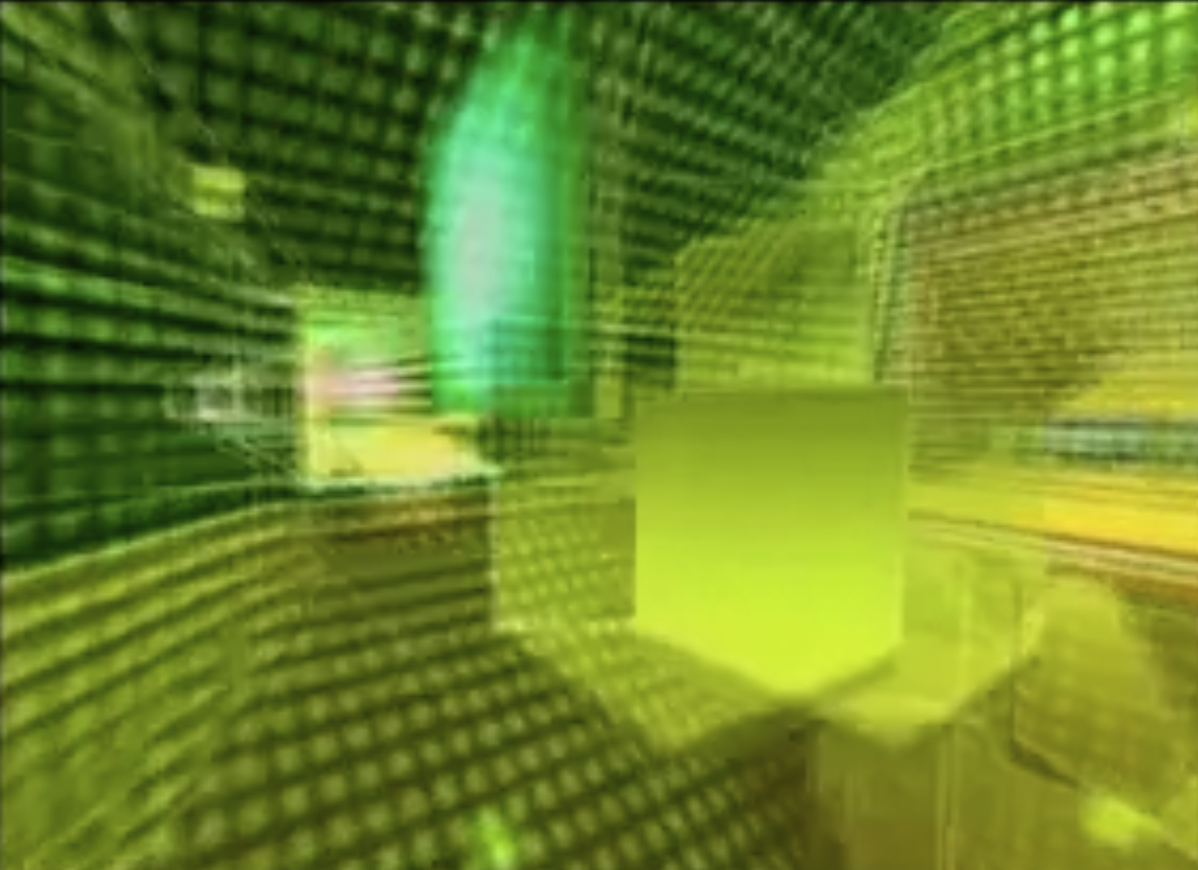
GameScenes: For QTHOTH and q3apd you used game engines to experiment with music. There were not that many artists using FPS engines to create music with videogames — one example that comes to mind is Sylvia Eckermann and Mathias Fuchs’ Hotel Synthifornia (1998). Today, music games have become an established genre. In a sense, you were a pioneer. Why is the combination of music and videogames so interesting to you?
Julian Oliver: I used to make a lot of noise music and was somewhat frustrated with a performance context limited to a laptop running software like Pure Data or SuperCollider.
Around 1998 I discovered that it was relatively trivial to repurpose a moddable game as an instrument in itself.
This coincided with several interests for me at the time: hypothetical architecture, experimental music and computer gaming.
I have always conceptualized sound spatially. For me it is more interesting, and convenient, to map properties like sustain, delay and pitch to events and ideas in a synthetic 3D environment than to a physical sound installation as such.
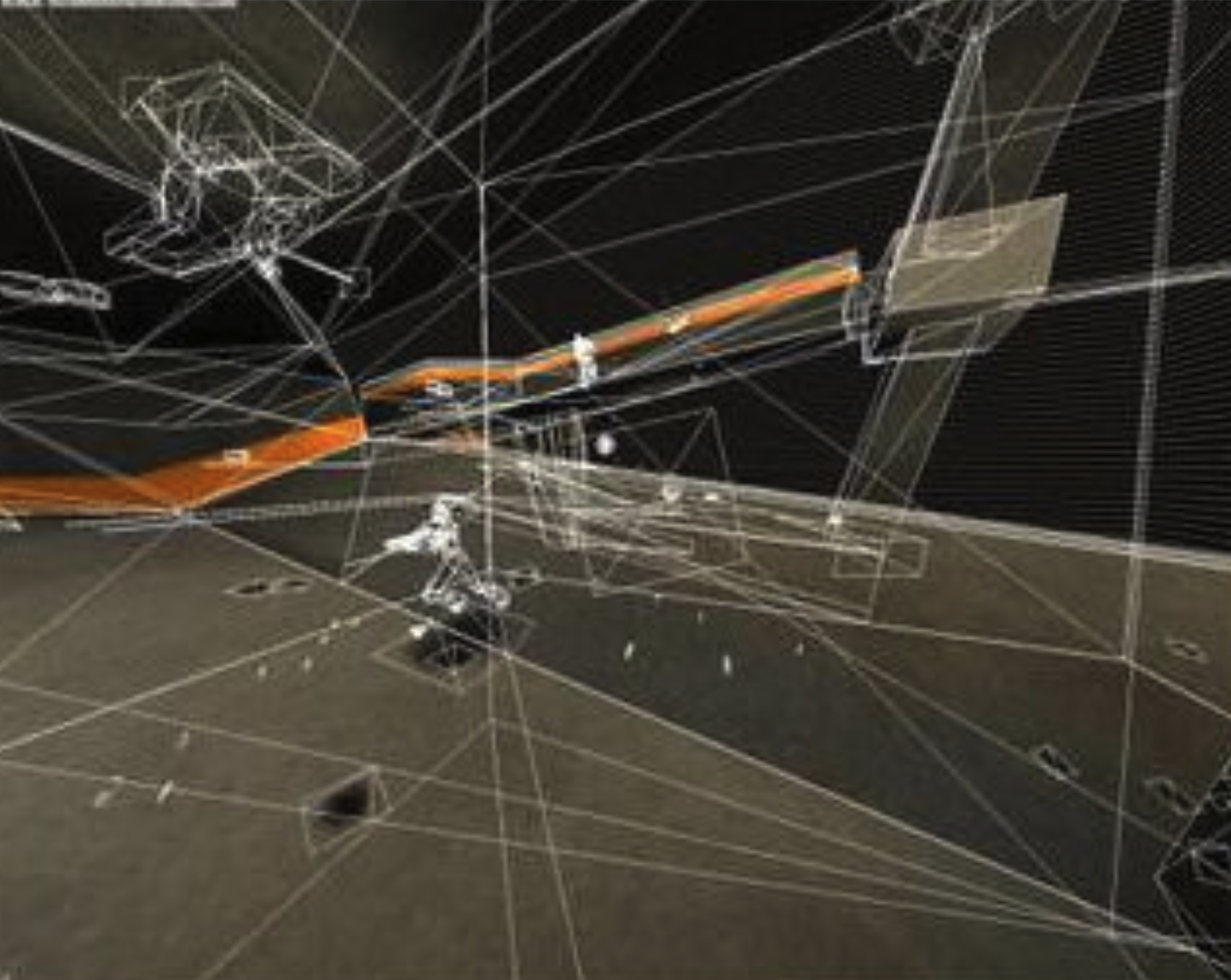
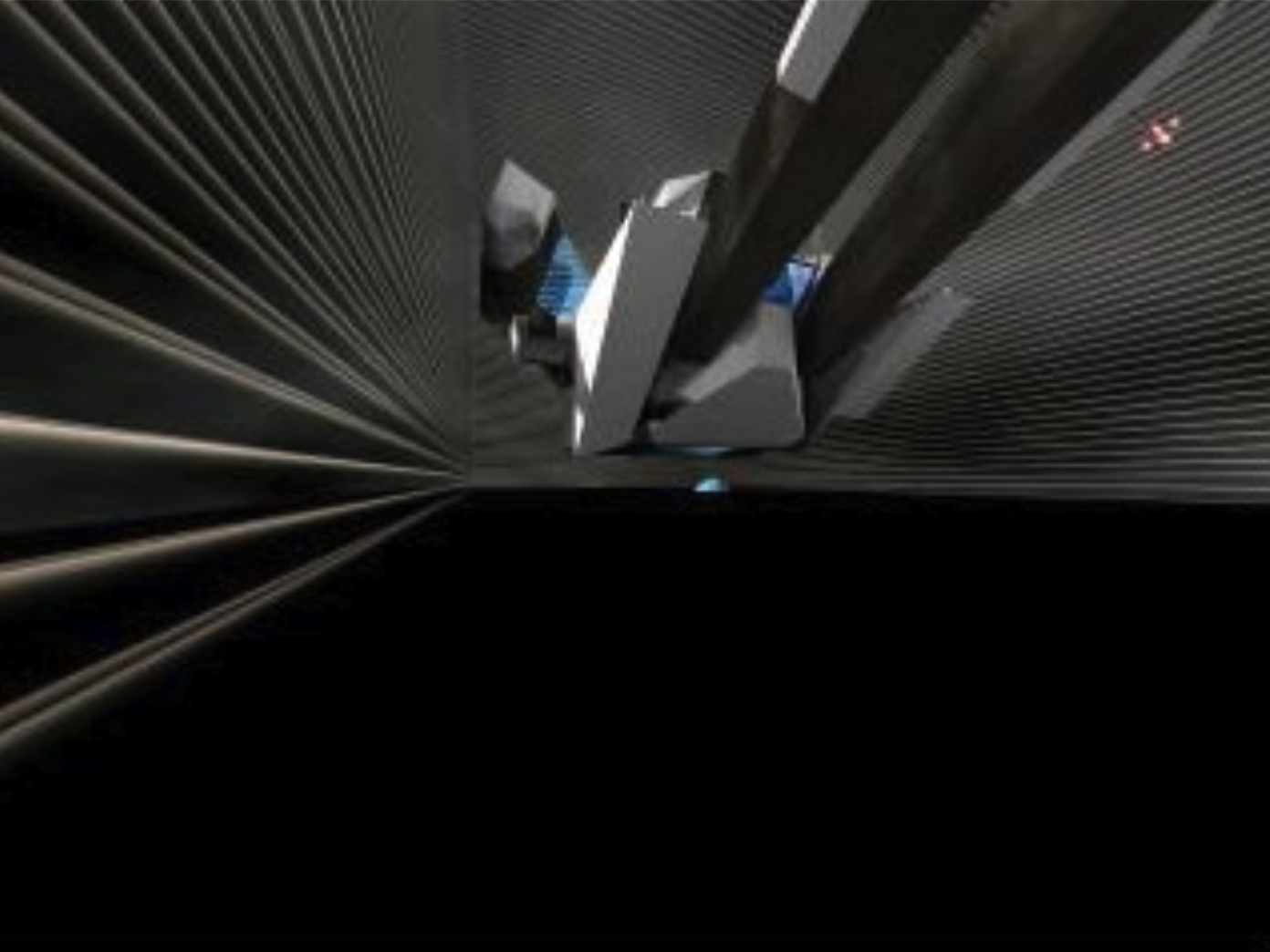
GameScenes: You’ve always used open, free software to create your artworks. In the early days, many game engines were freely available and users could modify them to create their own games and projects. In today’s fiercely competitive scene, however, game companies are not so eager to share the source code of their best titles with the community. Would you say that the hacker ethic and the ideology of open-source code were essential to the genesis of Game Art? What would have happened if Nintendo’s mentality of closedness had prevailed in the PC market as well? How has the situation changed in the last decade? What are the repercussions for the Game Art scene? How important was the open-source philosophy to your own artistic experimentation?
Julian Oliver: I think the “moddability” of those early engines was not just important but simply vital to the growth of the field.
Having game code exposed for manipulation and/or being able to load in custom art was seen as a creative boon for many of us. While many of us already had Amigas, development was often quite cumbersome and inaccessible for many.
Being able to make such rich, complex game-based art at home on your cheap Pentium II and 64 MB of RAM really opened things up.
Over the years I became a better programmer. As my curiosity and skill levels increased, so did my need to reach beyond the interaction models, player subjectivities, and other creative restrictions that “moddable” games represented.
I started to ask: “Am I creating through this tool or is this tool creating through me?”
I wanted access to engine source code, even to try to implement whole games myself, working from code libraries found online.
Linux-based operating systems were a big deal for me in this regard, and still are.
I’ve learned a huge amount from reading other people’s source code, beyond game engines themselves. I realized it was possible to “glue” just about anything to anything else, to arrive at truly weird and unusual outcomes.
It was at this point that I started to make more “computer art” than “computer games.”
I do think that we artists need to be very suspicious of the habits of style, method, and technique conveyed by the tools we use, something that extends to truly independent game development.
Every tool engenders particular use patterns and aesthetic expectations, a reason to be wary of “standardizing” on software and operating systems like those of Adobe, Apple, Discreet, id Software, and so forth.
We need to remember that these ways of working are not uncontestable givens, just particular ways of working with a computer designed and implemented with a mass market in mind.
“Think Similar™.”
I believe it’s significantly more fruitful to celebrate the unusual and complex unexpected in software and have higher expectations than merely “intuitive” tools and “sexy” interfaces.
Would the greats of painting have accepted such restrictions or the persistent presence of a Microsoft or Apple logo in their studios?
I don’t want that.
Computers are a raw tool for me and I bend them to my needs, right down to the look and feel.
Free and Open Source software provides a great platform for independent development, even if only to shake the creator out of their “industry-standardized” assumptions.
Hacking and modification are a great start, but just the beginning of a truly rigorous practice!
GameScenes: You also work as a teacher. If you compare your own research and teaching practices with those of your current students, how is the notion of Game Art perceived?
Julian Oliver: I think the expectations of students are both greater and smaller than they were ten years ago.
Students now seem to want to get back to gaming’s roots, like making 2D platformers for a mobile phone, or creating complex projects like augmented-reality, socially networked MMOs.
As what people consider a “computer game” has significantly diversified over the last decade, so have students’ interests and expectations.
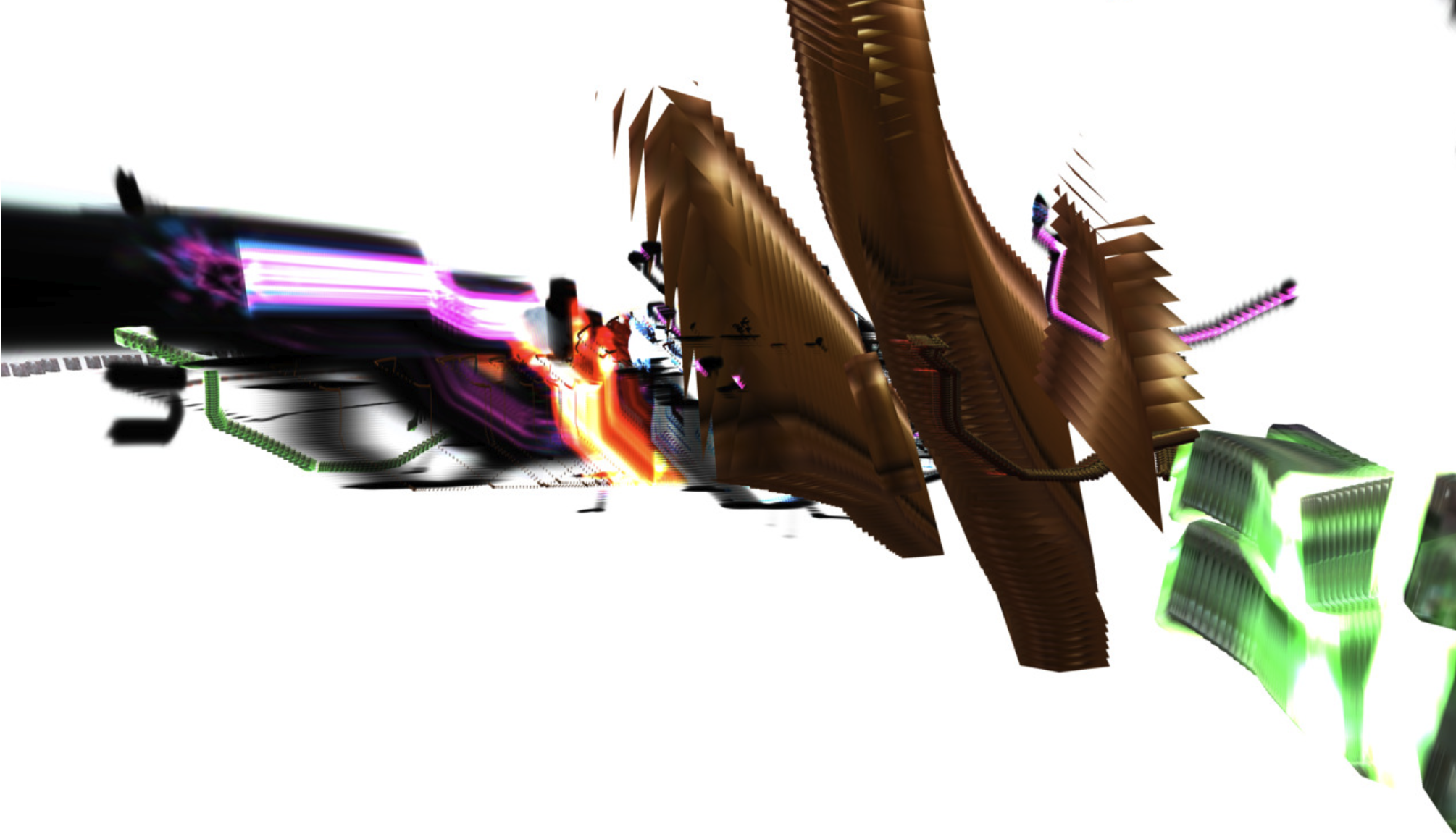
GameScenes: Can you tell me something about your latest work, ioq3aPaint, also known as New Arena Paintings?
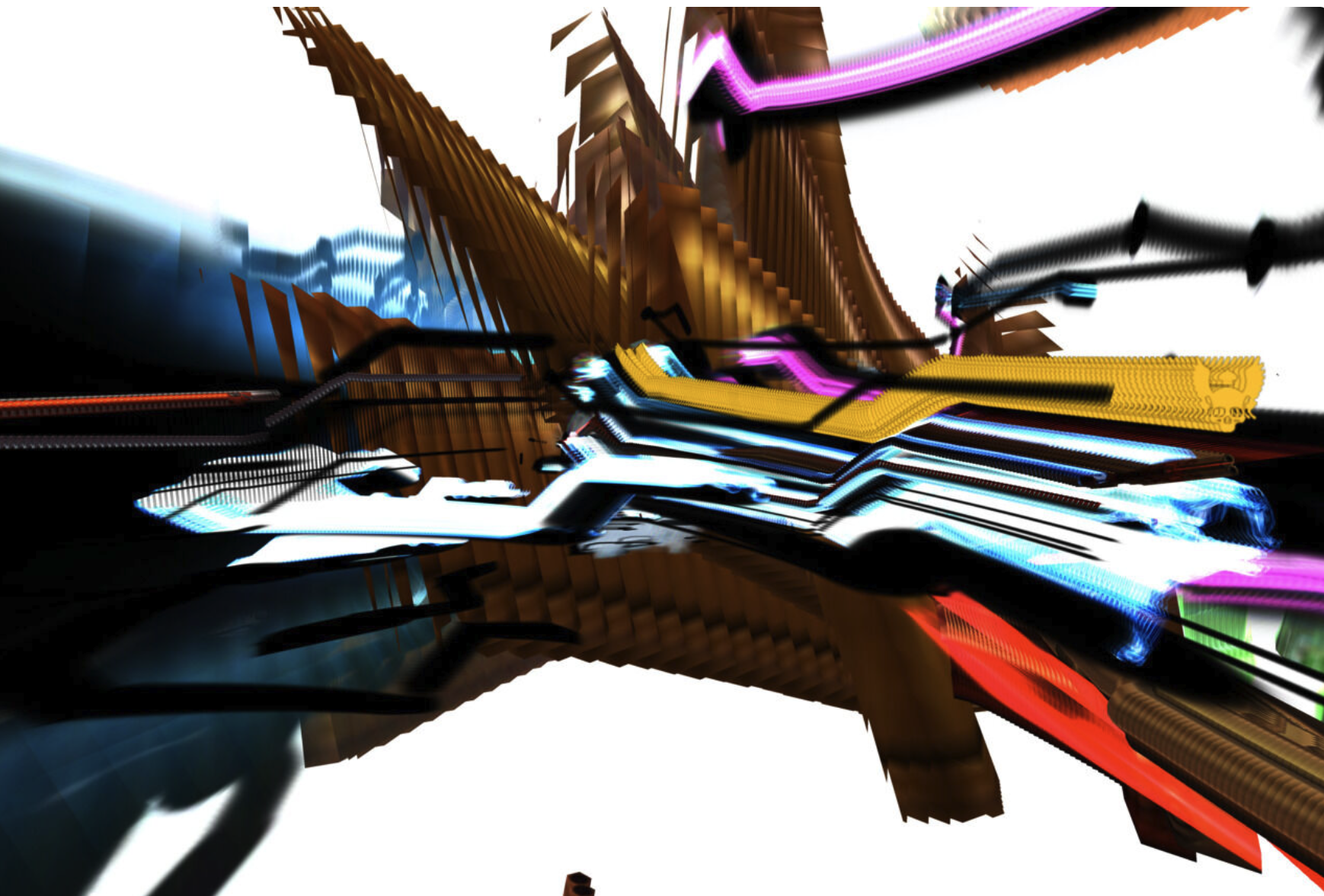
Julian Oliver: This project ultimately began in 2003 with me experimenting with developing visuals for my experimental music performances.
While experimenting with the Quake III renderer I saw what looked to me like the beginning of a platform for generating rich, abstract expressionist paintings.
So, q3aPaint was born.
Since then I’ve refined it significantly, the most recent result of which is The New Arena Paintings, recently appearing at a solo show in Dundee, Scotland, as high-quality, large-format prints.
This new system is built atop the free and open-source implementation of Quake III, IOQuake3.
I hope it will soon be available for download as a standalone project.
All images courtesy of the artist.
Interview by Mathias Jansson
Archival links
Julian Oliver
http://julianoliver.com
Selectparks
http://www.selectparks.net/
QTHOTH: The Quilted Thought Organ
http://selectparks.net/~julian/qthoth/
q3apd
http://ljudmila.org/~julian/q3apd/
Originally published on GameScenes, May 14, 2010.