EVENT: THE INEXORABLE NON-PLAYER CHARACTER (SEPTEMBER 5 AND 6 2026 HELSINKI, FINLAND)

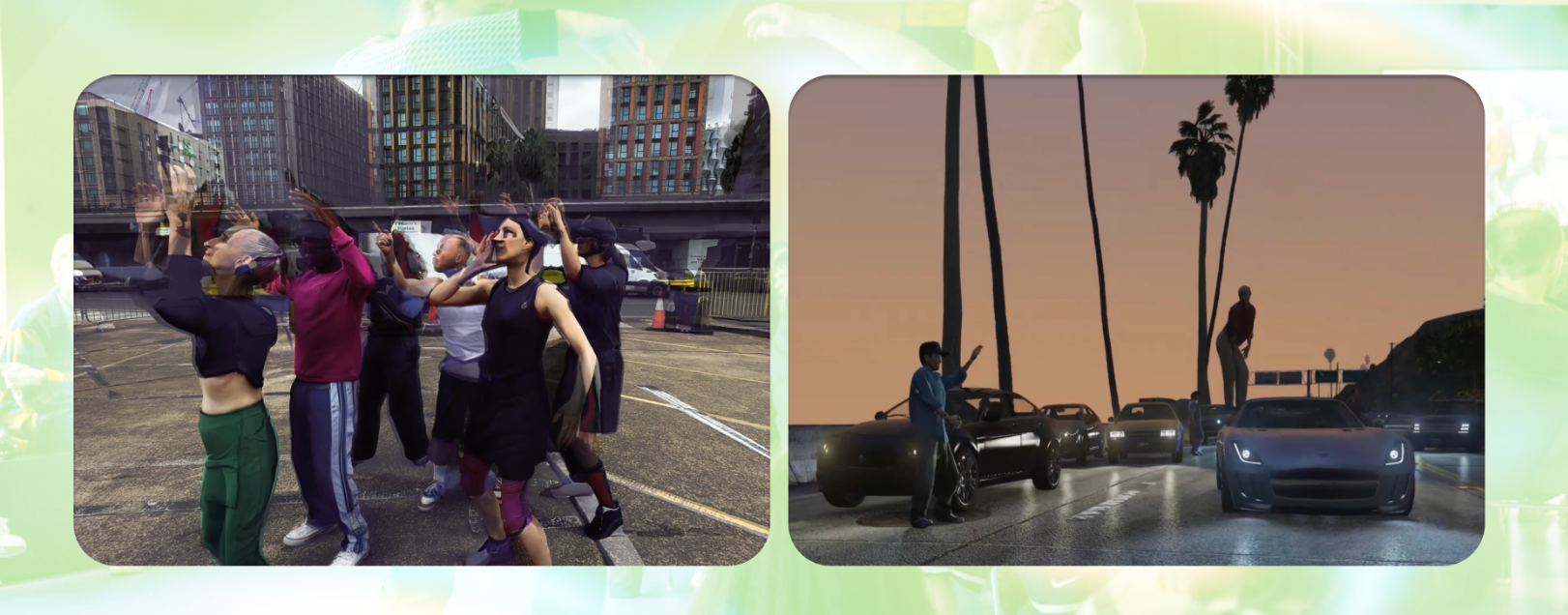
Nina Davies and 2girls1comp: The Inexorable Non-Player Character
September 5, 2026, 4:00 p.m.
September 6, 2026, 1:00 p.m. and 3:00 p.m.
Dance House Helsinki, Cable Factory
Kaapeliaukio 3
00180 Helsinki, Finland
Duration: 30 minutes
Admission: free, advance reservation available
Meeting point: Dance House Helsinki lobby
Language: the official pages do not specify a spoken-language requirement
Accessibility: the route is wheelchair accessible; part of the performance takes place outdoors and seating is limited during some sections
Artist talk: Sunday, September 6, after the 3:00 p.m. performance
Performers: Nina Davies, Juan Pablo Cámara, Christina Lovey, Yi-Chi Lee and Richard Pye.
Presented by M-Cult in collaboration with Zodiak – Center for New Dance. Gaming the Civic is supported by the Alfred Kordelin Foundation and AVEK Audiovisual Centre. The performance receives support from the Swiss Arts Council Pro Helvetia, the Finnish Institute in the UK and Ireland, and the British Embassy.
On September 5 and 6, 2026, Nina Davies and the modding duo 2girls1comp will present a new Helsinki iteration of The Inexorable Non-Player Character at Dance House Helsinki, located within the Cable Factory. The 30-minute performance begins in the building’s lobby and includes a short outdoor walk. M-Cult presents the work in collaboration with Zodiak – Center for New Dance as part of its Gaming the Civic programme. Admission is free, with advance reservation available through the official event page.
The collaboration joins two earlier projects that examine the passage of movement between human bodies and game systems. Davies developed Precursing for a solo exhibition at Matt’s Gallery in October 2023. The film constructs a fictional legal case involving a self-driving vehicle designed to anticipate pedestrian movement. TikTok performances in which people imitate non-player characters appear within this fiction as a possible response to a society increasingly organized through prediction.
Part of Davies’s premise draws on an established technical practice. Researchers have used Grand Theft Auto V to produce synthetic visual data for the training and testing of autonomous-driving systems. A 2017 study generated more than 480,000 labelled images from the game and used them to train a convolutional neural network to identify lane markings, vehicle distance and driving direction. The documented research concerns simulated driving data. The idea that pedestrians might adopt NPC-like gestures to become more readily legible to computer vision is Davies’s fictional extension of that research.
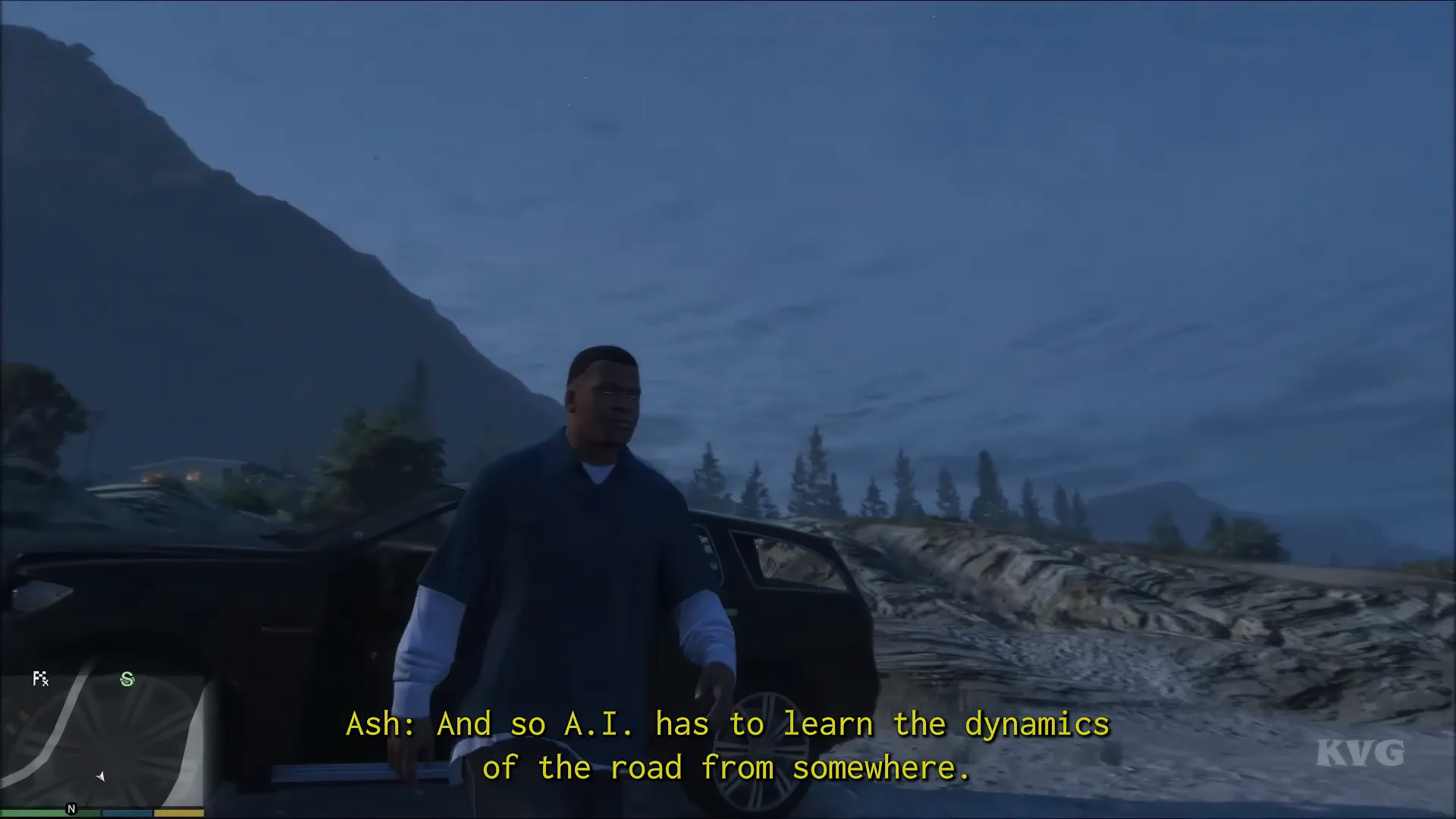
The work does not present NPC movement as a proven defence against automated vehicles. Instead, it imagines a future in which people reorganize their bodies around the representational habits of machines. Repetitive TikTok gestures become an invented vernacular for communicating with systems trained through simulations, images and behavioural prediction. Davies has described the project as an attempt to consider contemporary dances according to the social functions they might acquire, rather than treating them solely as entertainment or online ephemera.
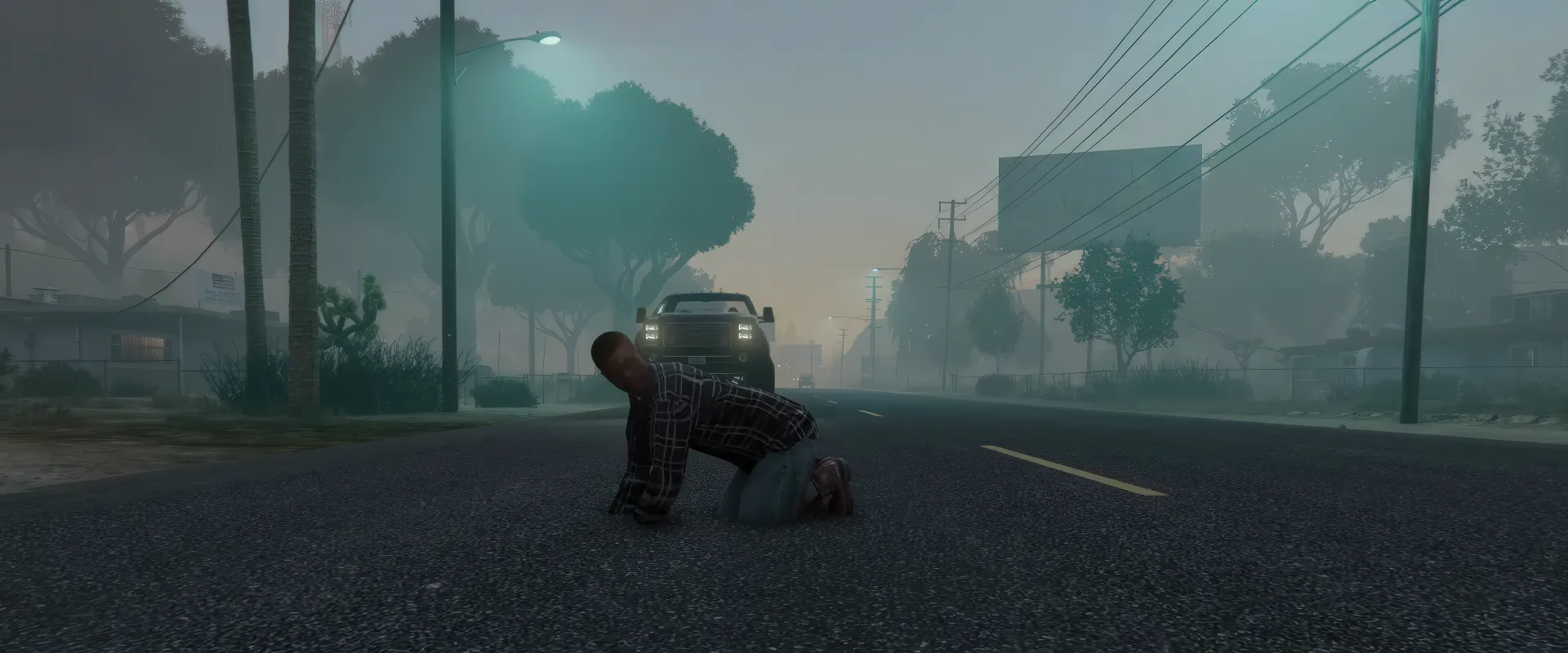
2girls1comp’s Dancing Plague operates within Grand Theft Auto V itself. The custom script gives the player a direct command: when the H key is pressed, all male NPCs begin to dance. Marco De Mutiis and Alexandra Pfammatter developed the intervention after examining the game’s animation library and finding that its dance routines were concentrated among female-presenting characters, particularly dancers associated with the strip club and sex work. Their mod reassigns those animations to male characters throughout Los Santos.
The alteration affects more than appearance. Drivers and construction workers abandon their scripted tasks, and the simulated city begins to malfunction around their movements. The choreography interrupts routines associated with labour, transport and masculine authority. Male bodies coded to drive, fight or patrol instead perform gestures that the game ordinarily reserves for a limited group of women. The result exposes gender as an operational category within the software: a variable used to determine which animations a character may execute.
Dancing Plague exists as a downloadable modification and as a video work derived from the altered game. Its soundtrack uses “Magnetic Service (Extended Version)” by Azu Tiwaline, featuring Cinna Peyghamy. The project received an Award of Distinction in the New Animation Art category at the 2026 Prix Ars Electronica.
The Inexorable Non-Player Character adds live bodies to this exchange. Game animations are reassigned by a mod, imitated by social-media performers, interpreted through Davies’s fiction and transferred to dancers in public space. The artists describe the live performers as a connection between screen and audience. Moving from software functions to human performers also changes the status of the instruction: a command executed automatically by an NPC becomes a physical task subject to interpretation, fatigue and hesitation.
This movement between script and deviation provides the work with its formal tension. A non-player character appears to lack agency because its conduct follows programmed rules. Dancing Plague demonstrates that those rules can be rewritten, although the newly dancing character remains subject to another command. The live performance introduces less predictable bodies into that structure. Their gestures carry traces of game animation without reproducing the precision of executable code.
The collaboration was first commissioned and presented by transmediale at Haus der Kulturen der Welt in Berlin on February 1, 2025. The Helsinki presentation is described by M-Cult as a new, site-specific version and the first presentation of the work in the city.
Its inclusion in Gaming the Civic gives the performance a public dimension beyond the conventional theatre space. M-Cult launched the programme in 2026 to support game-based art concerned with civic participation and democratic activity in public settings. The pilot phase runs through 2027 and combines commissioned works with workshops involving artists, game designers and researchers. Here, the passage through the Dance House lobby and the surrounding outdoor area places choreographed conduct within an ordinary circulation space, where programmed movement encounters pedestrians and institutional routines.
Davies is a Canadian-British artist and choreographer whose work examines how popular dance is produced, circulated and interpreted through digital media. 2girls1comp was founded in 2023 by Marco De Mutiis and Alexandra Pfammatter. Their projects modify game rules, cameras and databases, treating modding as a form of counter-play directed at the political and economic assumptions embedded in commercial videogames.