EVENT: RÄ DI MARTINO (NOVEMBER 5 2025 – FEBRUARY 7 2026, ROME)

Rä di Martino’s Kodrok
November 5th – February 7th 2026
Galleria Valentina Bonomo
via del Portico d’Ottavia 13, Rome, Italy
opening hours Tuesday to Saturday, 3–7 pm (or by appointment)
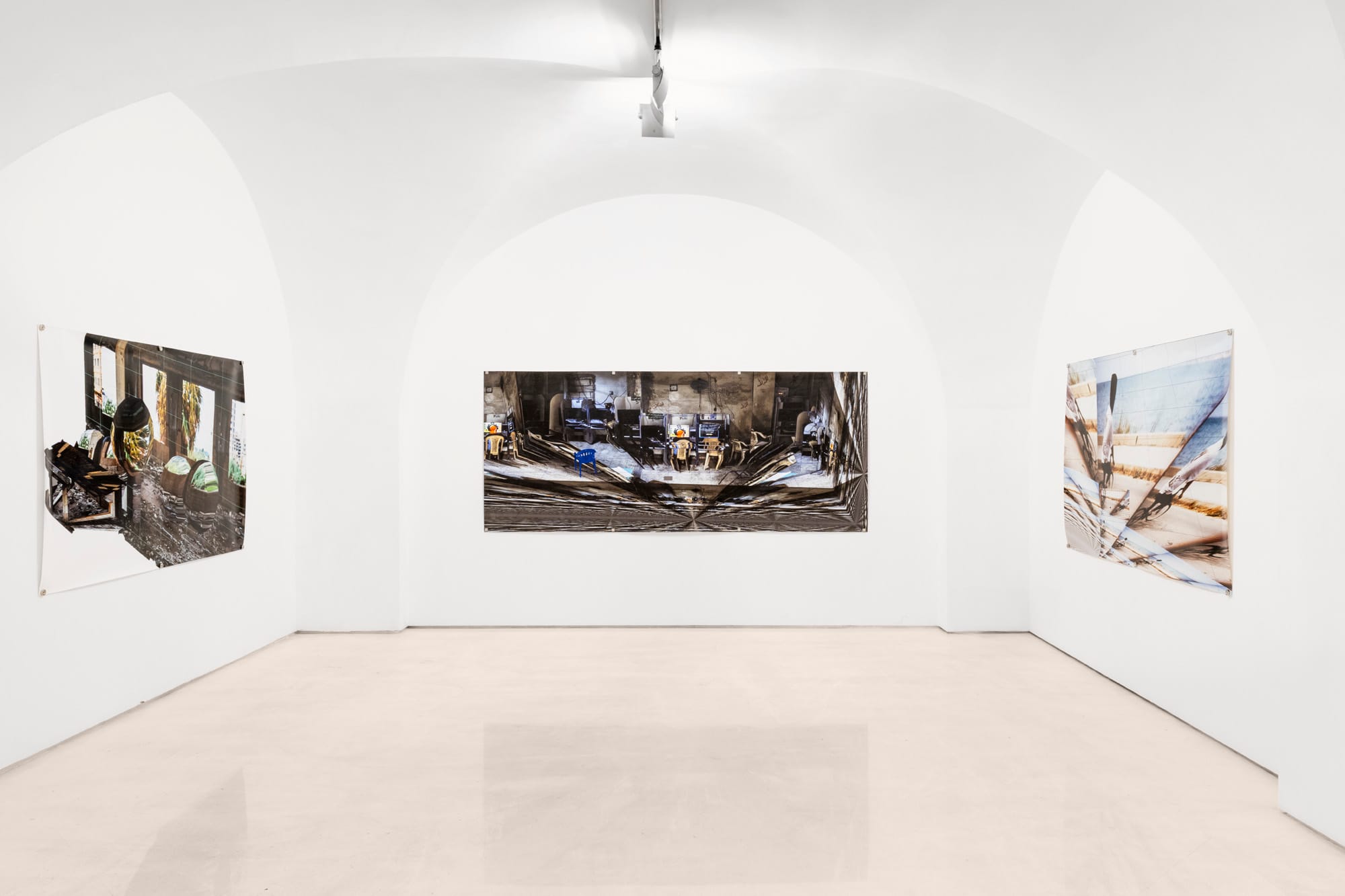
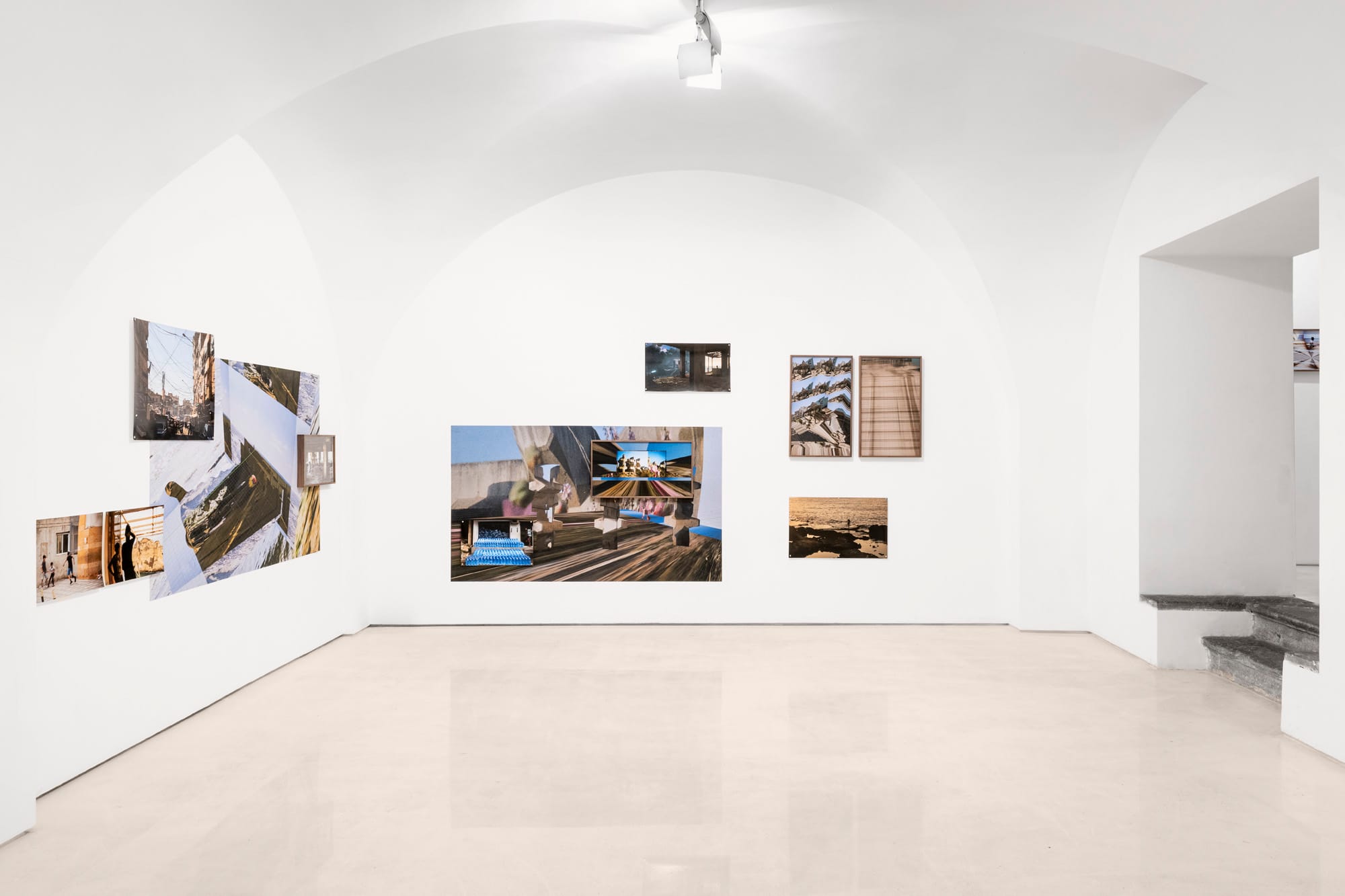
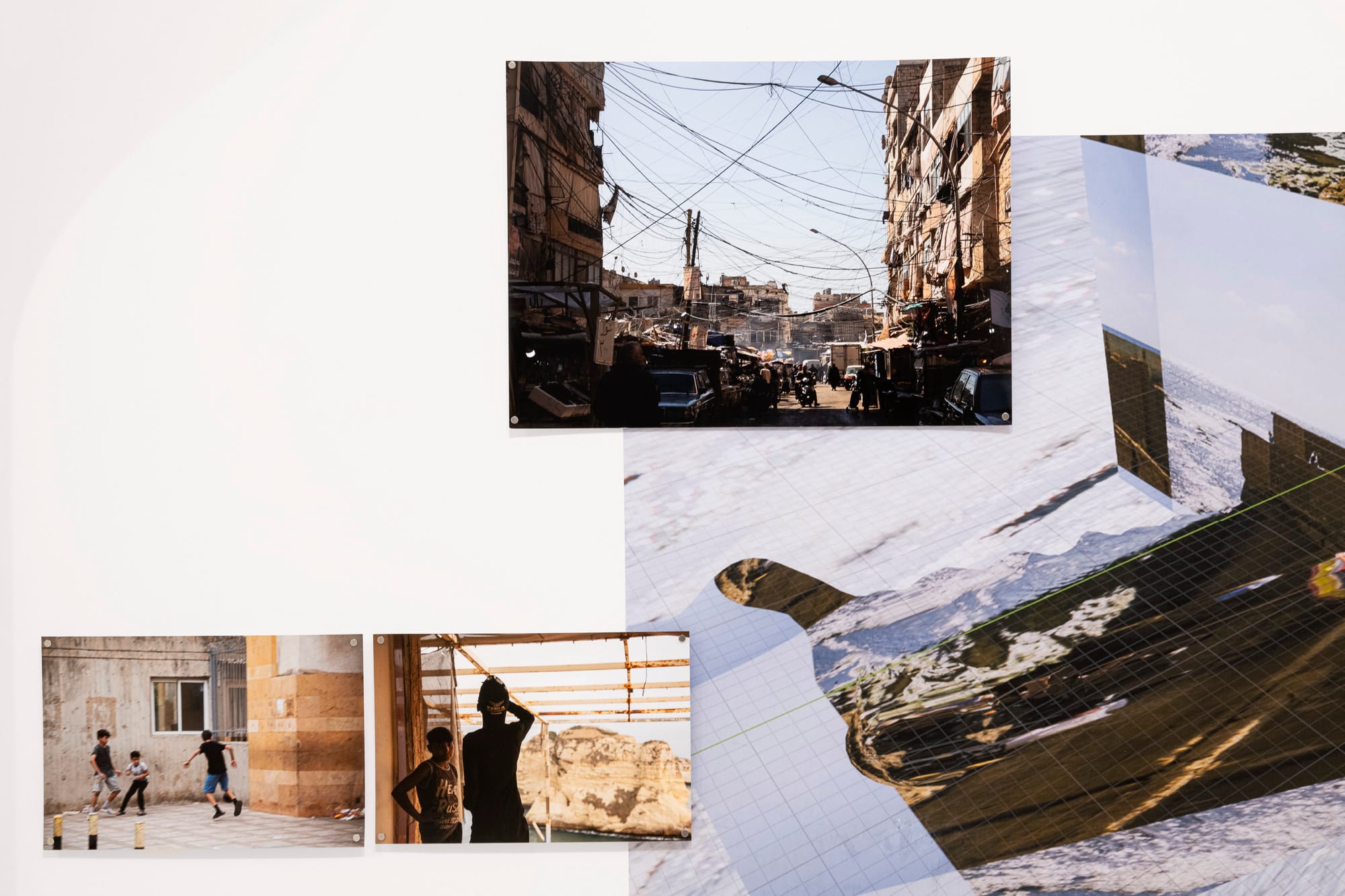
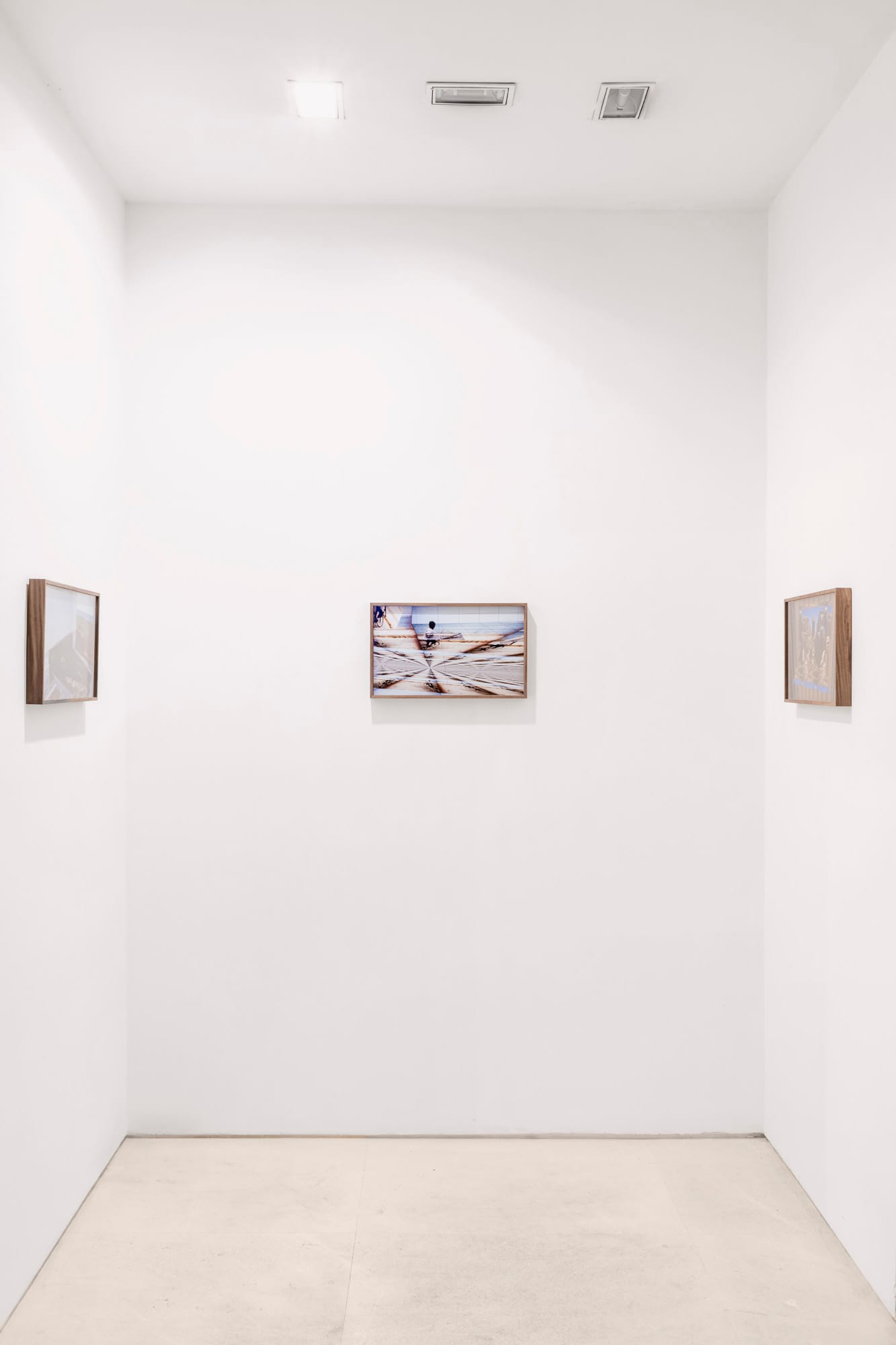
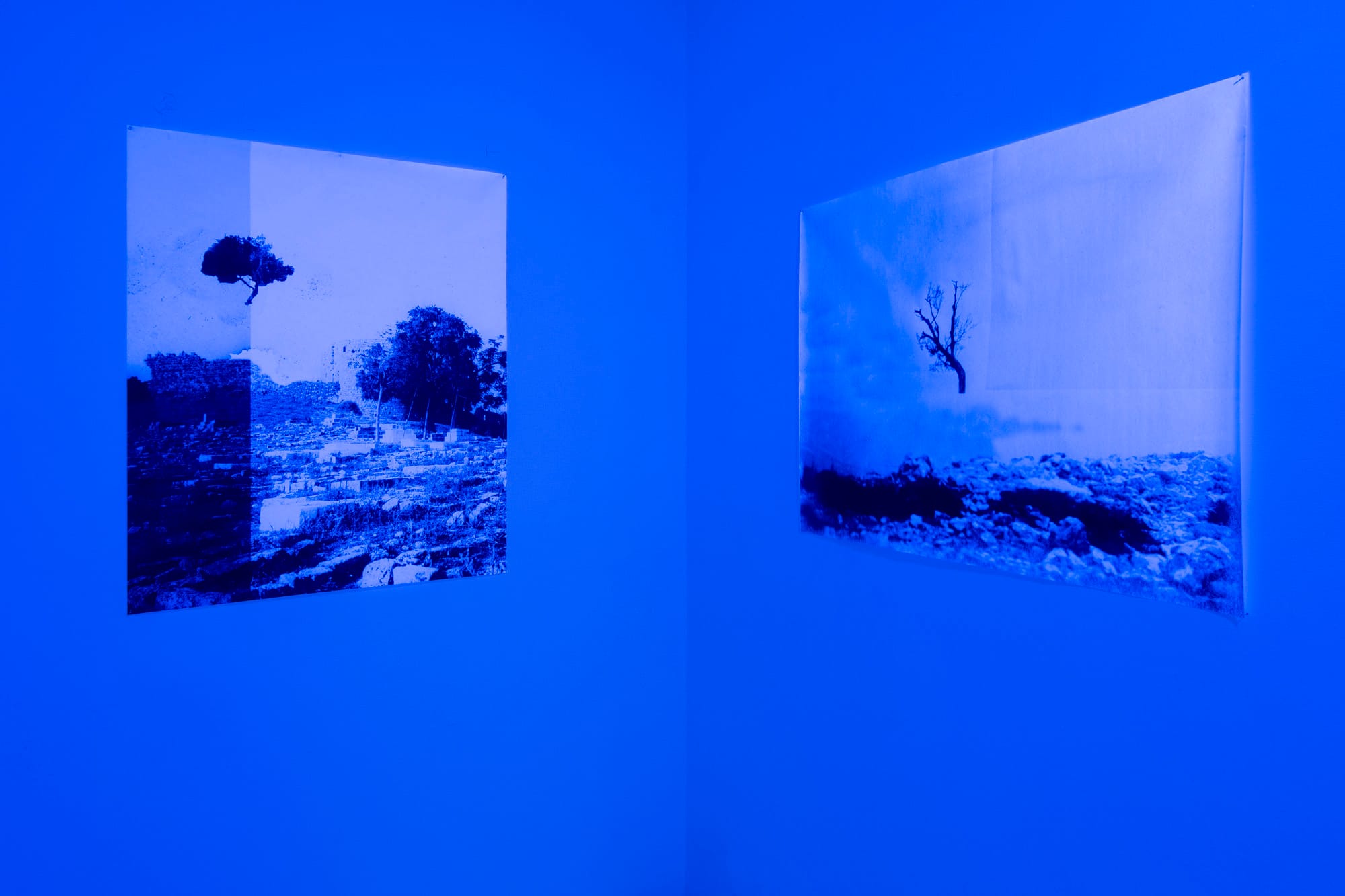
Kodrok, a solo exhibition by Rä di Martino, opened at Galleria Valentina Bonomo’s Portico d’Ottavia space in Rome last November. The project grows out of a research trip to Beirut and to Palestinian and Syrian refugee camps in Lebanon, where the artist photographed gaming rooms and nearby everyday interiors, informal gathering points marked by precarity, and by the social need to keep something going. The exhibition’s central gesture is a translation: documentary photographs are subjected to a digital transformation that turns them into distorted three-dimensional environments, suspended between recollection and re-invention.
Ibrahim Nehme, director of the Beirut Art Center and author of the accompanying curatorial text, describes these spaces as “hidden architectures”: basements, narrow alleyways, improvised rooms that function as portals for children and teenagers. The details are pointedly unglamorous: plastic chairs, humming monitors, tangled wires. Yet Kodrok does not treat the gaming room as ethnographic décor, nor as a sentimental emblem of “resilience”. Instead, it treats it as an image problem and an architectural problem at once: what does it mean to picture play when play depends on fragile infrastructures, informal economies, and rooms that can be dismantled overnight?
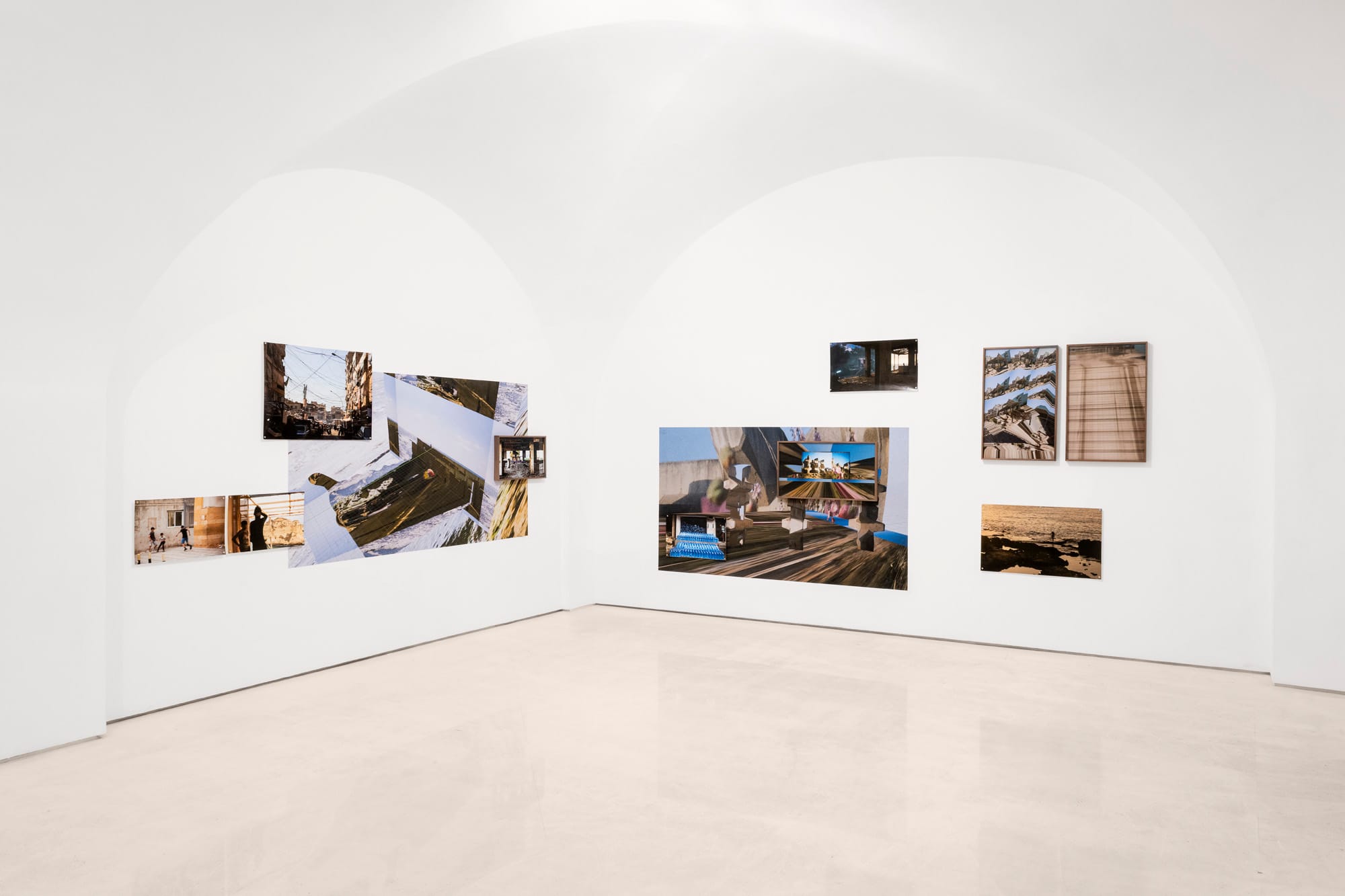
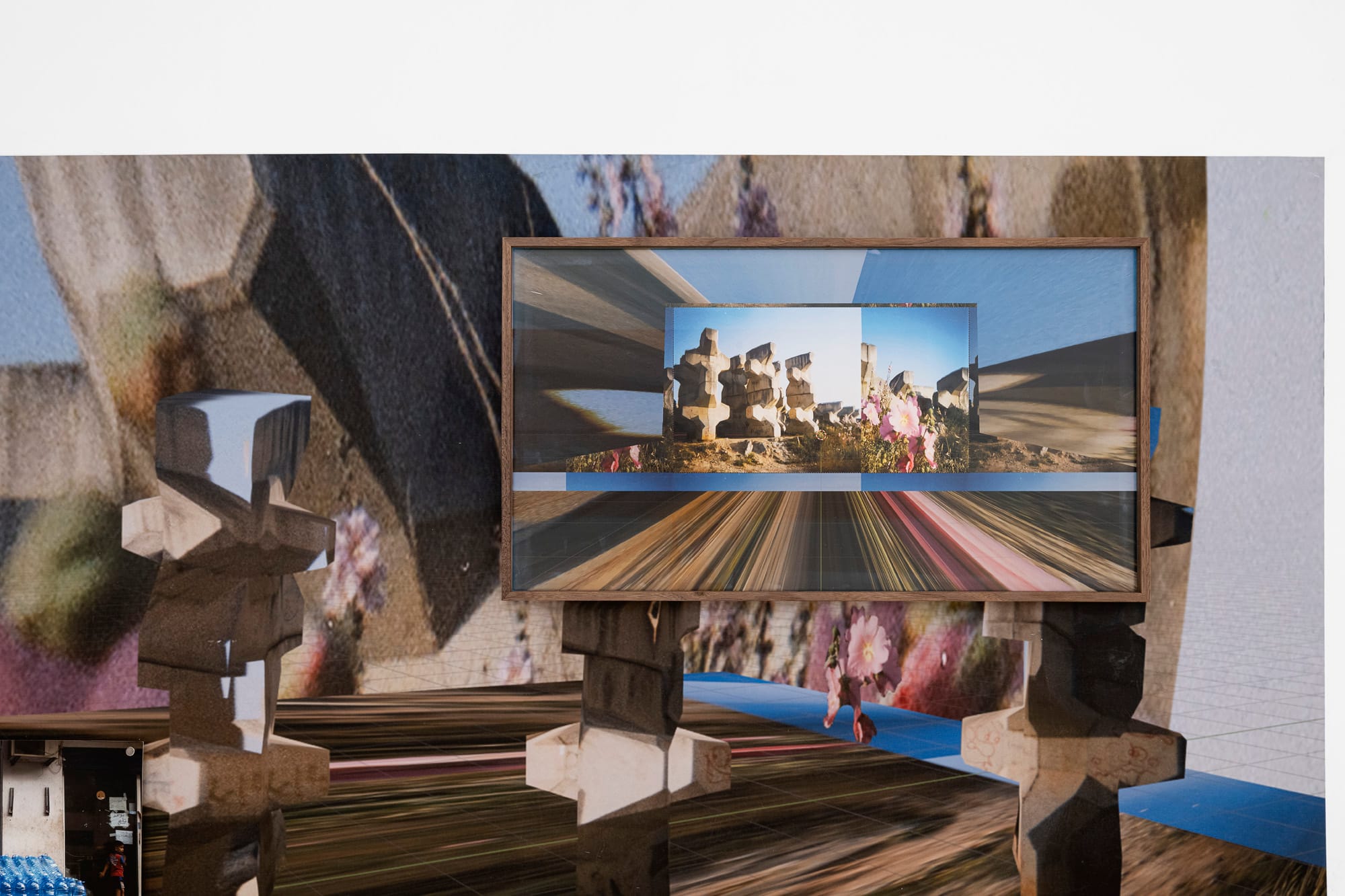
Nehme emphasises that di Martino’s images undergo digital manipulation and “collaborative interventions with the kids who inhabit these spaces”, bending and fracturing into layered compositions that oscillate between document and invention. This collaboration is a formal complication: the pictures refuse the clean authority of documentary address. They begin as records, then behave like environments: spaces that stretch, warp, and fold in ways that recall the logics of the games being played.
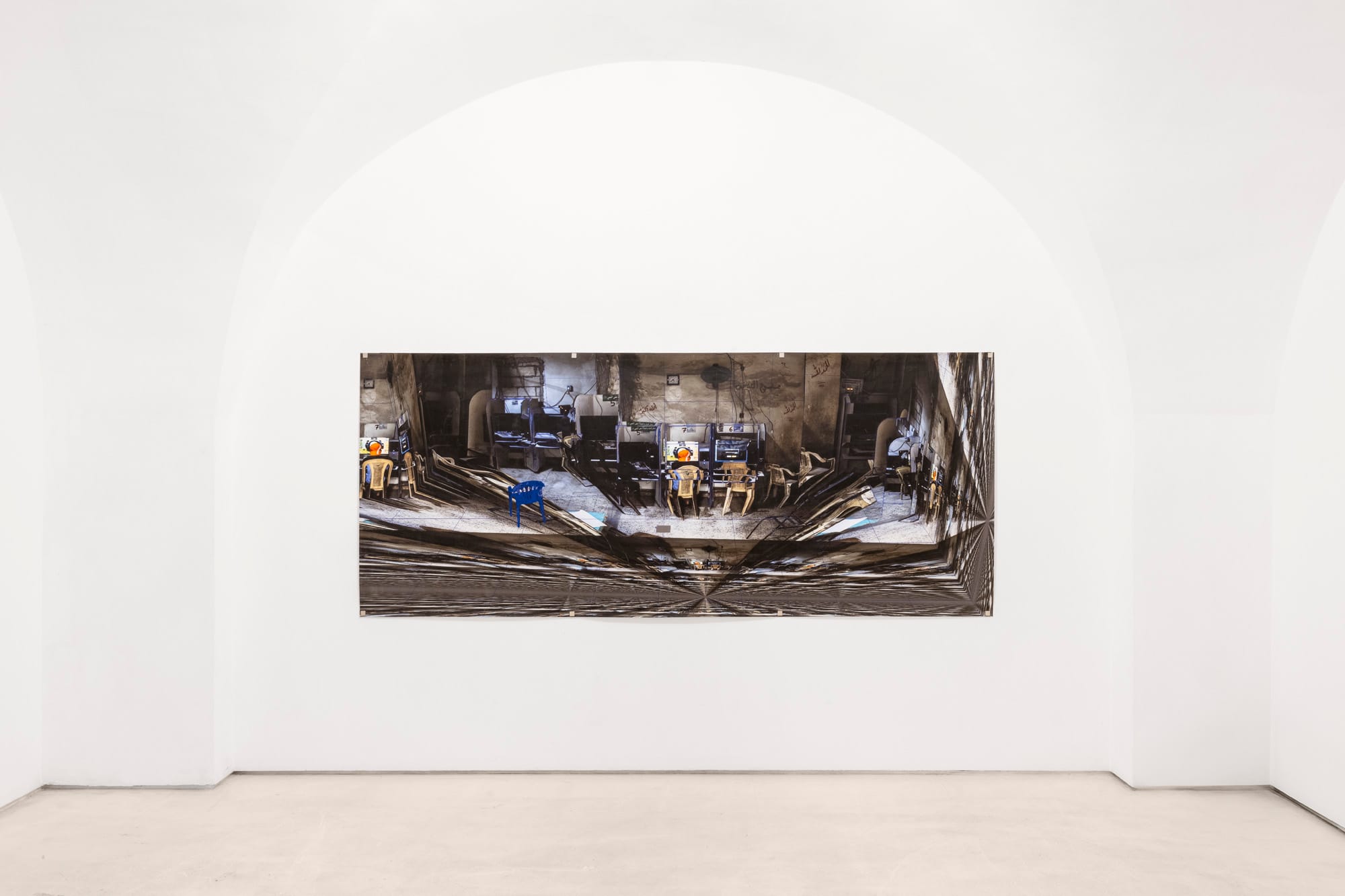
The exhibition’s save-the-date image already sets the terms: a scene appears tiled across multiple planes, as if the photograph had been pulled into a broken 3D viewport: grid lines, repeated fragments, perspective skew, the sense of an image trying (and failing) to settle into a single, stable space. Di Martino’s move is not to “gamify” documentary, but to let game-space grammar infect the documentary image: reset mechanics, spatial seams, the odd calm of repetition. Nehme writes of “universes folding onto themselves” like a level endlessly reset, with disorientation functioning as method rather than accident.
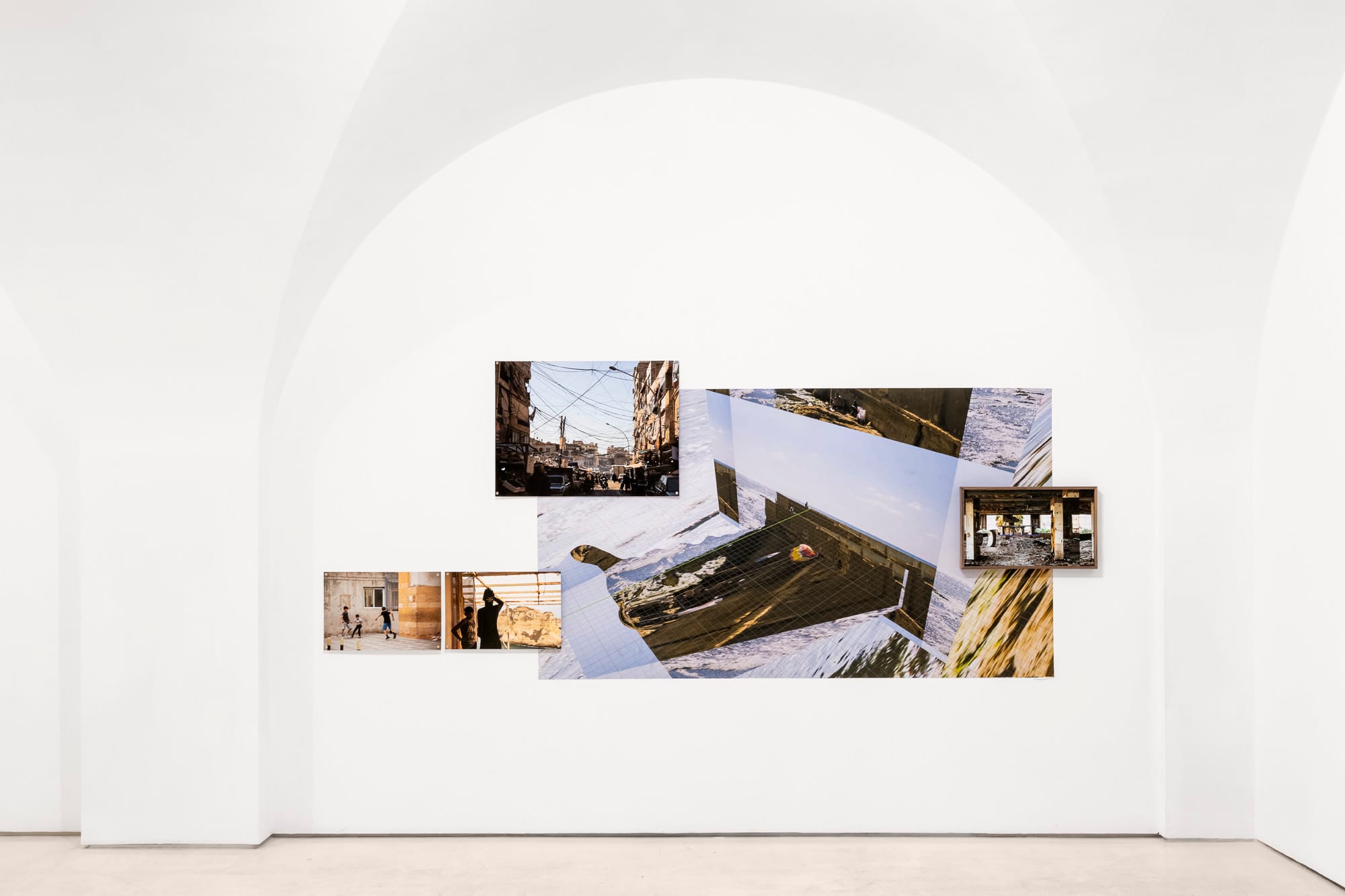
That emphasis on reset is politically loaded. In many mainstream discussions, gaming is framed either as escape (a benign elsewhere) or as pathology (a distraction from “real life”). Kodrok rejects both. It proposes play as an internal architecture within constrained conditions: a place made out of cables, screens, chairs, and time: material and social, not metaphoric.
Nehme’s closing proposition is blunt: Kodrok invites viewers “to step inside the glitch”, where the borders between real and virtual blur, and where another architecture tied to memory, play, and survival comes into being. Read critically, this is not an invitation to enjoy distortion as a fashionable aesthetic. It is a claim about how these spaces are lived: the “glitch” names unstable access, imperfect continuity, and the sense that the virtual is never cleanly separate from the room that contains it.
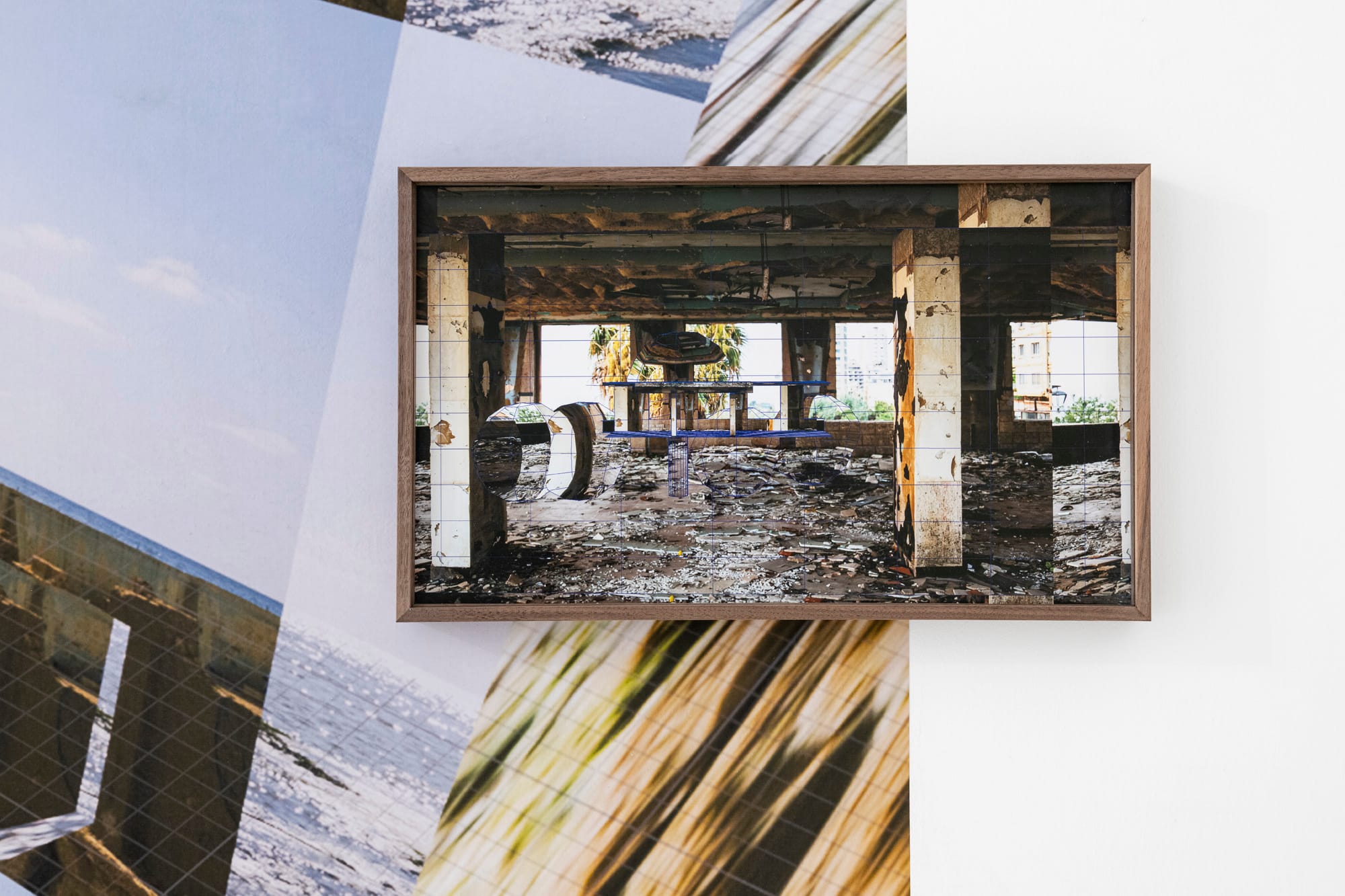
Di Martino’s broader practice has long examined the slippages between reality and fiction, often by exposing how fiction is constructed, and by testing what happens when that construction is made visible. In Kodrok, that interest gains a sharper edge. The work does not simply show that images can be manipulated; it asks what kinds of image-stability we take for granted, and whose lives are forced to operate without it. When the photographic document becomes a trembling pseudo-environment, the effect is less surreal than diagnostic: a visual analogue to precariousness itself.
The exhibition arrives at a moment when di Martino’s work is moving insistently between still image and cinema. Nehme notes that these gaming rooms also function as research grounds for the artist’s upcoming feature film, with Kodrok existing “in a state of passage” across media forms. That claim sits comfortably within a trajectory defined by filmmaking as much as installation: di Martino’s films and photographs have been presented across major institutions and festivals (including MoMA PS1, Tate Modern, Transmediale, and others), and her documentary The Show MAS Go On premiered at the Venice International Film Festival, receiving major awards.
It would be easy to read Kodrok as an opportunistic detour into “game culture”. The stronger reading is continuity: di Martino has repeatedly returned to sites where representation is strained: where the epic story does not match lived experience, and where images reveal their own mechanisms. Here, the strain is both technical and political. The gaming room becomes a hinge between the camp and the screen, between coded worlds and material limits, between the pleasures of play and the hard fact of improvisation.
Rä di Martino (b. Rome, 1975) is an Italian visual artist and filmmaker whose work moves between film, video installation, photography, and related research practices. Her projects repeatedly test how fictions are built—through cinematic conventions, props, voice, and framing, and how those conventions shape memory, collective narratives, and everyday perception. Di Martino studied in London, completing an MFA at the Slade School of Art, and received a fellowship at Columbia University that supported an extended period of work in New York before her return to Italy. In parallel with her moving-image practice, she has developed installation formats that foreground the friction between image and text, often holding pathos at a deliberate distance in order to expose how sentiment is engineered by media languages. Her work has circulated widely through museums, contemporary art institutions, and film contexts. Selected venues and platforms include MoMA PS1 (New York), Tate Modern (London), Palazzo Grassi–Punta della Dogana (Venice), Museion (Bolzano), MCA (Chicago), MAXXI (Rome), and Magasin (Grenoble), alongside recurring presences within biennial and festival circuits such as Manifesta and the Busan Biennale. In 2014 she premiered her mid-length documentary The Show MAS Go On at the Venice International Film Festival (Venice Days), receiving the Gillo Pontecorvo Award and the SIAE Award, and later a Nastro d’Argento recognition for documentary work. Her first feature film Controfigura (also known internationally as The Stand-in) premiered at the Venice Film Festival and received the Eurimages Lab Award. In 2018–19 di Martino received the Italian Council (MiBAC) award, supporting the production of new work and the publication of a catalogue, with presentations in Rome (Mattatoio) and at Kunstmuseum St. Gallen.