EVENT: CAO FEI’S DUOTOPIA (OCTOBER 31 2026–JANUARY 10, 2027, ROCHESTER, NEW YORK)

Cao Fei: Duotopia Vol. 1 and Vol. 2
October 31, 2026 – January 10, 2027
Memorial Art Gallery, University of Rochester, Media Arts Watch Gallery
500 University Avenue, Rochester, New York 14607, USA
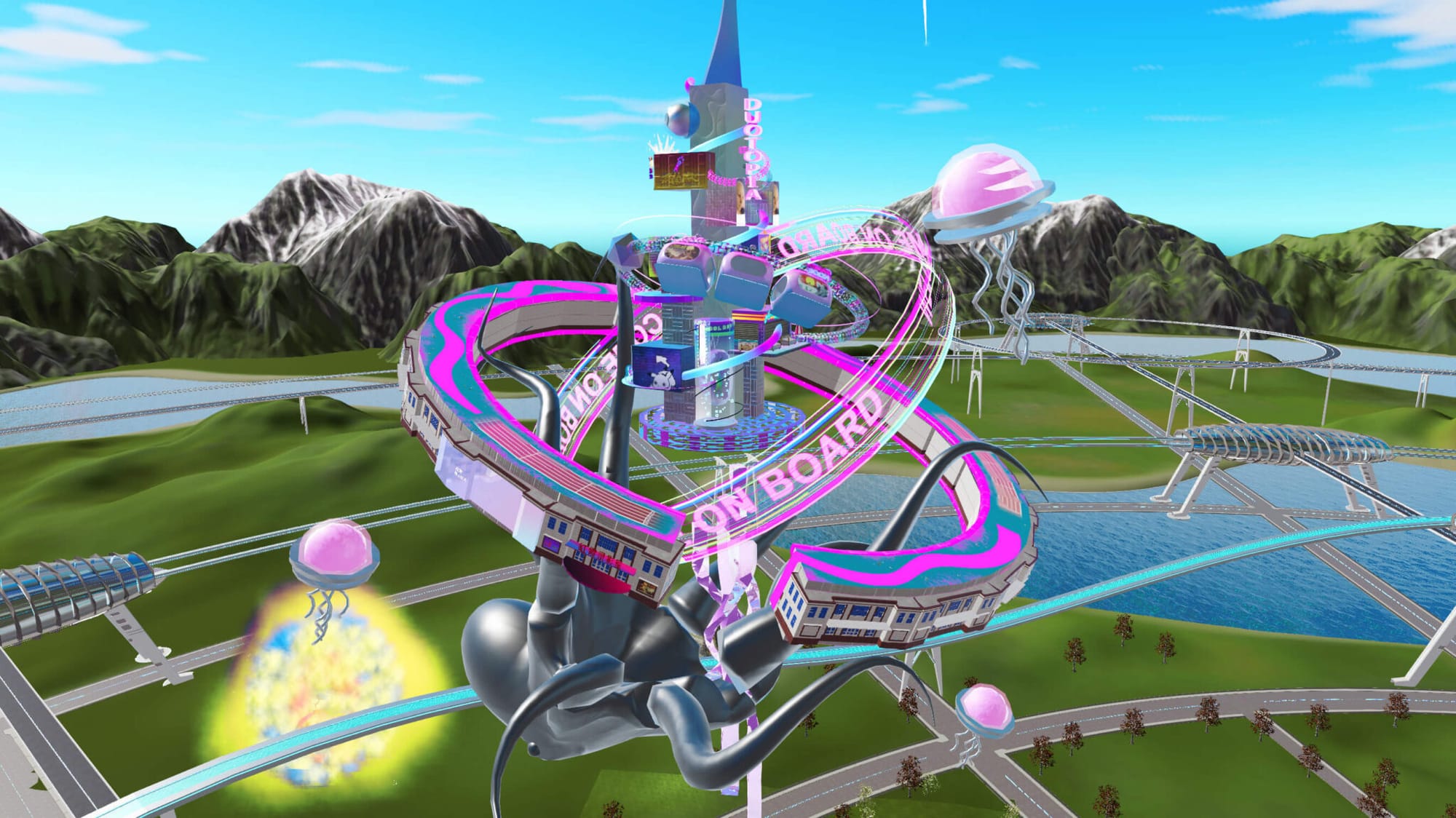
A luminous pink sign announces “COMING SOON” on a city suspended above a metallic octopus. Its tentacles resemble prosthetic fingers, while a ring of buildings rotates against a twilight sky. Jellyfish drift nearby. The structure could pass for an architectural proposal that has escaped its developer's specifications. In Cao Fei’s Duotopia Vol. 1 (2022), the slogan acquires a peculiar significance: the future has arrived as a digital rendering, although the city remains under construction.
At the Memorial Art Gallery of the University of Rochester, New York, two short films from Cao Fei’s Duotopia project are on view in the Media Arts Watch Gallery through 10 January 2027. Produced within Yuanbang Meta City, a Chinese metaverse platform, the videos extend the artist’s longstanding investigation of virtual urbanism, online identity and the relationship between technological development and social imagination.
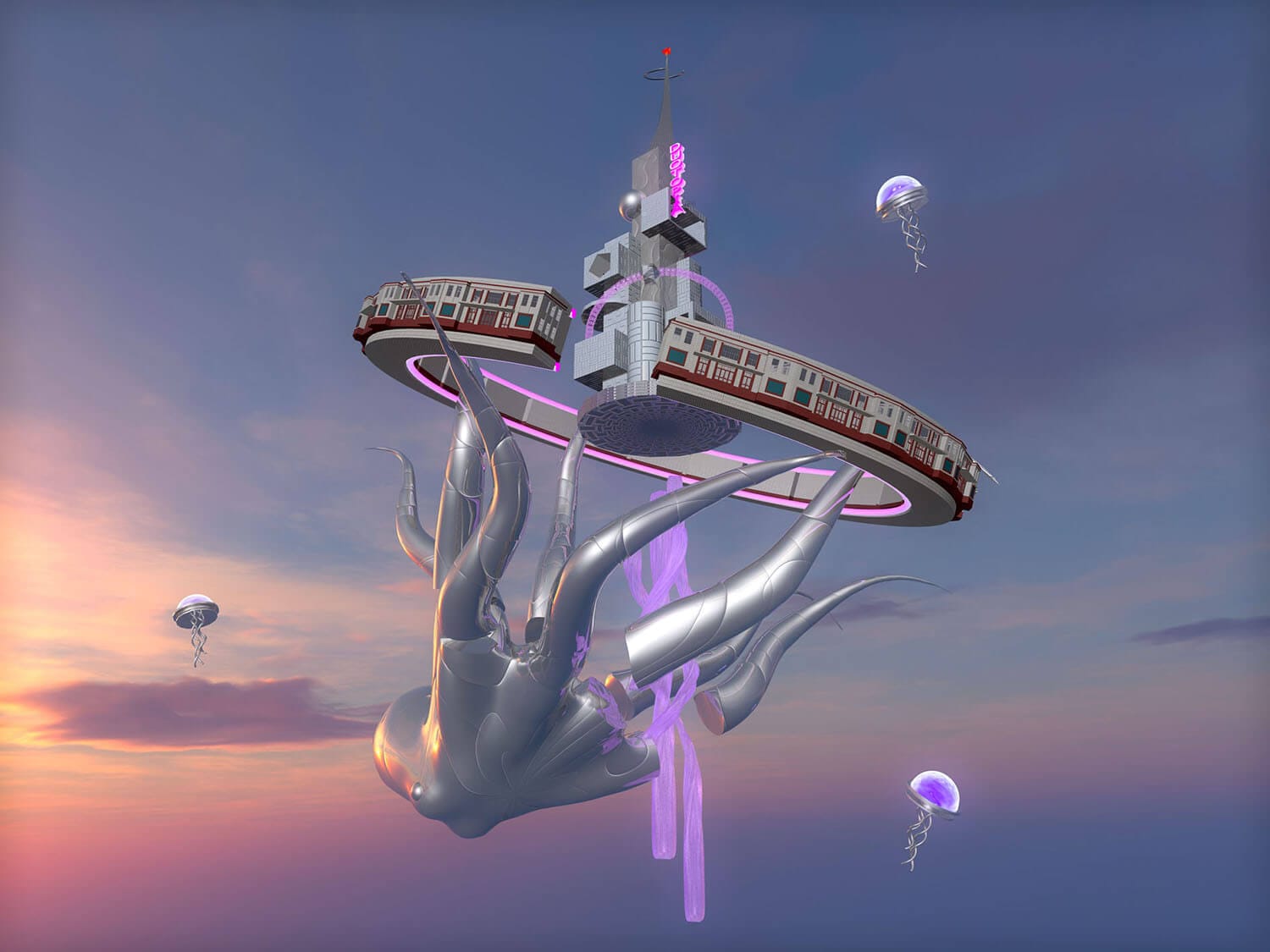
Duotopia Vol. 1 (2022), a 2-minute-40-second 3D-rendered video, introduces a fantastical floating metropolis. Duotopia Vol. 2 (2024), a 5-minute-15-second machinima with music by Ma Haiping, develops the project as a proposal for community-based virtual urban construction.
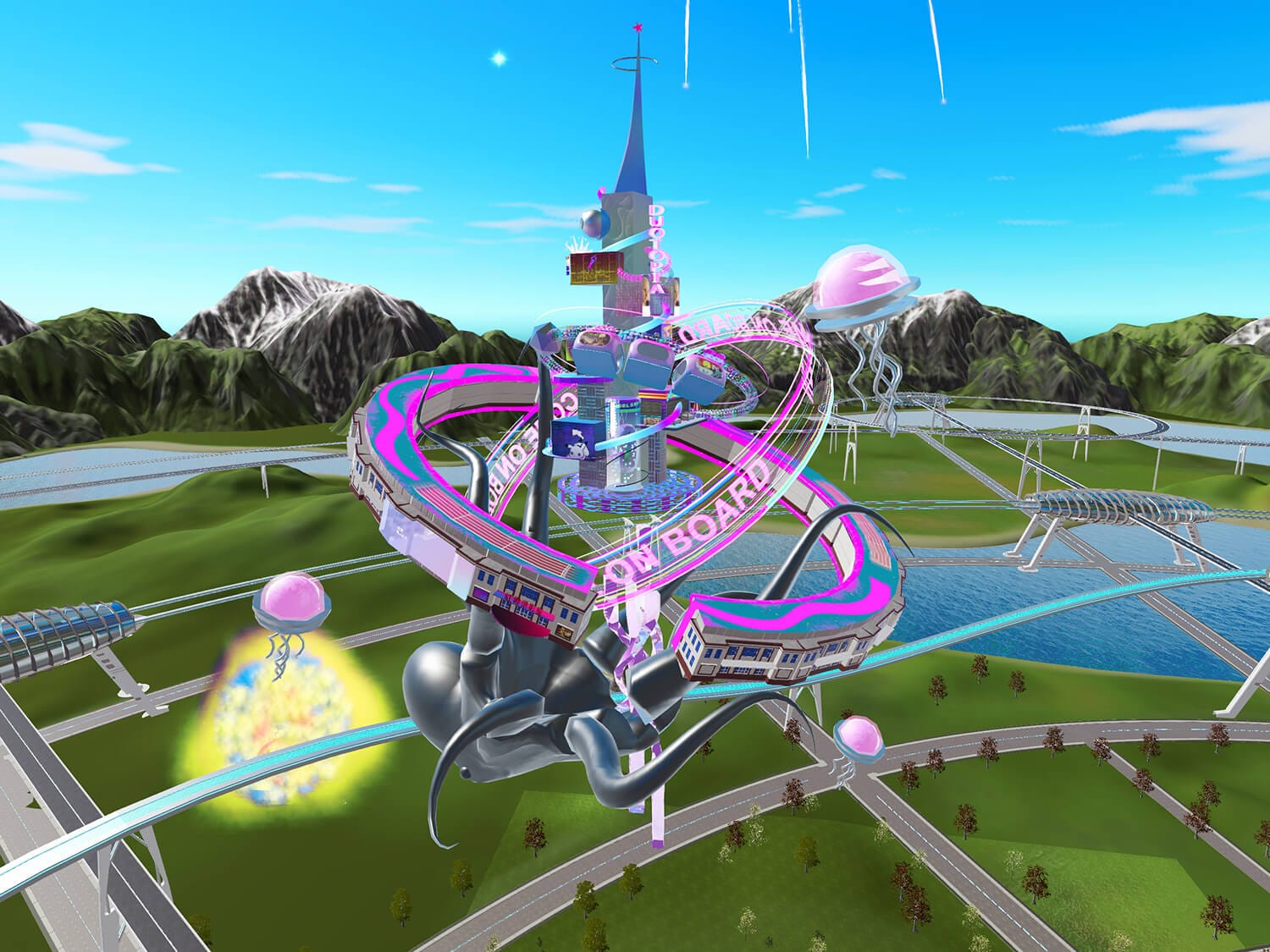
Both were commissioned by Meta City. The title combines duō (多), Mandarin for “many,” with the Greek topos, meaning place. Cao Fei envisages an urban environment capable of accommodating multiple, potentially incompatible futures. The premise is appealing, although the history of her work suggests that digital utopias seldom remain innocent for long.
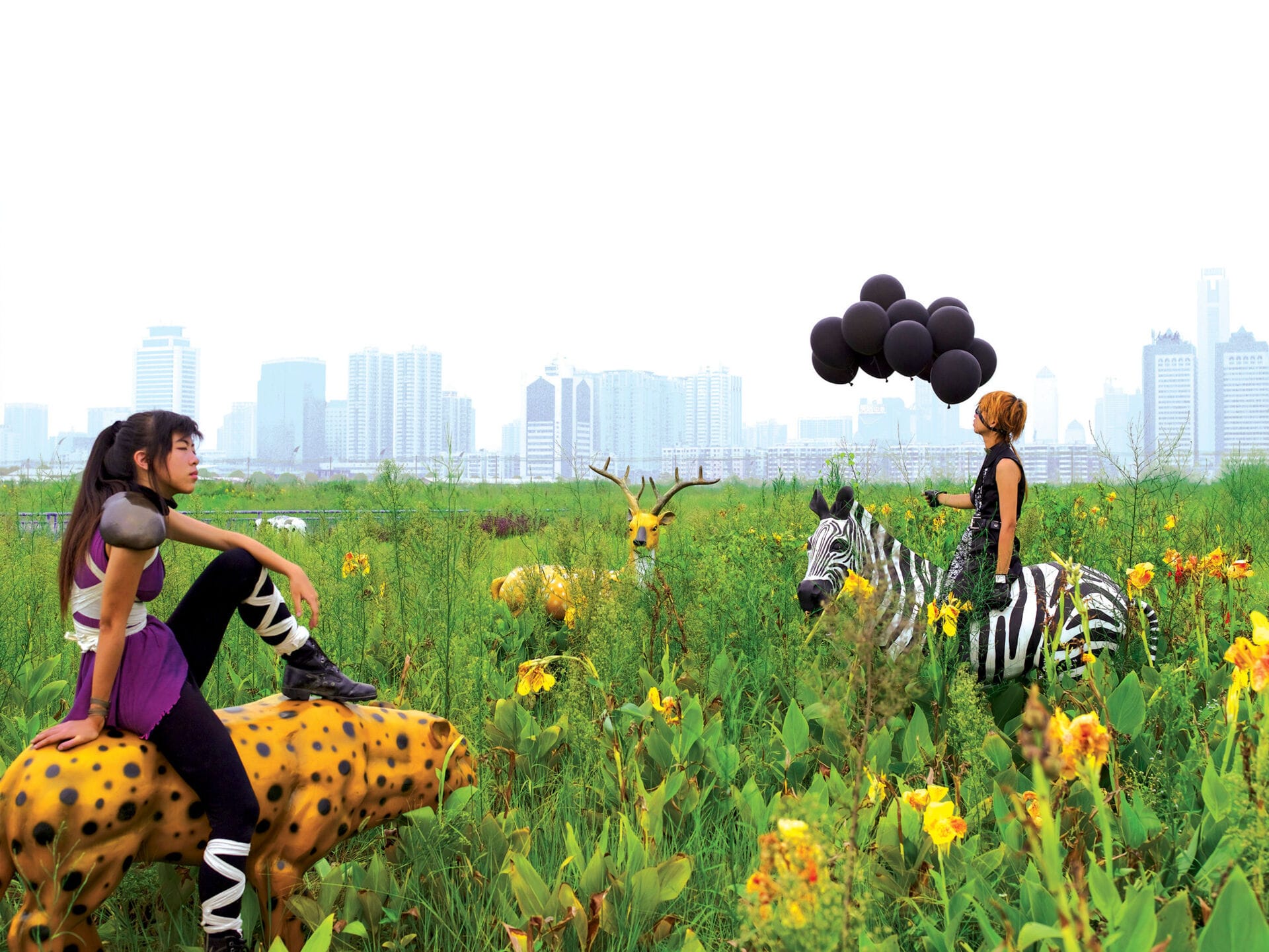
Born in Guangzhou in 1978, Cao Fei experienced China’s accelerating urban transformation firsthand. In Cosplayers (2004), she filmed young people dressed as characters from videogames, manga and anime, temporarily appropriating the unfinished spaces of a rapidly expanding city.
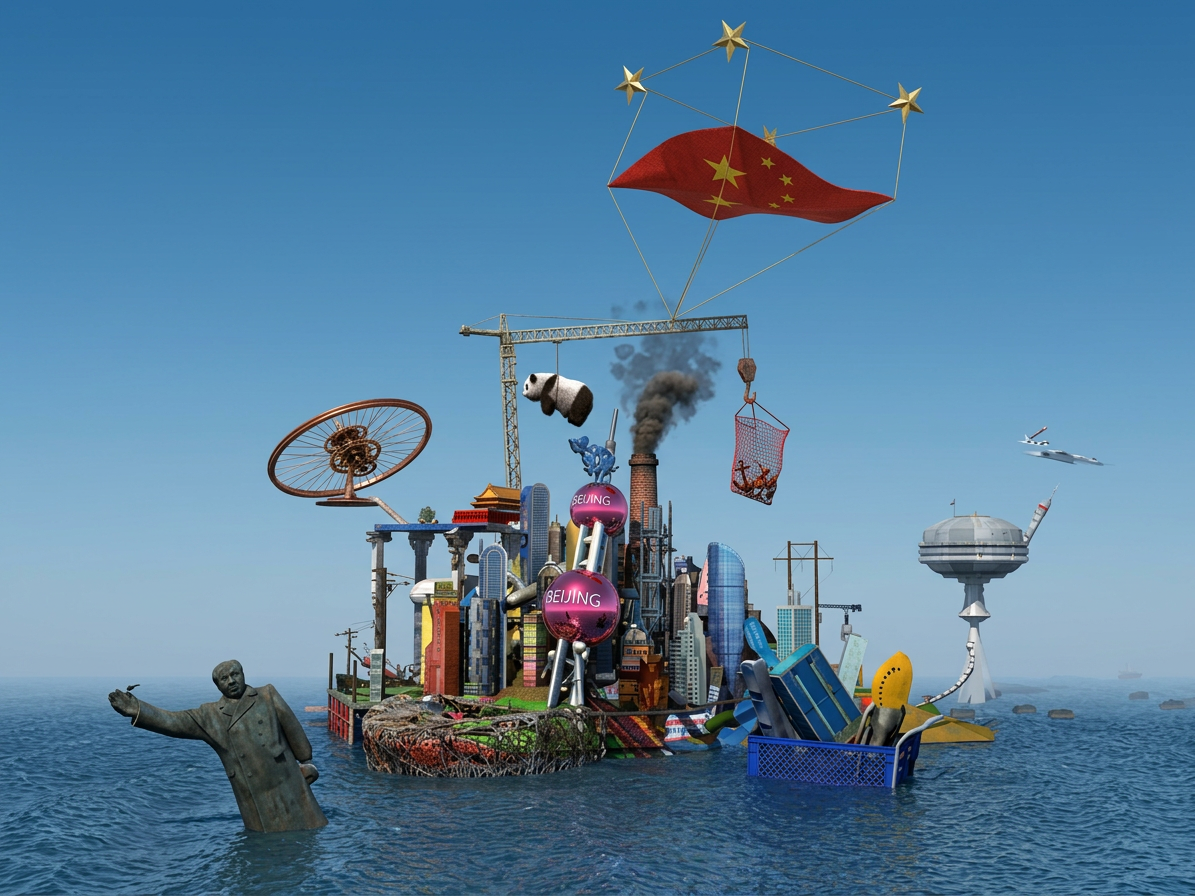
Three years later, she turned to Second Life to develop RMB City (2007–11), a virtual metropolis populated by extravagant architectural forms and references to China’s property boom. Under the identity China Tracy, her avatar participated in the city’s social life and appeared in machinima films such as i.Mirror (2007). These experiments considered the possibilities of inhabiting environments that existed entirely through software, while acknowledging the commercial forces shaping their development.
Nearly two decades later, China Tracy has acquired an extraordinary successor. Oz, the avatar associated with Duotopia, combines a human torso with translucent octopus-like flesh and mechanical appendages. Ungendered and suspended in the air, this hybrid figure introduces a markedly different understanding of virtual embodiment.
In a July 2026 interview with Yi Ting Lee for Burlington Contemporary, Cao Fei explained that China Tracy was an active participant in her digital environment, capable of flying, governing her city and looking after children. Oz, by contrast, keeps their eyes closed and remains unable to descend. The artist associated their hybrid anatomy with pain and their immobility with her own uncertainty about technological development. She connected Oz’s withdrawal to wu wei, the Daoist concept of non-action or effortless being.
This admission complicates the apparent optimism of Duotopia. The freedom promised by a virtual world has produced a body that cannot decide where to go.
Another contradiction emerges from the soundtrack of Vol. 1. A voice recites passages from Filippo Tommaso Marinetti’s Futurist Manifesto (1909), with its celebration of technological speed and the conquest of temporal limits. More than a century after Italian Futurism announced its revolutionary ambitions, Cao Fei places its rhetoric inside a computer-generated city whose architecture rotates indefinitely. The spectacle of acceleration has become a loop. Marinetti’s confidence in the machine sounds considerably stranger when heard from a place that cannot be located on any map.
The project also belongs to a different moment in the history of networked environments. Cao Fei developed Duotopia during the renewed enthusiasm for the metaverse that accompanied the COVID-19 pandemic. In the same 2026 interview, she described that enthusiasm as a speculative bubble, contrasting it with the earlier optimism surrounding Second Life. Her more recent work registers an increasing awareness of the limitations of technologically mediated experience. The virtual city remains an appealing site of artistic invention, although its social promise has become harder to sustain.
This tension extends to the films’ production. Machinima enables Cao Fei to create moving images within a navigable digital environment, turning virtual architecture into cinematic material. The technique offers a continuity with RMB City, but the emphasis has shifted. Where the earlier project involved the social experimentation of an emerging online community, Duotopia examines the uncertain future of the environments that such communities might inhabit.
The Rochester presentation follows Cao Fei’s extensive 2026 retrospective, Testimonies to the Near Future, at Kunstmuseum Basel, where Duotopia appeared within an installation called The Playground, alongside the video Oz (2022). Her virtual architectures acquired a physical counterpart in an exhibition environment designed for bodily participation. The comparatively concentrated Rochester presentation returns attention to the films themselves, allowing their digital construction and unresolved promises to occupy the foreground.
The sign still says “COMING SOON.” Twenty years after China Tracy began exploring Second Life, Cao Fei has given the inhabitants of her latest virtual city a more complicated relationship with the future. Oz closes their eyes while the buildings continue to revolve overhead.